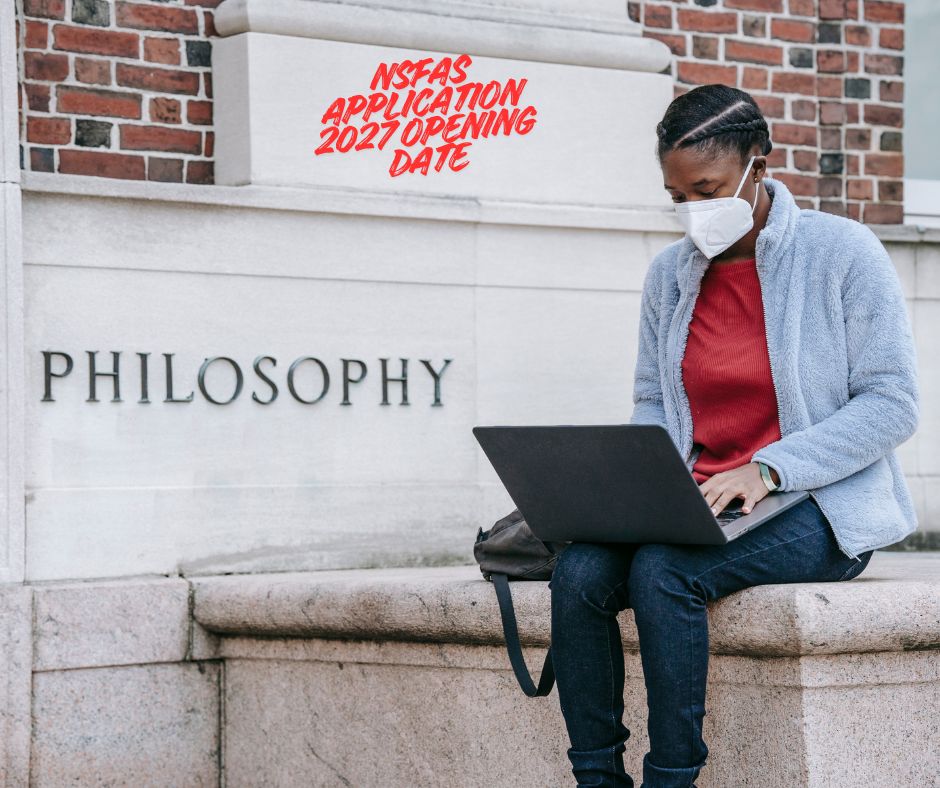
The National Student Financial Aid Scheme has not yet announced the official NSFAS application 2027 opening date, but applications are expected to open between September 2026 and November 2026 based on historical patterns.
Students planning to apply for the 2027 academic year should monitor official NSFAS channels for confirmation and prepare the required documents in advance.
Table of Contents
What is the NSFAS Application 2027 Opening Date?
The NSFAS application 2027 opening date is the specific day when the National Student Financial Aid Scheme activates its online application portal for students seeking financial aid for the 2027 academic year.
This date marks the beginning of the application window for undergraduate students at South African public universities and Technical and Vocational Education and Training (TVET) colleges.
The opening date becomes official only after NSFAS or the Department of Higher Education and Training (DHET) publishes formal announcements through verified government channels. Unconfirmed social media posts, WhatsApp messages, or unofficial PDFs do not constitute valid confirmation.
Confirmed vs Expected Opening Dates
A confirmed opening date appears on the official NSFAS website at nsfas.org.za or through DHET media statements, while an expected opening date is a projection based on historical application cycles.
Analysis of recent NSFAS application windows shows:
- 2026 academic year: Applications opened in mid-November 2025 and closed in mid-February 2026
- 2025 academic year: Applications opened in September 2024 and closed in January 2025
- 2024 academic year: Applications opened in November 2023 and closed in January 2024
This pattern indicates the NSFAS application 2027 opening date will likely occur in the fourth quarter of 2026, subject to government budget approval and system readiness.
How NSFAS Announces Application Opening Dates
NSFAS announces opening dates exclusively through official, government-verified channels to prevent misinformation and fraud.
Legitimate announcement channels include:
- NSFAS official website (nsfas.org.za)
- myNSFAS student portal (my.nsfas.org.za)
- Department of Higher Education and Training media statements
- Government Gazette publications
- Institutional financial aid offices at public universities and TVET colleges
- Verified NSFAS social media accounts with government verification badges
Students should verify the NSFAS application 2027 opening date by checking multiple official sources before submitting applications.
When Does NSFAS Open for 2027? Historical Application Patterns
NSFAS application cycles follow an annual pattern aligned with South Africa’s academic calendar, national budget processes, and institutional registration timelines. Understanding this pattern helps students anticipate when applications will open.
NSFAS Opening and Closing Dates: Historical Data
| Academic Year | Opening Date | Closing Date | Application Window Duration |
|---|---|---|---|
| 2026 | Mid-November 2025 | Mid-February 2026 | Approximately 12 weeks |
| 2025 | September 2024 | January 2025 | Approximately 16 weeks |
| 2024 | November 2023 | January 2024 | Approximately 10 weeks |
| 2023 | September 2022 | January 2023 | Approximately 16 weeks |
This historical data strongly suggests the NSFAS application 2027 opening date will fall between September 2026 and November 2026, with applications closing between January 2027 and February 2027.
Factors That Determine NSFAS Opening Dates
NSFAS coordinates opening dates with multiple government departments and educational institutions to ensure efficient processing and disbursement of funds.
Key factors influencing the opening date include:
- National Treasury budget allocations: NSFAS requires confirmed funding amounts before opening applications
- University admission cycles: Applications must align with institutional admission processes
- South African Revenue Service (SARS) integration: Income verification systems must be operational
- myNSFAS portal upgrades: Technical improvements and maintenance affect readiness
- Department of Social Development (DSD) data: SASSA grant beneficiary verification must be current
These interdependencies explain why the NSFAS application 2027 opening date cannot be confirmed until all systems are validated and funding is secured.
Why Applications Open in the Last Quarter
NSFAS opens applications in the fourth quarter of the preceding year to allow sufficient time for verification, institutional uploads, and fund disbursement before the academic year begins.
The timeline works as follows:
- September–November: Application window opens, students submit applications
- December–January: NSFAS processes applications, verifies income data
- January–February: Institutions upload student registration data
- February–March: Fund disbursements begin for the new academic year
This structure ensures students receive funding confirmation before or shortly after registration opens at their institutions.
NSFAS Application 2027 Opening Date by Study Level and Institution Type
The NSFAS application 2027 opening date applies uniformly to undergraduate students at public universities and TVET college students, but excludes most postgraduate qualifications.
Undergraduate Students at Public Universities
All first-time entering students (FTEN) and continuing undergraduate students at South Africa’s 26 public universities must apply during the same NSFAS application window.
The application cycle covers students at institutions including:
- University of South Africa (UNISA)
- University of Cape Town (UCT)
- University of the Witwatersrand (Wits)
- University of Pretoria (UP)
- Stellenbosch University
- University of KwaZulu-Natal (UKZN)
- All other public universities in South Africa
The NSFAS application 2027 opening date does not vary by institution. Distance learning students at UNISA follow the same timeline as contact students at other universities.
TVET College Students
Students enrolled in National Certificate (Vocational) [NC(V)] and NATED programmes at South Africa’s 50 TVET colleges must apply through the same NSFAS cycle as university students.
TVET funding covers:
- Registration fees
- Tuition costs
- Learning materials
- Transport allowances
- Personal care allowances
TVET students should prepare to apply when the NSFAS application 2027 opening date is announced, using the same myNSFAS portal as university applicants.
Postgraduate Funding Limitations
NSFAS does not fund most postgraduate qualifications, including Honours degrees, Master’s degrees, and Doctoral programmes.
Limited exceptions include:
- Postgraduate Certificate in Education (PGCE) for qualifying teachers
- Certain disability-related support for postgraduate students
- Specific programmes designated as DHET priorities
Postgraduate students should investigate institutional bursaries, research funding, and external scholarship programmes rather than waiting for the NSFAS application 2027 opening date.
NSFAS Closing Date 2027 and Late Application Policy
NSFAS applications close several weeks after the opening date, with limited provisions for late submissions under exceptional circumstances.
Expected NSFAS Closing Date 2027
Historical data indicates NSFAS applications remain open for 10 to 16 weeks after the opening date.
If the NSFAS application 2027 opening date occurs in:
- September 2026: Expected closing date in late December 2026 or early January 2027
- November 2026: Expected closing date in late January 2027 or mid-February 2027
Students must submit complete applications before the published closing deadline. Applications submitted after the deadline may not be processed.
Late NSFAS Applications: Policy and Exceptions
NSFAS occasionally extends application deadlines or accepts late applications, but only under formally announced circumstances.
Conditions that have triggered late application windows include:
- Widespread system outages are preventing access to myNSFAS
- Natural disasters affecting large student populations
- Government directives following significant policy changes
- Technical errors preventing document uploads
Late application windows are not guaranteed and depend on NSFAS Board decisions. Students should not plan to submit applications after the published closing date for the NSFAS application 2027 opening date cycle.
What Happens If You Miss the Deadline
Students who miss the NSFAS closing date face several options, none of which guarantee funding for the intended academic year.
Options include:
- Applying during the next cycle for the following academic year
- Seeking institutional emergency funding through university financial aid offices
- Exploring external bursary programmes from SETAs or private organizations
- Applying for the missing-middle loan scheme if household income qualifies
Missing the deadline typically results in a one-year delay in accessing NSFAS funding.
NSFAS Application Requirements for 2027
Applicants must satisfy citizenship, income, academic, and documentation requirements to qualify for NSFAS funding when applications open.
Citizenship and Residency Eligibility
NSFAS funds South African citizens only, excluding permanent residents and international students.
Requirements include:
- Valid South African identity document
- South African ID number for verification purposes
- Residence in South Africa during the application period
Students with South African citizenship but born outside South Africa must provide additional documentation proving citizenship status.
Household Income Thresholds for Bursaries and Loans
NSFAS applies means testing to determine whether applicants qualify for full bursaries or missing-middle loans.
Current income thresholds include:
| Household Income Category | Annual Combined Income | Funding Type Available |
|---|---|---|
| Full bursary eligibility | R0 to R350,000 | 100% bursary (tuition, accommodation, allowances) |
| Missing-middle eligibility | R350,001 to R600,000 | Loan with potential 50% bursary conversion |
| Above funding threshold | Above R600,000 | Not eligible for NSFAS funding |
SASSA grant recipients automatically qualify financially regardless of household income. Students from households receiving social grants should indicate this status when applying after the NSFAS application 2027 opening date.
Academic Eligibility and the N+ Rule
NSFAS funding has duration limits based on the minimum completion time for each qualification.
The N+ rule defines maximum funding periods:
- N represents the minimum years required to complete the qualification
- N+1 means NSFAS funds for one additional year beyond the minimum time
- N+2 applies in limited circumstances for students with academic challenges
For example:
- 3-year Bachelor’s degree: Maximum 4 years of funding (N+1)
- 4-year Bachelor’s degree: Maximum 5 years of funding (N+1)
- 3-year National Diploma: Maximum 4 years of funding (N+1)
Students exceeding N+ limits will not receive funding even if they apply during the NSFAS application 2027 opening date window.
Required Documents for NSFAS Applications
Applicants must upload clear, valid documents to myNSFAS to complete their applications successfully.
Mandatory documents include:
- South African ID: Certified copy of the applicant’s identity document
- Proof of household income: Payslips (3 most recent months), IRP5 forms, unemployment letters, pension statements, or SASSA grant letters for all household members
- Proof of registration or admission: Institutional confirmation letter showing acceptance or current registration
- Consent form: Signed NSFAS consent form authorizing third-party verification
- Proof of residence: Utility bills, municipal accounts, or affidavits confirming household address
Additional documents required in specific circumstances:
- Disability annexure: Medical professional certification for students with disabilities
- Death certificates: For deceased parents or guardians
- Divorce decrees: When parents are divorced and income must be split
- Marriage certificates: For married applicants or parents
- Guardianship court orders: When applicants are under legal guardianship
Documents must be certified copies except where electronic uploads are accepted. Poor-quality scans delay processing after the NSFAS application 2027 opening date.
How to Apply for NSFAS When Applications Open in 2027
NSFAS applications must be submitted online through the official myNSFAS portal at my.nsfas.org.za following a structured process.
Step 1: Create Your myNSFAS Account Before Applications Open
Students should create myNSFAS accounts before the NSFAS application 2027 opening date to avoid system congestion and technical delays.
Account creation process:
- Visit my.nsfas.org.za using a desktop computer, laptop, tablet, or smartphone
- Click “Register” or “Create Account”
- Enter your South African ID number exactly as it appears on your identity document
- Provide a valid email address and create a secure password
- Enter a mobile phone number for SMS notifications
- Verify your email address by clicking the link sent to your inbox
- Verify your mobile number by entering the SMS code
Account verification can take 24 to 48 hours. Creating accounts early prevents delays when applications open.
Step 2: Gather and Prepare Required Documents
Applicants should collect and organize all required documents before the NSFAS application 2027 opening date to complete applications efficiently.
Document preparation checklist:
- Scan all documents at high resolution (300 DPI minimum)
- Save documents as PDF files under 5 MB per file
- Name files clearly (example: “Applicant_ID_Certificate.pdf”)
- Verify all documents are certified where required
- Ensure documents are current (issued within required timeframes)
- Create backup copies stored in multiple locations
Having documents ready before the NSFAS application 2027 opening date allows immediate submission when the portal opens.
Step 3: Complete the Online NSFAS Application
The myNSFAS application form requires accurate personal, academic, financial, and household information.
Application completion steps:
- Log in to myNSFAS using your ID number and password
- Navigate to the “Apply for Funding” section
- Select the academic year (2027)
- Complete personal details (name, date of birth, contact information)
- Enter household information (parent/guardian details, dependents)
- Provide financial information (household income sources, amounts)
- Enter academic information (institution, qualification, year of study)
- Upload all required documents in the specified formats
- Review all information for accuracy
- Accept terms and conditions
- Submit the completed application
The system generates a unique reference number upon successful submission. Save this number for tracking purposes.
Step 4: Track Your NSFAS Application Status
Applicants must monitor their application status through myNSFAS after submission to respond to requests and confirm funding decisions.
Common application statuses include:
- Submitted: Application received, awaiting processing
- Information required: NSFAS needs additional documents or clarification
- Provisionally funded: Initial approval pending final verification
- Approved: Funding confirmed, awaiting institutional registration upload
- Rejected: Application denied due to ineligibility
Status checks should occur weekly after the NSFAS application 2027 opening date closes. NSFAS may request additional documentation at any stage, and students have a limited time to respond.
Step 5: Respond to NSFAS Requests and Upload Registration Data
Students must respond promptly to NSFAS information requests and ensure their institutions upload registration data.
Critical post-submission actions:
- Check myNSFAS notifications daily for information requests
- Upload requested documents within specified deadlines (typically 7 to 14 days)
- Register at your institution by the published registration deadline
- Confirm your institution has uploaded your registration data to NSFAS
- Update contact information if email or mobile number changes
Failure to respond to information requests or complete institutional registration can result in funding cancellation even after initial approval.
How to Verify the Official NSFAS Opening Date and Avoid Misinformation
Only official NSFAS platforms and government channels publish valid application dates, and students must verify information to avoid scams and false announcements.
Official NSFAS Verification Channels
Students should confirm the NSFAS application 2027 opening date through multiple verified sources before taking action.
Legitimate verification sources include:
- NSFAS website: nsfas.org.za (check the official announcements section)
- myNSFAS portal: my.nsfas.org.za (login dashboard displays current application periods)
- Department of Higher Education and Training: www.dhet.gov.za (media statements section)
- Government Communications: www.gov.za (search for NSFAS announcements)
- Institutional financial aid offices: Contact your university or TVET college directly
Cross-reference information across at least two official channels before considering any date confirmed.
Identifying False Announcements and Scams
Fraudulent NSFAS announcements circulate widely on social media and messaging platforms, often leading students to fake portals or requesting payments.
Red flags indicating false information:
- Opening dates announced exclusively on WhatsApp, Facebook groups, or unofficial websites
- PDFs with poor formatting, spelling errors, or missing government branding
- URLs that do not match nsfas.org.za or gov.za domains
- Requests for payments, fees, or bank details during application processes
- Promises of guaranteed funding or fast-tracking for payment
- Announcements significantly earlier or later than historical patterns
NSFAS never charges application fees. Any request for payment is fraudulent.
What to Do If You Receive Conflicting Information
Students who encounter conflicting NSFAS opening dates should follow a verification protocol before acting.
Verification steps:
- Visit nsfas.org.za directly (do not click links in messages)
- Log in to myNSFAS to check for official announcements
- Call the NSFAS contact centre at 08000 67327 (toll-free)
- Email NSFAS at info@nsfas.org.za for written confirmation
- Visit your institution’s financial aid office for guidance
Do not submit applications or documents to unverified platforms claiming to offer early access to the NSFAS application 2027 opening date.
NSFAS Application Timeline: What Happens After You Apply
The NSFAS application process extends several months beyond the submission deadline, involving multiple verification stages and institutional coordination.
Application Processing Timeline
NSFAS follows a structured processing timeline from application closure through fund disbursement.
Typical timeline after the NSFAS application 2027 opening date closes:
| Processing Stage | Expected Timeframe | Actions Required |
|---|---|---|
| Application review | 2–4 weeks after closing | None (automatic) |
| Income verification via SARS | 4–8 weeks after closing | Ensure tax compliance |
| Document evaluation | 6–10 weeks after closing | Respond to information requests |
| Provisional funding decisions | 8–12 weeks after closing | Monitor myNSFAS status |
| Institution registration uploads | January–February 2027 | Register and confirm upload |
| Final funding approval | February 2027 | Confirm funding agreement |
| First disbursement | February–March 2027 | Verify payment receipt |
Delays at any stage extend the overall timeline. Students should maintain regular communication with NSFAS and their institutions.
Registration Upload Requirements
Students must complete institutional registration and ensure their institutions upload registration data to NSFAS for funding activation.
Registration upload process:
- Register at your approved institution by the registration deadline
- Pay any required initial fees (if applicable)
- Obtain proof of registration from your institution
- Confirm your institution has uploaded your registration to NSFAS
- Monitor myNSFAS for registration confirmation
NSFAS cannot disburse funds until registration uploads are complete. Contact your institutional financial aid office if registration uploads are delayed beyond mid-February 2027.
NSFAS Allowances and Funding Coverage for 2027
NSFAS provides comprehensive funding covering tuition, accommodation, and living expenses for eligible students.
Funding Components Covered by NSFAS
NSFAS bursaries include multiple allowance categories paid directly to institutions or students.
Standard NSFAS funding components:
- Tuition fees: Paid directly to institutions (covers full registration and course fees)
- Accommodation: Paid to institutions (on-campus residence) or students (off-campus allowance)
- Personal care allowance: R3,050 per year paid to students in monthly installments
- Transport allowance: R3,700 per year for students living off-campus
- Book and learning materials: R5,460 per year deposited into student accounts
- Disability allowance: Additional funding up to R55,000 per year for students with disabilities
Allowance amounts are reviewed annually and may change for the 2027 academic year.
How NSFAS Pays Allowances
NSFAS disburses allowances through a cashless system using designated wallets and cards.
Payment process:
- NSFAS deposits allowances into student wallets
- Students receive NSFAS-approved debit cards or bank accounts
- Personal care and transport allowances are paid monthly
- Learning materials allowances are paid at the beginning of each semester
Students must activate NSFAS wallets and cards to receive allowances after registration uploads are complete.
Frequently Asked Questions About NSFAS Application 2027 Opening Date
When is the NSFAS application 2027 opening date?
The NSFAS application 2027 opening date has not been officially announced and is expected between September 2026 and November 2026 based on historical application cycles from previous years.
When does NSFAS open for 2027 applications?
NSFAS typically opens applications in the fourth quarter of the year preceding the academic year, meaning applications for 2027 are expected to open in late 2026.
Is NSFAS open yet for 2027 applications?
No, NSFAS applications for the 2027 academic year are not yet open as of Wednesday, January 14, 2026. Students should monitor nsfas.org.za for official announcements.
Can I apply for NSFAS after the closing date?
NSFAS rarely accepts late applications after the published closing date, except under officially announced exceptional circumstances such as system failures or government directives.
What documents do I need to apply for NSFAS 2027?
Required documents include a certified South African ID, proof of household income for all working household members, proof of institutional admission or registration, and a completed NSFAS consent form.
Will NSFAS open in September or November 2027?
This question contains a date error. The NSFAS application 2027 opening date refers to when applications open FOR the 2027 academic year, which will occur in 2026, not 2027. Applications are expected to open between September 2026 and November 2026.
Can I apply for NSFAS before I get my matric results?
Yes, Grade 12 students can submit NSFAS applications before receiving final matric results, but final funding approval depends on meeting institutional admission requirements.
How long do NSFAS applications stay open?
NSFAS application windows remain open for 10 to 16 weeks, historically, giving students approximately 2 to 4 months to complete and submit applications.
Does NSFAS fund UNISA students?
Yes, NSFAS funds eligible students at the University of South Africa using the same application process and eligibility criteria as contact universities.
What is the NSFAS closing date for 2027?
The NSFAS closing date for 2027 has not been announced, but it is expected between late December 2026 and mid-February 2027, based on when the opening date is confirmed.
Preparing for the NSFAS Application 2027 Opening Date
Students can take immediate action to prepare for the NSFAS application 2027 opening date even before official announcements.
Pre-Application Preparation Checklist
Early preparation increases application success rates and reduces processing delays.
Actions to take now:
- Create your myNSFAS account at my.nsfas.org.za
- Verify your email address and mobile number on myNSFAS
- Collect certified copies of all required documents
- Confirm your household income falls within NSFAS thresholds
- Research which public universities or TVET colleges you plan to attend
- Ensure your parents or guardians are tax compliant with SARS
- Update your contact information if you change phone numbers or email addresses
- Bookmark official NSFAS verification channels for monitoring announcements
Students who complete these steps before the NSFAS application 2027 opening date can submit applications immediately when the portal opens.
Common Application Mistakes to Avoid
Many applications face delays or rejections due to preventable errors.
Mistakes that delay applications:
- Providing incorrect ID numbers or personal details
- Uploading uncertified documents where certification is required
- Submitting poor-quality scans that cannot be verified
- Failing to disclose all household income sources
- Missing application deadlines due to incomplete document preparation
- Not responding to NSFAS information requests within specified timeframes
- Assuming automatic funding renewal without reapplying when required
Avoiding these errors improves approval speed after the NSFAS application 2027 opening date.
Key Takeaways: NSFAS Application 2027 Opening Date
The NSFAS application 2027 opening date will be announced officially by NSFAS and the Department of Higher Education and Training between September 2026 and November 2026 based on historical patterns. Students seeking financial aid for the 2027 academic year should begin preparing documents now, create myNSFAS accounts in advance, and monitor official channels for confirmation.
Critical points to remember:
- Applications open only through myNSFAS at my.nsfas.org.za
- Household income must fall below R350,000 annually for full bursaries
- Applications remain open for approximately 10 to 16 weeks historically
- Required documents include ID, proof of income, and proof of registration
- Late applications are not guaranteed and should not be relied upon
- Verification must occur through official NSFAS and government channels only
Students who prepare early, submit complete applications promptly after the NSFAS application 2027 opening date, and respond quickly to information requests maximize their chances of securing funding for the 2027 academic year.

Leave a Reply to Isiphile tabata Cancel reply