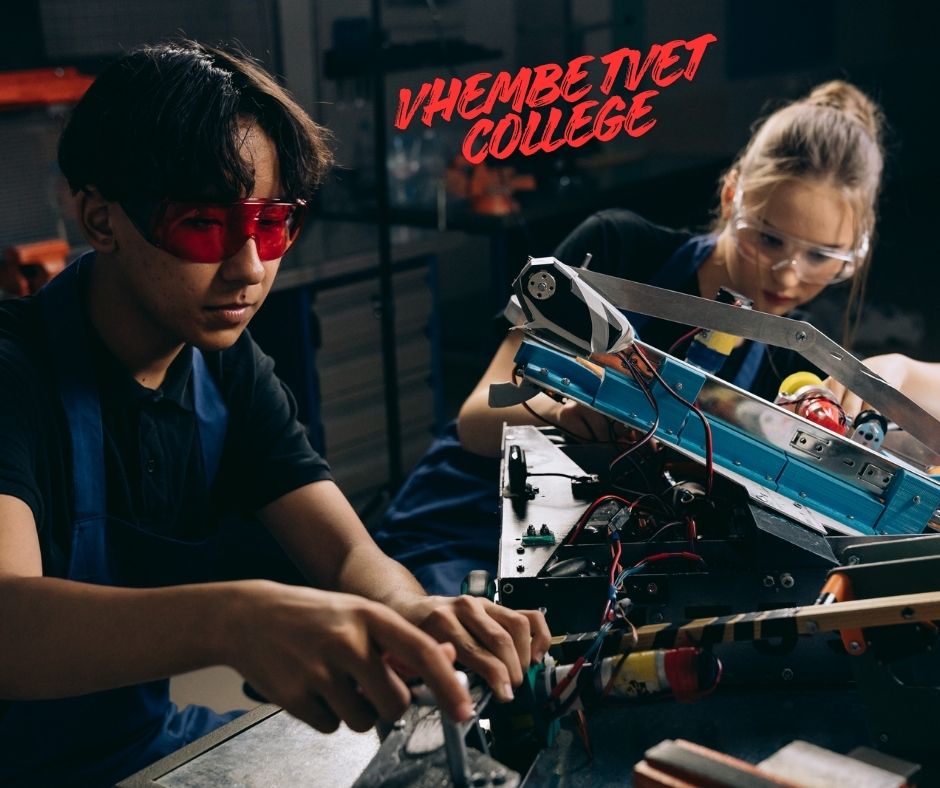
Vhembe TVET College is a public vocational institution operating seven campuses across the Vhembe District in Limpopo Province, South Africa.
The college was established in its current form in 2003 following the merger of technical colleges in the region. Vhembe TVET College serves Thulamela, Makhado, Collins Chabane, and Musina municipalities.
The National Department of Higher Education and Training (DHET) regulates the institution. The college received an unqualified audit opinion from the Auditor-General of South Africa in consecutive years. Ms. Basani R. Hlekane serves as Principal and CEO, receiving the TVET College Principal of the Year award in 2025.
The institution offers National Certificate Vocational (NCV) programmes, NATED Report 191 qualifications, and occupational certificates accredited by the Quality Council for Trades and Occupations (QCTO). Campus locations include Makwarela, Tshisimani, Mashamba, Mavhoi, Thengwe, Shingwedzi, and Musina.
The central office operates from Sibasa, approximately 2 kilometers from Makwarela Campus. Students access the online application system through the MyAccess portal at ienabler.vhembecollege.edu.za.
Table of Contents
About Vhembe TVET College — History, Mission & Accreditation
Vhembe TVET College evolved from Bantu State School (1963) through multiple institutional changes to become a comprehensive vocational education provider in 2003. The institution operated as Bantu Trade School (1967), Finyazwanda College (1985), Technical College of Venda/Techniven (1992-2003), and Vhembe FET College (2003-2014). The college adopted its current name in 2014 following national policy changes in technical and vocational education terminology.
The College Council provides governance and strategic oversight. Dr. TI Ravhura chairs the council, supported by Deputy Chairperson Ms. T Monare and Secretary Mr. MV Ramarumo. The council comprises 16 members, including academic experts, industry representatives, and student representatives.
Ms. M Booi serves as Deputy Principal for Corporate Services, Mr. MS Ramulifho holds the Deputy Principal position for Academic Support, and Mr. KA Rabothatha manages finance operations.
Vision and Strategic Goals
The college vision centers on becoming the leading provider of quality-assured and responsive skills-based programmes for lifelong learning. The mission statement commits to excellence in teaching, learning, management, and governance. Five core values guide operations:
| Value | Definition |
|---|---|
| Excellence | Continuous improvement in processes supporting creative pursuit of new ideas |
| Commitment | Dedication to student success, diversity, and global competitiveness |
| Trust | Honesty, integrity, and fairness in all operations |
| Respect | Safe, cooperative environment with open communication |
| Accountability | Responsible use of entrusted resources |
| Collaboration | Partnerships with business, government, and communities |
The college implements four strategic goals aligned with DHET national objectives. Strategic Goal 1 focuses on increasing skilled youth enrollment to 35,003 students through infrastructure expansion. Strategic Goal 2 emphasizes lecturer training in teaching methodologies and workplace exposure. Strategic Goal 3 targets increasing graduates entering employment through employer relationships. Strategic Goal 4 develops a market-responsive curriculum with emphasis on artisan training.
Accreditation and Quality Assurance
The Quality Council for Trades and Occupations (QCTO) accredits 13 occupational programmes offered by Vhembe TVET College. The DHET maintains regulatory oversight of all National Certificate Vocational and NATED programmes. The college achieved unqualified audit opinions from the Auditor-General of South Africa for consecutive financial years, demonstrating strong financial management and governance compliance.
Vhembe TVET College Courses — NCV, NATED & Occupational Programmes
Vhembe TVET College offers three qualification types: National Certificate Vocational (NCV) Levels 2-4, NATED Report 191 programmes (N1-N6), and occupational certificates.
NCV qualifications require 36 months of study combining classroom instruction with Work Integrated Learning (WIL). NATED programmes follow a modular structure, allowing subject-by-subject completion over 18-24 months. Occupational programmes deliver short-course training in specific trade skills.
National Certificate Vocational (NCV) Programmes
NCV programmes span three academic years (Levels 2, 3, and 4) and integrate theoretical learning with practical workplace experience. Students complete vocational subjects, fundamental subjects (Mathematics/Mathematical Literacy, Language, Life Orientation), and WIL placements. The college offers NCV qualifications in the following fields:
Business Studies:
- Finance, Economics, and Accounting (FEA)
- Generic Management
- Marketing Management
- Office Administration
Engineering Studies:
- Civil Engineering and Building Construction
- Electrical Infrastructure Construction
- Engineering and Related Design
- Information Technology and Computer Science
Primary Industries:
- Primary Agriculture
- Process Plant Operations
Services:
- Hospitality Services
- Tourism
NCV graduates qualify for entry-level positions or can advance to higher certificates and diplomas at universities of technology. Employers recruit NCV Civil Engineering graduates for plumbing, masonry, and construction supervision roles. Electrical Infrastructure graduates enter positions in electrical installation, maintenance, and municipal infrastructure.
NATED Report 191 Programmes (N1-N6)
NATED qualifications use a subject-based modular system where students register for individual subjects and progress at their own pace. N1-N3 subjects provide foundational knowledge, while N4-N6 subjects offer advanced technical and business competencies. Students must complete N6 and 18 months of workplace experience (N6 Certificate + 18 months practical = National Diploma).
Business Studies (N4-N6):
- Business Management
- Financial Management
- Human Resource Management
- Marketing Management
- Management Assistant
- Public Management
- Farming Management
Engineering Studies (N1-N6):
- Chemical Engineering
- Civil Engineering
- Electrical Engineering
- Mechanical Engineering
Specialized Programmes:
- Clothing Production
- Hospitality Management
NATED N1-N3 subjects serve as entry points for students with Grade 9 qualifications. N4 entry requires a National Senior Certificate or N3 certificate. Engineering Studies NATED graduates progress to trade tests and professional registration with the Engineering Council of South Africa (ECSA). Business Studies graduates enter supervisory, administrative, and management positions across sectors.
Occupational Programmes and Skills Development
The Artisan and Skills Development Centre (ASDC) delivers occupational certificates and short courses lasting 4-12 months. The QCTO accredits occupational programmes, which include both theory and practical assessments. Short skills programmes target unemployed youth, employed workers seeking upskilling, and entrepreneurs.
Occupational Programmes Include:
- Welding (arc welding, gas welding)
- Fitting and Turning
- Electrotechnology
- Carpentry and Furniture Making
- Plumbing and Water Reticulation
- Bricklaying and Plastering
Short Skills Programmes:
- Basic Electricity
- Catering and Food Preparation
- End-User Computing
- Fashion Design and Clothing Production
- New Venture Creation (entrepreneurship)
- Project Management
- Road Works Construction
- Technical Drawing
- Tiling and Painting
The Entrepreneurship and Incubation Centre at Makwarela Campus provides business development support for students and graduates establishing small enterprises. The center offers mentorship, workspace, and connections to funding opportunities.
Work Integrated Learning (WIL) and Placements
All NCV and NATED programmes require workplace learning components to meet qualification requirements. Students complete WIL placements with registered employers in their field of study. The placements office coordinates employer partnerships and monitors student progress during workplace learning periods.
WIL placement durations vary by programme. NCV students complete structured workplace learning modules integrated throughout Level 2, Level 3, and Level 4. NATED students fulfill practical requirements after completing N6 theoretical subjects. The college maintains partnerships with employers in construction, manufacturing, hospitality, agriculture, and public sector entities.
Employers participating in WIL include Eskom (energy sector), local municipalities (civil infrastructure), Madzivhandila Agricultural College (agriculture), provincial government departments, and small-to-medium enterprises across the Vhembe District. Students receive logbooks to document workplace activities and competencies achieved.
Vhembe TVET College Campuses — Locations, Contact Details & Programmes
Vhembe TVET College operates seven campuses distributed across four municipalities in the Vhembe District. Each campus offers specific programmes based on regional economic needs and available infrastructure. Campus addresses, telephone numbers, and email contacts are published on the official college website.
| Campus | Municipality | Address | Telephone | Key Programmes | |
|---|---|---|---|---|---|
| Makwarela | Thulamela | Portion 15 of 278 Mphaphuli, Sibasa 0970 | +27 (0)15 963 3490 / 7100 | makwarela@vhembecollege.edu.za | NCV Business & Engineering, NATED N1-N6 Engineering & Business, Distance Learning |
| Tshisimani | Makhado | Stand 016 Luvhalani, Tshakhuma 0958 | +27 (0)15 581 6009 / 10 | tshisimani@vhembecollege.edu.za | NCV Business & Engineering, NATED N4-N6 Business, NATED N1-N6 Engineering |
| Mashamba | Makhado | Stand 19, Mashamba Village 0920 | +27 (0)15 873 7904 / 5 / 6 | mashamba@vhembecollege.edu.za | NCV Office Administration, Primary Agriculture, Tourism; NATED Farming Management |
| Mavhoi | Makhado | Plot 2769 Makongoza Biaba, Dzanini 0920 | +27 (0)15 963 7270 | mavhoi@vhembecollege.edu.za | NCV Office Administration, IT, Civil & Electrical Engineering; NATED Civil & Electrical N1-N6 |
| Thengwe | Thulamela | Stand 1000, Tshilamba Village 0970 | +27 (0)15 963 7258 | thengwe@vhembecollege.edu.za | NCV Office Administration, Civil Engineering; Skills programmes (artisan training) |
| Shingwedzi | Collins Chabane | 520 Madonsi Boltman, Malamulele 0982 | +27 (0)15 963 7000 | shingwedzi@vhembecollege.edu.za | NATED Business & Engineering; NCV programmes launching 2026 |
| Musina | Musina | 761 Whyte Road Extension 2, Musina 0900 | +27 (0)15 963 7000 | musina@vhembecollege.edu.za | NATED N1-N6 Engineering (Chemical, Civil, Electrical, Mechanical) |
Central Office:
Stand No. 203, Unit A, Sibasa 0970
Telephone: +27 (0)15 963 7000
Email: info@vhembecollege.edu.za
Postal: Private Bag X2136, Sibasa 0950
Note: Contact individual campuses directly for programme availability, campus tours, and admissions assistance. Campus operating hours are typically Monday to Friday, 07:30-16:00.
Makwarela Campus
Makwarela Campus is the oldest and largest campus, established in 1963 as the first technical college in the Vhembe region. The campus serves as the administrative hub and houses the Distance Learning Centre and Entrepreneurship and Incubation Centre. Located in Sibasa within the Thulamela Municipality, Makwarela offers the widest range of programmes, including both NCV and NATED qualifications.
The campus provides engineering workshops for practical training in electrical installation, civil construction, and mechanical systems. Business Studies facilities include computer laboratories for office administration and IT programmes, and hospitality training kitchens. Students access library resources, learner support services, and financial aid advice at Makwarela.
Makwarela Campus coordinates distance learning programmes for students unable to attend daily classes. The distance learning option offers NATED N4-N6 Business Studies (Human Resource Management, Public Management, Marketing Management) over 18 months. Distance learning students receive online and in-person lecturer support, study materials, and access to examination centers.
Tshisimani Campus
Tshisimani Campus operates from the former Tshisimani and Ramaano Colleges of Education campus in Tshakhuma village. The campus opened in 2011 to accommodate overflow enrollment from Makwarela and rapidly became the second-largest campus by student numbers. Mr. NZ Malitsha serves as Campus Manager following the leadership tenure of Mrs. Ruth Ndou (2011-2015).
Tshisimani specializes in Business Studies and Engineering Studies programmes. NCV offerings include Management, Marketing, Finance, Economics and Accounting, Office Administration, Tourism, Information Technology, Electrical Infrastructure Construction, and Engineering and Related Design. NATED programmes span N4-N6 Business Studies and N1-N6 Engineering Studies (Chemical, Mechanical).
The campus infrastructure includes dedicated ICT laboratories, engineering workshops with modern equipment, and business simulation facilities. Students benefit from proximity to Makhado town, providing access to work-integrated learning opportunities in retail, hospitality, manufacturing, and agriculture sectors.
Mashamba Campus
Mashamba Campus was established in the early 2000s to serve agricultural and rural development needs in the southern Vhembe District. The campus location in Mashamba village positions students near commercial farming operations, providing practical training opportunities in primary agriculture. Mr. NW Maumela has served as Campus Manager since 2007.
The campus focuses on Primary Agriculture NCV programmes, Office Administration, and Tourism. NATED offerings include Farming Management (N4-N6). The agricultural training facilities include demonstration plots, greenhouse structures, livestock handling facilities, and mechanization equipment.
Students learn crop production, animal husbandry, agricultural business management, and sustainable farming practices.
Tourism students at Mashamba benefit from the campus’s proximity to cultural heritage sites and eco-tourism destinations in the Vhembe region. The programme includes modules in tour guiding, hospitality operations, and tourism marketing.
Mavhoi Campus
Mavhoi Campus was established in 1983 to reduce enrollment pressure on the original Finyazwanda Technical College. The campus serves rural communities in the Dzanini area of Makhado Municipality. Mavhoi specializes in technical programmes with strong employer connections in construction and electrification projects.
NCV programmes include Office Administration, Information Technology and Computer Science, Civil Engineering, and Electrical Infrastructure Construction. NATED qualifications cover Civil Engineering and Electrical Engineering (N1-N6). The campus maintains workshops for practical training in electrical systems installation, building construction, surveying, and structural analysis.
Students complete work-integrated learning placements with construction companies, electrical contractors, municipal infrastructure departments, and consulting engineering firms operating in the Vhembe and broader Limpopo regions.
Thengwe Campus
Thengwe Campus opened as a satellite campus in 2011 and gained full campus status in 2016. Located in Tshilamba village near the town of Mutale, Thengwe serves remote rural communities in the Thulamela Municipality. The campus emphasizes skills development and short courses alongside select NCV and NATED programmes.
NCV offerings include Office Administration and Civil Engineering (specializing in plumbing). NATED programmes cover Farming Management and Clothing Production. The campus operates an extensive Skills Development Centre delivering short courses (4 months duration) in trades including carpentry, catering, electrical work, fashion design, plumbing, tiling, painting, and water reticulation.
Thengwe Campus also delivers learnership programmes (12 months) in Technical Support, End-User Computing, Primary Agriculture, and Building and Civil Construction for students with Grade 9 qualifications. The skills programmes target unemployed youth and workers requiring upskilling in construction, hospitality, and artisan trades.
Shingwedzi Campus
Shingwedzi Campus launched in December 2016 following the official opening by Minister Dr. Blade Nzimande. The campus occupies the former Shingwedzi College of Education buildings in Malamulele, serving the Collins Chabane Municipality. Shingwedzi addresses skills shortages in the eastern Vhembe region.
The campus offers NATED N4-N6 Business Studies (Financial Management, Business Management, Management Assistant) and NATED N1-N6 Engineering Studies. Engineering specializations include Civil Engineering (bricklaying focus) and Mechanical Engineering (motor mechanics focus). The campus facilities include automotive workshops, business computer labs, and construction training yards.
Shingwedzi’s location in Malamulele provides access to work placement opportunities in automotive repair, retail management, local government, and small enterprise sectors. The campus collaborates with the Collins Chabane Local Municipality on infrastructure projects requiring skilled artisans.
Musina Campus
Musina Campus was established and registered as a fully operational campus in 2019. Located on Whyte Road in Musina town near the South Africa-Zimbabwe border, the campus serves the Musina Local Municipality and surrounding mining areas. The campus occupies the former Gateway Primary School premises.
Musina Campus specializes in NATED N1-N6 Engineering Studies exclusively. Programme offerings include Chemical Engineering, Civil Engineering, Electrical Engineering, and Mechanical Engineering. The campus location supports partnerships with mining companies, processing plants, and industrial operations in the Musina-Makhado Special Economic Zone.
Engineering students at Musina complete workplace learning with employers in mineral processing, industrial maintenance, chemical plant operations, and mining support services. The campus infrastructure includes engineering laboratories, workshop facilities, and safety training areas aligned with mining industry standards.
Vhembe TVET College Fees, NSFAS Funding & Payment Options
Vhembe TVET College charges fees based on programme type, with NATED programmes billed per subject and NCV programmes charged annually or per programme. Exact fee amounts vary by qualification level and resource requirements. Students must confirm current fees through the official college fees schedule before registration. The college publishes fee information in the annual prospectus and on the Financial Aid page.
Fee Structure Overview
NATED Report 191 programmes typically charge per subject enrolled, while NCV programmes use annual or total programme fees. Subject-based charging allows NATED students to register for individual modules and spread costs across multiple semesters. NCV students pay for the entire academic year or level of study.
Fee components include:
- Tuition fees — covering instruction, assessments, and materials
- Registration fees — one-time administrative processing per academic year
- Examination fees — per subject for NATED; included in NCV tuition
- Practical fees — for programmes requiring specialized equipment or consumables
- Student services fees — supporting library, IT, and learner support
Students registered through the National Student Financial Aid Scheme (NSFAS) do not pay fees directly. NSFAS-approved students receive tuition coverage, prescribed textbooks, and learner support materials. Non-NSFAS students must pay fees according to the college payment schedules.
NSFAS Funding for TVET Students
Vhembe TVET College is an NSFAS-funded TVET college. The National Student Financial Aid Scheme (NSFAS) provides comprehensive funding for eligible TVET students covering tuition, registration, textbooks, and living allowances. NSFAS funding is means-tested, targeting students from households with a combined annual income below R350,000. South African citizens and permanent residents qualify for NSFAS applications.
NSFAS TVET Funding Coverage:
| Component | Coverage |
|---|---|
| Tuition fees | Full tuition costs paid directly to college |
| Registration fees | Included in tuition payment |
| Learning materials | Prescribed textbooks and study materials |
| Transport allowance | Up to R7,500 per year for qualifying students |
| Accommodation allowance | Up to R33,000 per year for students living away from home |
| Personal care allowance | R2,900 per year for toiletries and essentials |
Students must apply for NSFAS through the official NSFAS portal at www.nsfas.org.za. Application periods typically open in September for the following academic year. Required documents include:
- South African identity document
- Proof of household income (parents’ payslips, unemployment letters)
- Proof of residence
- Certified copies of Grade 9, 10, 11, or 12 results
After NSFAS approval, students complete college registration at their selected campus. The college’s Financial Aid office assists NSFAS students with registration procedures and monitors compliance with academic progress requirements. Students must maintain satisfactory academic performance to retain NSFAS funding in subsequent years.
Additional Bursaries and Funding Sources
Vhembe TVET College students access bursaries from Sector Education and Training Authorities (SETAs), government departments, and private companies. The college maintains partnerships with SSETA (Services SETA), PSETA (Public Service SETA), MQA (Mining Qualifications Authority), Bank SETA, Construction SETA, and Energy SETA for learnership and bursary funding.
The Gauteng City Region Academy (GCRA) offers bursaries to qualifying students from Gauteng Province studying at Vhembe TVET College. Provincial government departments, including the Limpopo Department of Economic Development, Environment and Tourism (LEDET), sponsor students in priority skills areas. Students should contact the college bursary office at their campus for current bursary opportunities and application deadlines.
Employer-sponsored students receive funding from their employers for programmes relevant to workplace skills development. Companies operating in the Vhembe District sponsor employees for upskilling in engineering, business management, and technical trades. The Skills Development Centre at Thengwe Campus coordinates short-course funding through SETA discretionary grants.
Payment Plans and Options
Students who do not qualify for NSFAS or bursaries can arrange payment plans through campus finance offices. The college accepts payment methods including electronic funds transfer (EFT), cash deposits at campus finance offices, and debit orders. Students making direct payments must settle fees according to published deadlines to avoid late registration penalties.
Payment plan arrangements allow students to pay fees in installments across the academic year. Students must apply for payment plans before registration and provide proof of income or sponsor commitments. The finance office issues payment schedules specifying installment amounts and due dates.
How to Apply to Vhembe TVET College — Online Application Process 2026
Vhembe TVET College accepts applications through the MyAccess online portal and in-person submissions at campus admissions offices. The online application system opens annually, with typical intake periods for a February start (applications in October-November) and a July mid-year intake (applications in April-May). Students must complete a pre-entry placement screening before submitting the online application form.
Step 1: Pre-Entry Placement Screening
All applicants must complete a compulsory pre-entry placement test through the MyAccess system before applying for programmes. The screening assessment evaluates academic readiness, career interests, and aptitude for different programme fields. The test takes approximately 30-45 minutes and covers numeracy, literacy, and vocational interest questions.
To begin screening:
- Visit ienabler.vhembecollege.edu.za
- Click “First Time Here?” button
- Create a MyAccess account with your email address and password
- Record your username and password securely
- Complete all assessments in the “Pre-Entry Information” folder
- Click “Finish” at the end of each assessment section
The system generates a placement report recommending programmes aligned with your results. Students retain the right to choose any programme regardless of screening recommendations, but must sign an acknowledgment form accepting responsibility for their choice. Save the placement report for reference during programme selection.
Step 2: Complete Online Application Form
After finishing the pre-entry screening, applicants proceed to the online application form through the MyAccess portal. The application form requires personal information, contact details, previous education records, programme selections, and campus preferences.
Application Form Requirements:
- Personal details — full names, identity number, date of birth, gender
- Contact information — physical address, postal address, cell phone, email
- Previous education — highest grade passed, year completed, school attended
- Programme selection — first choice and alternative programme, campus preference
- Intake year — 2026, February or July intake
Students applying for NCV Level 2 require a minimum of Grade 9 completion. NCV Level 3 entry requires NCV Level 2 or Grade 11 completion. NCV Level 4 entry requires NCV Level 3 or Grade 12 completion. NATED N1-N3 programmes require Grade 9 completion. NATED N4-N6 programmes require a Grade 12 National Senior Certificate or N3 completion.
Step 3: Upload Required Documents
Applicants must upload certified copies of supporting documents to complete the application submission. Documents must be in PDF or JPG format with file sizes under 5MB per document. Name files clearly (example: Surname_ID_Document.pdf, Surname_Grade12_Results.pdf).
Required documents:
- Certified copy of South African identity document or passport
- Certified copies of the highest academic results (Grade 9, 10, 11, or 12)
- Proof of residence (utility bill, affidavit, or municipal account)
- NSFAS approval letter (if applicable)
Document certification guidelines: Documents must be certified by a South African Police Service officer, Commissioner of Oaths, attorney, or magistrate within the past 6 months. Each page must bear the certifier’s stamp, signature, and date. Uncertified documents or unclear scans will delay application processing.
Common upload errors include:
- File size exceeding 5MB (compress large scans)
- Wrong file format (use only PDF or JPG)
- Uncertified documents (must have a certification stamp)
- Missing pages (ensure all pages of results are scanned)
Step 4: Submit Application and Note Reference Number
After uploading all documents, review the application form for accuracy and submit. The system generates a unique application reference number immediately upon submission. Write down this reference number and keep it secure—you will need it to check application status and for all communication with the admissions office.
Applicants receive an automated email confirming application submission to the email address provided during registration. If no confirmation email arrives within 24 hours, check spam folders or contact the campus admissions office to verify submission.
Application Status Checking
Students check application status by logging into the MyAccess portal using their username and application reference number. The application dashboard displays current status: “Received,” “Under Review,” “Conditionally Accepted,” “Accepted,” or “Not Accepted.” Processing times vary but typically take 2-6 weeks after the application closing date.
Status updates include:
- Received — application submitted and documents under verification
- Under Review — admissions committee evaluating application
- Conditionally Accepted — provisionally accepted pending document verification or test results
- Accepted — formal acceptance issued; student must register
- Not Accepted — application unsuccessful; letter explains reasons
Accepted students receive registration instructions via email and SMS. Registration periods are specified in acceptance letters and typically occur 2-4 weeks before the academic term starts. Students must complete in-person registration at their allocated campus, bringing original identity documents and original certified copies of academic results.
On-Site Application Assistance
Applicants experiencing technical difficulties with online applications can book on-site assistance at campus admissions offices. Contact the campus directly to schedule an appointment. Bring all required documents (original identity document, certified copies of results, proof of residence) to the appointment.
Campus admissions staff provide:
- Assistance with MyAccess registration
- Guidance on document uploads and formatting
- Programme selection counseling based on career goals
- Answers to questions about entry requirements and fees
Students without reliable internet access or personal computers should use on-site assistance rather than attempting applications from internet cafes, where the security of personal information cannot be guaranteed.
Student Support Services at Vhembe TVET College
Vhembe TVET College provides academic support, financial aid guidance, counseling, library services, and disability accommodations through Student Support Services departments at each campus. Support services aim to assist students in overcoming barriers to learning and achieving qualification completion. All enrolled students have access to support services at no additional cost.
Academic Support and Learner Development
Student Support Services coordinates tutoring, supplementary instruction, and academic skills development programmes. Students struggling with specific subjects can request individual or group tutoring from senior students or qualified tutors. Supplementary classes operate outside regular lecture hours for subjects with high failure rates or complex content.
Academic support includes:
- Study skills workshops (time management, note-taking, exam preparation)
- Mathematics and science support sessions
- Language and communication skills development
- Computer literacy training for students lacking prior ICT exposure
- Test anxiety management and exam techniques
Lecturers refer students requiring additional support to the Student Support office. Students can also self-refer by visiting the office or emailing student support contacts listed on campus noticeboards.
Financial Aid and Bursary Assistance
Campus financial aid advisors assist students with NSFAS applications, bursary searches, and financial problem-solving. Advisors help students complete NSFAS forms correctly, gather required documentation, and understand funding conditions. The office maintains current information on external bursaries, SETA funding, and employer sponsorships.
Students experiencing financial hardship during the academic year can consult financial aid advisors for emergency support options. The college operates emergency funds for students facing urgent crises (transport costs to reach campus, food insecurity, medical emergencies). Advisors connect students with social workers and community resources when college funds are insufficient.
Counseling and Personal Support
Qualified counselors provide confidential personal, academic, and career counseling to students. Counseling services address stress, anxiety, relationship problems, family issues, academic pressure, and career uncertainty. Students access counseling by appointment or walk-in during office hours.
Counselors offer:
- Individual counseling sessions (typically 6-8 sessions per issue)
- Crisis intervention for urgent mental health concerns
- Referrals to external mental health professionals and clinics
- Support groups for specific issues (exam stress, first-generation students)
- Career guidance and post-graduation planning
All counseling interactions remain confidential except where legal obligations require reporting (child abuse, imminent harm to self or others). Counselors do not share information with lecturers, parents, or administrators without written student consent.
Library and Learning Resources
Campus libraries provide textbooks, reference materials, computers, internet access, and study spaces. Students borrow prescribed textbooks for the duration of the semester or year. Reference books, past examination papers, and study guides are available for in-library use. Computer workstations allow students without personal devices to complete assignments and access online learning resources.
Library services include:
- Prescribed textbook lending (NSFAS students receive free textbooks)
- Reference collection for research and assignment preparation
- Computer and internet access during library hours
- Printing and photocopying services (nominal fees)
- Quiet study areas and group work spaces
- Information literacy training (how to research and cite sources)
Library operating hours typically extend from 08:00 to 17:00 on weekdays. Extended hours operate during examination periods. Students requiring after-hours library access should inquire at their campus library about evening and weekend arrangements.
Disability Support and Accommodations
Students with disabilities receive reasonable accommodations to ensure equal access to education. The Disability Support office works with students to identify barriers and implement accommodations such as extended test time, assistive technology, note-taking assistance, accessible classrooms, and alternative assessment formats.
Students requiring disability support must register with the Disability Support office and provide medical documentation of their condition. Common accommodations include:
- Extra time (25%-50%) for tests and examinations
- Separate examination venues with reduced distractions
- Assistive software (screen readers, speech-to-text, magnification)
- Sign language interpretation for deaf students
- Alternative format materials (large print, digital text, audio)
- Physical accessibility (ramps, accessible restrooms, reserved parking)
Disability support staff liaise with lecturers to implement accommodations while maintaining academic standards. Accommodations are individualized based on the student’s specific needs and the course requirements.
Work Integrated Learning (WIL) and Graduate Placement Support
All NCV and NATED students must complete Work Integrated Learning to qualify for certification. The WIL and Placements Office manages employer partnerships, student placement arrangements, workplace monitoring, and graduate employment linkages. WIL periods range from block placements (2-6 weeks) to semester-long attachments, depending on programme requirements.
WIL Requirements by Programme Type
NCV students complete structured workplace learning modules integrated throughout Level 2, Level 3, and Level 4. Each NCV level includes a workplace learning module requiring students to demonstrate vocational competencies in real work environments. Students log hours and tasks completed, receiving assessments from workplace supervisors and college lecturers.
NATED students complete practical experience after finishing N6 theoretical subjects. Engineering Studies students require 18-24 months of practical experience in approved workplaces to qualify for National Diplomas. Business Studies students complete shorter practical components (3-6 months) depending on specialization.
Employer Partnerships and Placement Process
Vhembe TVET College maintains memoranda of understanding with employers across construction, manufacturing, hospitality, agriculture, retail, and public sectors. Partner organizations agree to host students for WIL, provide workplace mentorship, and assess student competencies. Current partnerships include:
- Energy sector — Eskom (electrical and mechanical engineering placements)
- Public sector — Thulamela, Makhado, Collins Chabane, and Musina municipalities (civil engineering, office administration)
- Agriculture — Madzivhandila Agricultural College, commercial farms (primary agriculture, farming management)
- Hospitality — Hotels, restaurants, catering companies (hospitality services, tourism)
- Construction — Building contractors, civil engineering firms (civil engineering, building construction)
- Small business — Retail stores, IT services, accounting practices (office administration, business management)
The Placements Office coordinates student allocations to employers based on programme requirements, geographic proximity, and available positions. Students submit WIL preferences indicating employer types and locations. The office matches students with placements and facilitates introductions.
Student Responsibilities During WIL
Students completing WIL must comply with workplace policies, professional conduct standards, and college assessment requirements. Workplace supervisors evaluate students on technical skills, work ethic, punctuality, communication, and problem-solving. Poor performance or misconduct during WIL can result in dismissal from the placement and failure of the WIL module.
Student WIL responsibilities include:
- Reporting to placements on scheduled dates and times
- Dressing appropriately and following workplace dress codes
- Completing assigned tasks with diligence and professionalism
- Maintaining logbooks documenting daily activities and learning
- Attending college monitoring visits and providing progress updates
- Submitting workplace assessment forms signed by supervisors
- Completing WIL portfolios demonstrating competency achievement
Students experiencing problems at placements (harassment, unsafe conditions, inadequate learning opportunities) must report issues to the WIL coordinator immediately. The college will investigate and, if necessary, relocate students to alternative placements.
Graduate Employment Support
The Placements Office assists graduates seeking employment through job vacancy notifications, CV development, interview preparation, and employer referrals. Many WIL host employers offer permanent positions to high-performing students after qualification completion. Graduates should register with the Placements Office to receive job alerts and placement support.
Employment support services include:
- Job vacancy database updated weekly with advertised positions
- CV writing workshops and individual CV review
- Mock interviews and interview technique coaching
- Professional reference letters confirming qualifications and workplace learning completion
- Employer referrals for graduates demonstrating exceptional performance
Graduates advancing to higher education receive articulation guidance. The college maintains a Memorandum of Understanding with the University of Venda (UNIVEN), facilitating student progression from TVET diplomas to university degrees. Students completing NCV Level 4 or NATED N6 can apply for admission to higher certificates and bachelor’s degrees at universities of technology.
Vhembe TVET College Graduate Outcomes and Career Pathways
Vhembe TVET College graduates enter employment in technical, supervisory, and management positions across sectors, including construction, engineering, hospitality, agriculture, and business services. Graduate outcomes vary by programme and economic conditions. The college tracks graduate employment through tracer studies and employer feedback.
Engineering Studies Outcomes
NCV Civil Engineering and Building Construction graduates secure positions as construction supervisors, site managers, quantity surveyors, and artisan assistants. Typical employers include construction companies, civil engineering consulting firms, municipal infrastructure departments, and property development companies. Starting salaries range from R8,000-R15,000 per month for entry-level positions.
NATED Civil Engineering diploma holders (N6 + 18 months practical) advance to junior engineer, estimator, project coordinator, and contract administrator roles. Professional registration with the Engineering Council of South Africa (ECSA) as a candidate engineer requires holding a National Diploma and completing mentorship under a professional engineer.
NCV and NATED Electrical Infrastructure graduates work as electrical technicians, electricians, maintenance supervisors, and electrical draughtspersons. Employers include Eskom, private electrical contracting companies, manufacturing plants, mines, and municipalities. Electrical diploma holders can pursue professional registration as candidate engineering technicians with ECSA.
Mechanical Engineering graduates enter automotive repair, industrial maintenance, manufacturing, and equipment servicing sectors. Chemical Engineering graduates find opportunities in mining, mineral processing, water treatment, and industrial chemistry. Process Plant Operations graduates work in refineries, power stations, and manufacturing facilities operating complex industrial systems.
Business Studies Outcomes
Business Management and Financial Management graduates enter supervisory and administrative roles in retail, banking, insurance, and public sector organizations. Positions include junior accountant, financial administrator, bookkeeper, office manager, operations supervisor, and management trainee. Entry-level salaries typically range from R6,000-R12,000 per month.
Human Resource Management graduates work in HR departments as HR assistants, recruitment coordinators, training officers, and employee relations specialists. Public Management graduates enter local government, provincial departments, and public entities as administration officers, project coordinators, and assistant managers.
Marketing Management graduates secure positions in sales, customer service, brand promotion, digital marketing, and market research. Office Administration graduates fill receptionist, secretary, personal assistant, and administrative coordinator roles across all industries.
Hospitality and Tourism Outcomes
Hospitality Services graduates work in hotels, restaurants, catering companies, and event management businesses. Positions include chef, sous chef, front office supervisor, guest relations coordinator, and food and beverage manager. Tourism graduates become tour guides, travel consultants, tourist information officers, and destination marketing officers. The Vhembe region’s tourism industry (game reserves, cultural sites, border posts) provides significant graduate employment opportunities.
Agriculture Outcomes
Primary Agriculture graduates enter farming operations as farm supervisors, agricultural extension officers, produce managers, and agri-business entrepreneurs. Farming Management graduates work in commercial agriculture, agricultural cooperatives, seed and fertilizer companies, and agricultural finance institutions. The Vhembe District’s agricultural economy (subtropical fruit, vegetables, livestock) creates demand for qualified agricultural technicians.
Artisan and Skills Programme Outcomes
Occupational certificate holders and skills programme completers enter artisan trades as qualified workers or establish small enterprises. Welders, plumbers, electricians, carpenters, and fitters with occupational certificates work for construction companies, maintenance contractors, or operate as self-employed tradespeople. The Entrepreneurship and Incubation Centre supports graduates establishing small businesses, providing business mentorship and connections to funding opportunities.
Frequently Asked Questions — Vhembe TVET College 2026
How do I apply to Vhembe TVET College online?
Create a MyAccess account at ienabler.vhembecollege.edu.za, complete the pre-entry placement test, then fill out the online application form and upload certified documents. Save your application reference number for status checking.
What documents do I need for the Vhembe TVET College application?
Upload certified copies of your South African ID or passport, your highest school results (Grade 9-12), and proof of residence. Documents must be certified within the past 6 months and in PDF or JPG format under 5MB.
When does Vhembe TVET College open applications for 2026?
Applications for the February 2026 intake typically open in October 2025 and close in November 2025. Mid-year July 2026 intake applications open in April 2026. Check the college website for exact dates.
Does Vhembe TVET College accept NSFAS funding?
Yes, Vhembe TVET College accepts NSFAS for eligible students. Apply for NSFAS at www.nsfas.org.za, then register at the college after receiving NSFAS approval.
What are the entry requirements for NCV programmes?
NCV Level 2 requires Grade 9 completion, NCV Level 3 requires NCV Level 2 or Grade 11, and NCV Level 4 requires NCV Level 3 or Grade 12. The age requirement is typically under 23 years for first-time NCV Level 2 students.
How much are Vhembe TVET College fees?
Fees vary by programme type. NATED programmes charge per subject (typically R600-R1,200 per subject per semester). NCV programmes charge annual fees (approximately R8,000-R15,000 per year). NSFAS-funded students pay no fees.
How long do Vhembe TVET College programmes take?
NCV programmes require 3 years (36 months) for Levels 2-4. NATED N1-N6 takes 18-24 months, depending on subject load. Occupational programmes range from 4 to 12 months. Add 18 months of practical experience for NATED National Diplomas.
Where is Vhembe TVET College Makwarela Campus located?
Makwarela Campus is at Portion 15 of 278 Mphaphuli, Sibasa 0970 in Thulamela Municipality. Contact +27 (0)15 963 3490 or makwarela@vhembecollege.edu.za. The campus is approximately 2 kilometers from the central office in Sibasa.
How do I check my Vhembe TVET College application status?
Log into MyAccess portal at ienabler.vhembecollege.edu.za using your username and application reference number. The dashboard displays your application status. Allow 2-6 weeks after the closing date for processing.
Can I study part-time or via distance learning at Vhembe TVET College?
Yes, distance learning options are available for NATED N4-N6 Business Studies programmes through Makwarela Campus. Distance learning suits working students and those unable to attend daily classes. Contact +27 (0)15 963 7000 for distance learning information.
Contact Vhembe TVET College — Apply Online and Download Resources
Start your application at the MyAccess portal: ienabler.vhembecollege.edu.za. New applicants click “First Time Here?” to create an account and begin the pre-entry placement test. Returning users log in with existing credentials to check application status or complete pending applications.
Download the 2025/2026 prospectus PDF from www.vhembecollege.edu.za for complete programme lists, entry requirements, and campus information. The prospectus includes module descriptions, assessment methods, and qualification pathways for all NCV, NATED, and occupational programmes.
Contact the Central Office for general inquiries:
Telephone: +27 (0)15 963 7000
Email: info@vhembecollege.edu.za
Address: Stand No. 203, Unit A, Sibasa 0970, Limpopo
Postal: Private Bag X2136, Sibasa 0950
Campus-specific inquiries, including programme availability, registration assistance, and campus tours, should be directed to individual campus contacts listed in the campus directory table above. Campus admissions offices operate Monday to Friday from 07:30 to 16:00.
For NSFAS application support, visit www.nsfas.org.za or contact campus financial aid offices. The college’s Financial Aid department provides assistance with NSFAS applications, bursary searches, and financial planning for students and parents.
Official Resources:
- College website: www.vhembecollege.edu.za
- MyAccess portal: ienabler.vhembecollege.edu.za
- Prospectus PDF: www.vhembecollege.edu.za/wp-content/uploads/2023/08/Prospectus.pdf
- Online Applications: www.vhembecollege.edu.za/online-application
- Campus Directory: www.vhembecollege.edu.za/our-campuses
- Courses List: www.vhembecollege.edu.za/academic/courses
- NSFAS TVET Information: www.nsfas.org.za/content/TVETs.html
Leave a Reply