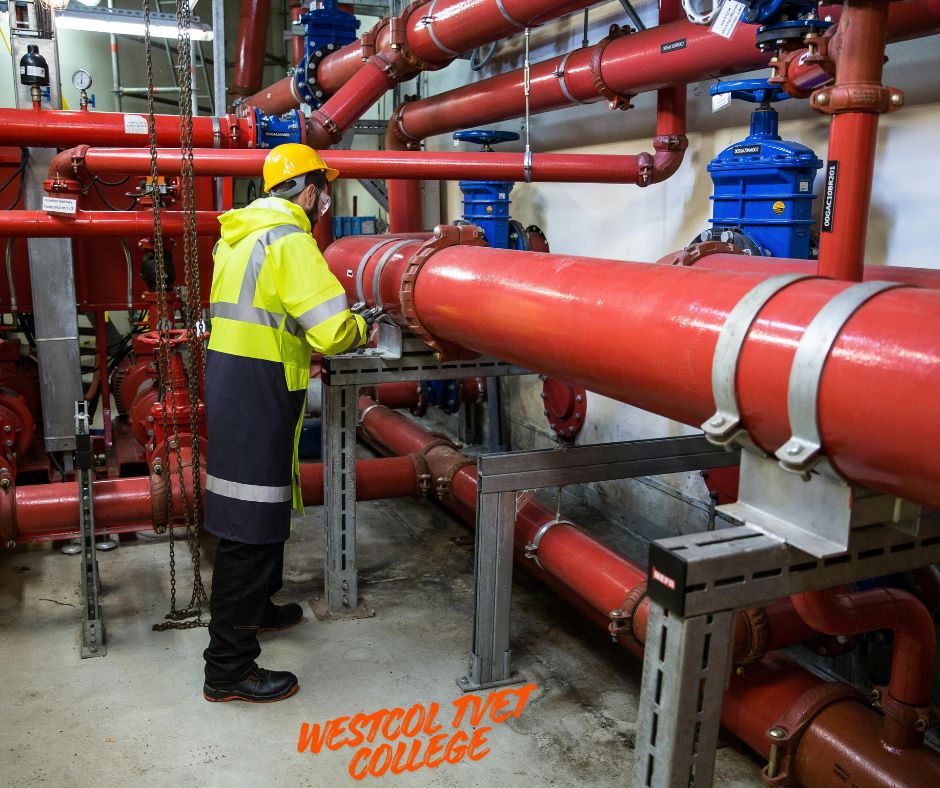
Westcol TVET College stands as one of Gauteng’s leading technical and vocational education institutions, serving students across the West Rand region with practical, career-focused programmes.
Whether you’re looking to launch your career through hands-on training or seeking an alternative pathway to traditional university education, Westcol offers nationally recognized qualifications that connect directly to workplace opportunities.
This comprehensive guide covers everything you need to know about applying, studying, and succeeding at Westcol TVET College.
Table of Contents
About Westcol TVET College
Western TVET College (Westcol) operates as one of 50 public TVET colleges under South Africa’s Department of Higher Education and Training, established through the Continuous Education and Training Act 16 of 2006. The college came into being in 2002 when Carletonville and Randfontein Technical Colleges merged, creating a unified institution focused on vocational excellence.
Vision: To be your innovative and holistic partner in lifelong learning
Mission: To provide relevant and accessible quality education, training, and development opportunities through innovative teamwork that benefits students, communities, and the country
The college’s journey reflects steady expansion and commitment to the West Rand community:
2002: Westcol was established through the merger of Carletonville and Randfontein Technical Colleges
2004: Acquired Krugersdorp and Krugersdorp-West campuses
2004-2008: Carletonville Campus temporarily ceded to the Northwest province during provincial border changes
2008: Carletonville Campus returned when Merafong Municipality rejoined Gauteng; the Corporate office building was acquired
2015: Westonaria satellite campus established
Today, Westcol proudly serves students through 5 campuses across Gauteng, offering 15+ vocational programmes backed by 25+ years of technical education experience.
Westcol TVET College Campuses & Locations
Understanding where Westcol TVET College is located helps you choose the right campus for your studies. Each campus offers specific programmes and facilities tailored to regional needs.
The Randfontein campus hosts core engineering and technical workshops with well-maintained facilities for practical sessions. This campus is home to specialized programmes, including:
Engineering and Related Design
Welding
Automotive Repair and Maintenance
Occupational Certificate in Hairdressing (only campus offering this programme)
Krugersdorp campus focuses on business, hospitality, and computer application training with dedicated classroom and laboratory resources. Popular programmes include Finance, Economics, and Accounting, Office Administration, and Hospitality.
Carletonville campus offers community-facing programmes, including Engineering Fabrication and various NC(V) options. The campus serves the Merafong Municipality area with both full-time and short skills courses.
Established in 2015, this satellite campus provides community access to occupational skills and selected NC(V) programmes, with a focus on serving local residents who need convenient training options.
Campus Programme Allocation Matrix
Programme
Randfontein
Krugersdorp
Krugersdorp West
Carletonville
Westonaria
Electrical Infrastructure Construction
✓
Engineering & Related Design
✓
✓
✓
Finance Economics & Accounting
✓
Hospitality
✓
Marketing
✓
Office Administration
✓
✓
✓
Tourism
✓
Hairdressing (Occupational)
✓
Important: Always verify programme availability at your preferred campus before applying, as Westcol reserves the right to adjust offerings based on student numbers and resource availability.
Westcol TVET College Courses & Programmes
Westcol offers three main qualification pathways, each designed to meet different career goals and educational backgrounds.
National Certificate (Vocational) – NC(V) Levels 2 to 4
NC(V) programmes provide a three-year vocational pathway equivalent to Grades 10-12, with Level 4 equal to a National Senior Certificate (Grade 12). Each level takes one full year to complete.
Duration: 1 year per level (3 years total) Intake: January only Mode: Full-time only
NC(V) Programme Structure
All NC(V) programmes include:
3 Fundamental Subjects: English First Additional Language, Mathematics or Mathematical Literacy, Life Orientation
4 Vocational Subjects: Specific to your field of study
Available NC(V) Fields of Study
1. Electrical Infrastructure Construction
Prepares students for careers in electrical installation, maintenance, and power systems.
Vocational Subjects (All Levels):
Electrical Principles and Practice
Workshop Practice
Electronic Control and Digital Electronics
Electrical Systems and Construction or Physical Science
Career Paths: Electrician, Electrical Technician at telecommunications companies, Power station work, Theatre technician, Sound technology, Process level control
2. Engineering and Related Design
Comprehensive engineering training with campus-specific specializations.
Practical training for tourism and food service industries.
Vocational Subjects (All Levels):
Hospitality Generics
Food Preparation
Client Service and Human Relations
Hospitality Services
Career Paths: Hotel management, Chef/cook, Food and beverage management, Housekeeping supervisor, Events management, Guest house management
6. Marketing
Consumer-focused programme covering advertising, promotion, and sales.
Vocational Subjects (All Levels):
Marketing
Advertising and Promotion
Marketing Communication
Consumer Behaviour
Career Paths: Marketing coordinator, Sales representative, Brand management, Market research, Product development, Public relations, Customer relations, Purchasing management
7. Office Administration
Administrative skills for business environments.
Vocational Subjects (All Levels):
Business Practice
Office Practice
Office Data Processing
New Venture Creation or Applied Accounting (Carletonville and Krugersdorp only)
Career Paths: Accounts officer, Bookkeeper, Administration officer, Company secretary, Legal secretary, Hospital administration, Freight forwarder
8. Tourism
Tourism industry training with a South African focus.
Vocational Subjects (All Levels):
Science of Tourism
Sustainable Tourism in South Africa
Client Service and Human Relations
Tourism Operations
Career Paths: Tour guide, Tourism development officer, Transportation manager, Travel counsellor, Game ranger, Adventure guide, Safari operator, Conference and events planner
NC(V) Entry Requirements
For Technical Programmes (Electrical Infrastructure Construction, Engineering and Related Design, Finance, Economics and Accounting):
Minimum qualification plus specified academic performance:
Grade 9: 50% in Mathematics/Mathematical Literacy and English FAL, or APS of 24 (best six subjects including Maths and English)
Grade 10: APS of 22 (best six subjects including Maths and English)
Grade 11: APS of 20 (best six subjects including Maths and English)
Grade 12: APS of 18 (best six subjects including Maths and English)
PLP Certificate: 50% in English and Life Orientation, 60% in Mathematics and Foundational Science
AET Level 4 (GETC): 50% in Mathematics/Mathematical Literacy and English FAL
For Business & Service Programmes (Hospitality, Marketing, Office Administration, Tourism):
Grade 9: 50% in English FAL, or APS of 24 (best five subjects plus English)
Grade 10: APS of 22 (best five subjects including English)
Grade 11: APS of 20 (best five subjects including English)
Grade 12/NC(V): APS of 18 (best five subjects including English)
PLP Certificate: 50% in English and Life Orientation, 60% in Mathematics/Mathematical Literacy, and Foundational Science
AET Level 4: 50% in English FAL
Report 191 (NATED) Programmes N4 – N6
NATED programmes offer technical diplomas that prepare learners for trade pathways and articulation to higher certificates. These semester-based programmes are flexible for working learners.
Duration: Varies by subject load Intake: Contact campus for specific dates Mode: Full-time and part-time options available
Available NATED Programmes
Tourism N4, N5, N6
N4: 5 subjects, including Computer Practice
N5 & N6: 4 subjects per level
Hospitality and Catering Services (Introductory Certificate N4)
Career Outcome: Qualified hairdresser ready for salon employment or business ownership after completing the trade test
Short Skills Programmes
Westcol offers community-facing short courses covering:
Welding basics
Electrical fundamentals
Plumbing
Computer literacy
Entrepreneurship
Many short programmes include workplace-integrated learning components. Contact your nearest campus for current offerings, duration, and fees.
Westcol TVET College Online Application 2026
Applying to Westcol requires completing both career guidance screening and the formal application. The process is entirely online, though campus assistance is available.
How to Apply at Westcol TVET College: Step-by-Step
Step 1: Watch the Application Tutorial
Before starting, watch the Westcol official video guide on the Westcol website to understand the complete process.
Step 2: Create Your Profile
Visit www.westcol.co.za and click “Online Application.”
Click the “First Time Here?” button
Choose a memorable USERNAME and PASSWORD (you’ll need this throughout your studies)
Verify your email address
Save your login credentials securely
Important: Your username and password provide access to all platforms, including the student portal for status checks, so choose something you’ll remember.
Step 3: Complete Career Guidance (Compulsory)
Navigate to “Pre-Entry Information” and complete all screening batteries:
Career interest assessment
Aptitude evaluation
Course recommendation tool
Why this matters: The career guidance helps match you to suitable programmes. While you retain the right to choose your own course, the assessment provides valuable insights. Complete honesty—letting someone else do this will result in wrong course recommendations.
You can save progress and return later using your username and password.
Results help provide academic support throughout your studies
You’ll receive SMS/email reminders until completion
Step 5: Submit Online Application
Log in to your profile
Complete the application form
Select your preferred programme and campus
Upload required documents in PDF format:
South African ID or Smart ID card
Proof of residence (utility bill, bank statement)
Certified school results (not older than 6 months)
Name each file clearly with the document type and ID number
Ensure scans are legible and under size limits
Click SUBMIT
Record your application reference number
Save the confirmation email
Troubleshooting Upload Issues:
Compress large files to PDF
Check file format (must be PDF)
Ensure documents are clear and legible
Visit a campus registration desk for assisted submission if problems persist
Step 6: Check Application Status
After the application closing date:
Log in to the Westcol TVET College student portal using your username and password
Check for placement notifications via SMS and email
Do NOT expect responses before the closing date
Westcol TVET College Application Dates
Application windows open annually, typically in August/September for the following year’s January intake.
Critical Dates to Remember:
Action
Timing
Applications Open
August/September annually
Applications Close
Check official website
Responses Sent
After closing date only
Registration
January for successful applicants
Classes Commence
Mid-January
Important Notes:
Responses are only sent after the closing date
Westcol processes large application volumes—be patient
Subscribe to campus notifications for verified date updates
Some programmes accept late applications if spaces remain—contact admissions to confirm
Always verify dates on the official Westcol website before applying
Westcol TVET College Status Check
How to Check Your Application Status:
Visit the Westcol TVET College login page
Enter your username and password
Navigate to the student portal dashboard
View your application status
Status Definitions:
Pending: Application received, under review
Provisionally Accepted: Offer made, subject to document verification
Accepted: Full acceptance confirmed
Rejected: Application unsuccessful
If your status doesn’t change or you need clarification, email admissions@westcol.co.za (example address) with your application reference number in the subject line.
Late Applications & Walk-In Registration
If you miss the main application period:
Visit your preferred campus in person
Request to be added to the walk-in register
Campus staff will record your details
Walk-in applicants are processed only if registration spaces remain available
Note: Priority goes to on-time applicants, so apply during the official window whenever possible.
Required Documents Checklist
Ensure you have these documents ready before applying:
[ ] Clear copy of South African ID or Smart ID card
[ ] Proof of residence (not older than 3 months)
[ ] Certified school results or statement (certified within 6 months)
[ ] Email address for correspondence
[ ] Working cell phone number
Document Tips:
Scan documents at high resolution for clarity
Save as PDF format only
Name files clearly: “ID_YourIDNumber.pdf”, “Results_YourIDNumber.pdf”
Keep physical copies of all certified documents
Write your ID number on every page of supporting documents
Westcol TVET College Tuition Fees 2026
Westcol operates a cash-free system. All fees must be deposited directly into ABSA Bank. The college does not charge application or registration fees.
Important: Parents/guardians/students are responsible for fee payment until NSFAS or other bursaries are confirmed and paid to Westcol. If you receive funding, paid fees will be refunded.
NC(V) Programme Fees (Levels 2-4)
Fees include administration, tuition, training materials, and examination entry. Textbook costs are included.
NC(V) Fees by Programme
Programme
Cash Price
Payment Plan
Engineering and Related Design
R21,626.00
Deposit: 8 × R2,450.00 Final: 1 × R2,026.00
Hospitality
R20,584.00
Deposit: 8 × R2,290.00 Final: 1 × R2,264.00
Information Technology (Robotics)
R16,678.00
Deposit: 8 × R1,855.00 Final: 1 × R1,863.00
Tourism
R15,850.00
Deposit: 8 × R1,770.00 Final: 1 × R4,690.00
Finance Economics and Accounting
R12,176.00
Deposit: 8 × R1,350.00 Final: 1 × R1,376.00
Finance, Economics, and Accounting
R10,922.00
Deposit: 8 × R1,215.00 Final: 1 × R1,202.00
Office Administration
R10,886.00
Deposit: 8 × R1,200.00 Final: 1 × R1,286.00
NC(V) Subject Breakdown:
Fundamental subjects: R1,562.00 per subject × 3 = R4,686.00
Vocational subjects: Varies by programme (see table above)
Fees include administration, tuition, training materials, external assessment, hairdressing kit, uniforms, and excursions/competitions.
Year
Level
Cash Price
Payment Options
Year 1
Level 2
R12,015.00
Deposit: R4,000.00 7 × R1,145.00
Year 2
Level 3
R10,259.00
Deposit: R4,000.00 7 × R800.00<br>1 × R660.00
Year 3
Level 4
R12,323.00
Deposit: R4,000.00 7 × R1,000.00 1 × R1,223.00
Examination-Only Registration
If you need to write exams only: R500.00 per subject (cash only)
Note: Examination-only registration is not available through the online portal. Visit your campus to facilitate this registration.
Pre-Vocational Learning Programme (PLP) Fees
Cash Price: R6,208.00 Cost per subject: R1,552.00 Payment Plan: 4 installments of R1,552.00
Important Fee Notes
No application or registration fees are charged
If you don’t qualify for NSFAS or other financial aid, pay 50% deposit of class fees upon registration
Textbooks and examination entry are included in NC(V) and Hairdressing fees
Cash-free system: All payments via ABSA Bank direct deposit only
Westcol reserves the right to:
Only offer programmes justified by student numbers
Change programme locations/venues
Cancel programmes
Re-assessment fees apply if you need to rewrite exams
Does Westcol Accept NSFAS? Financial Aid Information
Yes, Westcol TVET College is an NSFAS-funded TVET College in South Africa. The National Student Financial Aid Scheme provides bursaries for qualifying students at all TVET colleges, including Westcol.
Record your NSFAS reference number (sent via SMS and email)
Critical: If you don’t receive a reference number, your application was NOT successfully submitted. Try again or visit a campus bursary office for assistance.
Submit supporting evidence through your Westcol campus bursary office
Contact the bursary office with your application reference number and myNSFAS screenshot for assistance
Westcol Bursary Office Contacts
Each campus has a dedicated bursary office. Visit during registration or email bursaries@westcol.co.za (example address) with your application reference in the subject line.
Alternative Funding: If you don’t qualify for NSFAS, ask bursary staff about other financial aid options, payment plans, or employer sponsorships.
Westcol Registration & Student Support Services
Registration Process
Once you receive a provisional acceptance notification:
Respond immediately—if you don’t come on your assigned registration date, you forfeit your space
Bring original documents for verification:
ID or Smart ID card
School results (certified copies)
Proof of residence
Complete registration forms at your campus
Sign the code of conduct and contract agreements
Confirm NSFAS registration with the bursary office (if applicable)
Pay 50% deposit if not NSFAS-funded
Receive timetable and orientation schedule
What Happens if You’re Offered Your Second Choice?
If you’re pre-enrolled for your second programme option, accepting the registration offer automatically cancels your other option. Once you register at Westcol, all other applications on your portal are cancelled.
Placement Tests
All new students must complete placement tests before registration. These tests:
Evaluate general knowledge and proficiency
Guide career advice
Enable on-course support planning
Inform exit support strategies
There is NO pass or fail—results help the college support your success.
Compulsory Student Orientation/Induction
All new students must attend the 3-day student induction programme. This prepares you for academic life and covers:
Academic expectations from lecturers and students
DHET and college policies
Student Support Services available
Code of conduct
Exam requirements and rules
Attendance policy
External stakeholder engagement
Textbooks & Learning Materials
Distribution policies vary by programme:
NC(V) programmes: Textbook costs included in fees
Hairdressing: Kit, uniforms, and materials included
NATED programmes: Textbook costs included
NSFAS book allowances may apply to qualifying students. Check with your campus for specific programme policies.
Accommodation
Westcol does not provide on-campus residence. Students arrange private accommodation.
Accommodation Support:
Contact the campus bursary office for approved accommodation options
Ask about temporary arrangements while waiting for the NSFAS accommodation allowance
NSFAS provides accommodation allowance for qualifying students residing 40+ kilometers from campus
Tips: Start looking for accommodation early, verify landlord references, and keep rental agreements for NSFAS claims.
Student Support Services (SSS)
Westcol provides comprehensive support throughout your student journey:
See campus section above for specific campus phone numbers, addresses, and operating hours.
Important Email Contacts
General Inquiries: info@westcol.co.za
Admissions: admissions@westcol.co.za (example—include application reference in subject)
Bursaries/Financial Aid: bursaries@westcol.co.za (example—include NSFAS reference in subject)
Response Tips:
Include your application reference number in all correspondence
Check the student portal before emailing to reduce response time
Visit the campus registration desk during office hours for urgent issues
Keep all email correspondence and timestamps for follow-up and appeals
Westcol TVET College Frequently Asked Questions
How do I apply to Westcol TVET College?
Visit www.westcol.co.za, click “Online Application,” create your profile, complete career guidance and placement assessments, then submit your application with required documents (ID, proof of residence, school results) in PDF format. Save your application reference number.
Is Westcol open for 2026 applications?
Check the official Westcol website New Students page for verified opening and closing dates. Applications typically open in August/September for the following year’s January intake.
Does Westcol accept NSFAS?
Yes. Apply on www.nsfas.org.za, then confirm registration with your Westcol campus bursary office. Upload correct bank details and follow the bursary instructions for disbursements.
Which campus offers engineering?
Randfontein campus hosts core engineering workshops with specializations in Welding and Automotive Repair and Maintenance. Krugersdorp West offers Fitting and Turning. Carletonville offers Engineering Fabrication. Verify campus allocations in the prospectus before applying.
Where is Westcol TVET College located?
Westcol operates 5 campuses across Gauteng’s West Rand: Randfontein (9 Kiewiet Street, Helikonpark), Krugersdorp (32 Von Brandis Street), Krugersdorp West (69 Flemming Avenue), Carletonville (20 South Street), and Westonaria (109 Botha Street).
How do I check my application status?
Log in to the Westcol TVET College student portal using your username and password, or email admissions@westcol.co.za with your application reference number. Expect responses only after the application closing date.
Can I apply late for the second semester?
Some programmes accept late intake if spaces remain. Contact admissions or visit your preferred campus to confirm availability and fees.
How much does it cost to study at Westcol?
Fees vary by programme. NC(V) programmes range from R10,886 (Office Administration) to R21,626 (Engineering and Related Design). Hairdressing costs R10,259–R12,323 per year. NSFAS covers full tuition for qualifying students.
Is there a registration fee?
No. Westcol does not charge application or registration fees. If not NSFAS-funded, you pay a 50% deposit of class fees upon registration.
What are the NC(V) entry requirements?
Minimum Grade 9 passed with specific percentages in English and Mathematics, or completed ABET Level 4, or Grade 10-12 with specified APS scores. Requirements vary by programme—see detailed entry requirements section above.
Can I change my course after applying?
Yes, during the application period. Log in to your portal, cancel the incorrect course, then reapply for the correct one. Changes must be made before the application window closes.
What if my documents are rejected?
Check that documents are clear (legible), properly certified (not older than 6 months), and in PDF format. Review the SMS/email with rejection reasons. Visit a campus for assistance if problems persist.
Why Choose Westcol TVET College
Westcol stands out as a partner in your career journey for several reasons:
1. Accreditation & Recognition: Fully accredited by the Department of Higher Education and Training, with QCTO accreditation for occupational programmes. Qualifications are nationally recognized and accepted by employers and higher education institutions.
2. Workplace Integration: Strong employer partnerships for workplace-integrated learning, artisan placements, and practical exposure. Many programmes include compulsory work placement modules at accredited industry partners.
3. Practical Focus: Small practical classes and well-maintained workshops provide hands-on exposure that increases job readiness. Employers value Westcol graduates for their practical skills.
4. Multiple Pathways: NC(V), NATED, and short skills options that articulate to further study, trade tests, or immediate employment. Complete NC(V) Level 4, then progress to NATED N4-N6 for deeper specialization.
5. Comprehensive Support: Student services include counselling, disability support, bursary guidance, career counselling, academic tutoring, and life skills development. Support is available pre-entry, on-course, and at exit.
6. Convenient Locations: Five campuses across the West Rand provide accessible education close to home, reducing transport costs and time.
7. NSFAS Funding: Full NSFAS support for qualifying students, including tuition, transport, and accommodation allowances.
8. Proven Track Record: Over 25 years of technical and vocational education excellence serving the Gauteng West Rand community.
Final Application Tips
Before you submit your Westcol application:
✓ Watch the official application tutorial video ✓ Complete career guidance honestly—don’t let others do it for you ✓ Finish all 7 placement test modules ✓ Double-check document quality and file formats (PDF only) ✓ Save your username, password, and application reference number ✓ Apply for NSFAS early if you need financial aid ✓ Apply during the official window—don’t wait until the closing date ✓ Verify programme availability at your preferred campus ✓ Keep copies of all submissions and confirmation emails ✓ Check the student portal regularly after the closing date ✓ Respond immediately to registration invitations
Start your vocational education journey with Westcol TVET College today. With practical programmes, industry partnerships, comprehensive student support, and NSFAS funding options, Westcol prepares you for meaningful careers and lifelong learning opportunities.
Visit www.westcol.co.za to begin your application, or contact your nearest campus for personalized assistance. Your future starts here.
Central Johannesburg TVET College stands as one of Gauteng’s premier public technical and vocational education institutions, serving students across eight campuses in Johannesburg.
Whether you’re searching for NC(V) programmes, NATED courses, or workplace-integrated learning opportunities, this guide covers everything you need to know about applying, funding options, campus locations, and course offerings for 2026.
Table of Contents
About Central Johannesburg TVET College
Central Johannesburg TVET College (CJC) was established on Thursday, September 11, 2003, when the then Minister of Education launched the Further Education and Training sector at the Alexandra campus.
The institution operates under the Department of Higher Education and Training (DHET) as one of 50 public TVET colleges across South Africa, and one of eight colleges serving Gauteng province.
Why Students Choose CJC
The college offers accredited vocational training through practical workshops, industry partnerships, and comprehensive student support services. Small class sizes and well-equipped facilities support both theoretical learning and hands-on skill development.
Employer partnerships provide workplace-integrated learning placements that improve graduate employment prospects significantly.
Key Features:
Accredited by the Department of Higher Education and Training
Eight strategically located campuses within a 10-kilometre radius
Quality assurance through Umalusi for national standard compliance
Partnerships with Sector Education and Training Authorities (SETAs)
Comprehensive student support, including counselling, disability services, and career guidance
College Vision and Mission
Vision: To be a public TVET college of choice.
Mission: To lead students to employment and entrepreneurship opportunities that contribute to economic development through responsive education and training interventions.
The college’s core values emphasize quality, teamwork, integrity, respect, accountability, and professionalism—principles reflected in both academic programmes and student services.
How to Apply to Central Johannesburg TVET College
The CJC online application process opens annually for new student intake. Follow these steps to submit your application successfully.
Step-by-Step Application Process
1. Create Your Online Account: Visit the official CJC online application portal and register using a valid email address. You’ll receive a verification email—click the link to activate your account before proceeding.
2. Complete the Application Form: Log in to your student profile and fill out all required sections:
Personal information (full names, date of birth, ID number)
3. Upload Required Documents: Prepare clear, legible scans of these documents (under 2MB per file):
Certified copy of your South African ID or birth certificate
Proof of residential address (not older than three months)
Latest school report or National Senior Certificate
Highest qualification obtained (if applicable)
File Naming Tips: Use descriptive names like “Surname_Name_ID.pdf” or “Surname_Name_SchoolResults.pdf” to ensure documents are processed correctly.
4. Submit Your Application: Review all information for accuracy, then submit. The system will generate an application reference number—save this number for status checks and future correspondence.
5. Complete Placement Tests (If Required): Some programmes require placement assessments. If applicable, you’ll receive SMS or email notification with test dates, times, and campus location.
Important Application Guidelines
Apply Early: Submit your application as soon as the window opens. Popular programmes fill quickly and operate on a first-come, first-served basis among eligible applicants.
Save Your Progress: The portal allows you to save incomplete applications. Return within the application window to add missing documents.
Keep Records: Download confirmation emails and take screenshots of your submitted application for your records.
Portal Issues: If you experience technical difficulties, visit any campus registration desk during office hours (Monday to Thursday: 8:00 AM to 4:00 PM; Friday: 8:00 AM to 2:00 PM) for assisted application support.
Central Johannesburg TVET College Application Dates 2026
Application windows vary by programme type and campus capacity. Check the official New Students page regularly for confirmed opening and closing dates.
Expected Application Timeline
Period
Activity
Notes
Early January 2026
Online applications open
Apply immediately for best programme availability
Late applications
Until Friday, February 5, 2026
Subject to seat availability; check website for updates
Registration period
January to February 2026
SMS and email notifications sent to successful applicants
Classes commence
Check campus-specific dates
Varies by programme type (trimester/semester/annual)
Trimester Programmes: Three registration periods—January, April/May, August/September.
Semester Programmes: Two registration periods—January and July.
Annual NC(V) Programmes: Single registration in January.
How to Stay Updated on Application Dates
Subscribe to the CJC newsletter or follow official social media channels for real-time updates. Application deadlines can change based on Department of Higher Education directives or campus capacity adjustments.
CJC Online Application Status Check
After submitting your application, monitor your status through the CJC student portal.
Enter your student number or application reference
View your current application status and next steps
Option 2: SMS Notification The college sends status updates via SMS to the mobile number provided during application. Ensure your contact details are accurate.
Option 3: Email Enquiry Send an email to registration@cjc.edu.za, including:
Your full name and application reference number
ID number
Programme and campus applied for
Subject line: “Application Status Check.”
Understanding Your Application Status
Status
Meaning
Next Steps
Pending
Application received, under review
Wait for processing (typically 7–14 working days)
Documents Required
Missing or unclear documents
Check email for specific requirements; upload immediately
Provisionally Accepted
Preliminary approval pending final verification
Attend registration with original documents
Accepted
Full admission granted
Complete registration and pay fees (or finalize NSFAS)
Declined
Application unsuccessful
Contact admissions for reasons; consider alternative programmes
Processing Time: Most applications receive initial feedback within 7 to 14 working days after submission. Complex cases requiring additional verification may take longer.
Central Johannesburg TVET College Courses
CJC offers nationally accredited programmes across three main categories: NC(V), NATED, and skills development courses. All programmes are quality-assured by Umalusi and aligned with national occupational standards.
NC(V) Courses (National Certificate Vocational)
NC(V) programmes run from Level 2 through Level 4, combining theoretical knowledge with practical assessments and workplace learning. These three-year qualifications prepare students for direct employment or further studies.
Available NC(V) Programmes by Campus
Programme
Campus
Duration
Career Pathways
Business Management
Langlaagte
3 years (Levels 2–4)
Office administration, business operations, entrepreneurship
Civil Engineering & Building Construction
Ellis Park
3 years (Levels 2–4)
Building inspector, site supervisor, construction manager
Cosmetology
Alexandra
3 years (Levels 2–4)
Beauty therapist, salon owner, skincare specialist
Office administrator, receptionist, personal assistant
Entry Requirements for NC(V):
Grade 9 pass for Level 2
Level 2 pass for Level 3
Level 3 pass for Level 4
Minimum Application Point Score (APS) varies by programme
NATED Courses (Report 191)
NATED programmes follow the traditional N4, N5, and N6 structure with theory, practical work, and optional N6 examinations. Completing 12 subjects plus required work experience qualifies graduates for National N-Diplomas.
Engineering Studies (Trimester System)
Programme
Campus
Levels
Diploma Requirements
Building & Civil Engineering
Ellis Park
N4–N6
12 subjects + 24 months’ work experience
Electrical Engineering (Heavy Current)
Alexandra, Ellis Park, Riverlea
N4–N6
12 subjects + 24 months’ work experience
Electrical Engineering (Light Current)
Alexandra, Ellis Park, Riverlea
N4–N6
12 subjects + 24 months’ work experience
Mechanical Engineering
Alexandra, Ellis Park, Riverlea
N4–N6
12 subjects + 24 months’ work experience
Trimester Registration: Three intake periods per year (January, April/May, August/September)
Business Studies & Humanities (Semester System)
Programme
Campus
Levels
Diploma Requirements
Art & Design
Smit Street
N4–N6
12 subjects + 18 months’ work experience
Business Management
Parktown
N4–N6
12 subjects + 18 months’ work experience
Financial Management
Parktown
N4–N6
12 subjects + 18 months’ work experience
Haircare
Alexandra
N4–N6
12 subjects + 18 months’ work experience
Hospitality
Smit Street
N4–N6
12 subjects + 18 months’ work experience
Human Resource Management
Parktown
N4–N6
12 subjects + 18 months’ work experience
Marketing Management
Parktown
N4–N6
12 subjects + 18 months’ work experience
Music Performance
Smit Street
N4–N6
12 subjects + 18 months’ work experience
Studio Work
Smit Street
N4–N6
12 subjects + 18 months’ work experience
Travel & Tourism
Riverlea
N4–N6
12 subjects + 18 months’ work experience
Semester Registration: Two intake periods (January and July)
Specialized Programmes
Clothing Production – Alexandra (N4–N6) Prepares students for careers in garment manufacturing, pattern making, and fashion production.
Cosmetology – Alexandra (N4–N6) Covers beauty therapy, skincare treatments, and salon management.
Skills Development Programmes
The college offers short courses and unit-standard-based skills programmes accredited by relevant SETAs. These flexible programmes target specific occupational competencies:
Welding and fabrication
Plumbing basics
Computer literacy
Entrepreneurship and small business management
Industry-specific short courses
Contact the relevant campus for current skills programme availability, fees, and registration dates.
NSFAS Funding: Does Central Johannesburg TVET College Accept NSFAS?
Yes, Central Johannesburg TVET College students are eligible for NSFAS funding. The National Student Financial Aid Scheme provides bursaries covering tuition, accommodation, transport, and learning materials for qualifying students at all 50 public TVET colleges.
NSFAS Eligibility Criteria for CJC Students
You qualify for NSFAS funding if you meet these requirements:
Financial Criteria:
South African citizen with a valid ID or birth certificate
Combined household income below R350,000 per year
Combined household income below R600,000 per year (if you or a household member has a disability)
Academic Requirements:
Registered or accepted at Central Johannesburg TVET College
Pass the minimum number of subjects per level (see progression rules below)
SASSA Grant Recipients: Students from households receiving SASSA grants automatically qualify for NSFAS funding.
How to Apply for NSFAS as a CJC Student
Step 1: Apply Online: Visit www.nsfas.org.za and create your myNSFAS account using your ID number. Complete the online application form before the NSFAS closing date.
Step 2: Upload Required Documents: Submit these certified documents through your myNSFAS profile:
South African ID or unabridged birth certificate (certified within 6 months)
Parent/guardian IDs or death certificates if applicable (certified within 6 months)
Proof of income: payslips, letter of employment, pension advice, or SASSA letter (certified within 3 months)
Completed and signed consent form
Disability declaration (if applicable)
Orphan declaration form (if applicable)
Step 3: Check Your Application Status: Log in to myNSFAS regularly to view your funding status and respond to any verification requests promptly.
Step 4: Confirm Registration with CJC: Once NSFAS approves your funding, confirm your registration with the CJC bursary office so the college can submit tuition claims and process your allowances.
Step 5: Provide Banking Details: Upload your personal bank account details on myNSFAS for allowance payments. NSFAS disburses transport, accommodation, and personal care allowances directly to students.
NSFAS Academic Progression Rules
To maintain NSFAS funding at Central Johannesburg TVET College, you must meet minimum pass requirements:
Programme Type
Minimum Pass Requirement
Consequence of Failing More
NATED (N4–N6)
Pass 3 out of 4 subjects
NSFAS funding terminates; student pays own fees
NC(V) (Levels 2–4)
Pass 5 out of 7 subjects
NSFAS funding terminates; student pays own fees
Important Note: If you fail one or two subjects, NSFAS continues funding your other subjects, but you must personally pay for repeating the failed subjects.
Central Johannesburg TVET College NSFAS Contact
For NSFAS-specific queries at CJC:
Email: nsfas@cjc.edu.za
Campus Bursary Offices: Contact details listed in the Campuses section below
NSFAS National: 0800 067 327 or info@nsfas.org.za
What NSFAS Covers at TVET Colleges
Tuition Fees: Full coverage paid directly to Central Johannesburg TVET College
Allowances (paid to students):
Accommodation allowance
Transport allowance
Personal care allowance
Learning materials (where applicable)
Allowance amounts are determined annually by NSFAS and vary based on student circumstances and campus location.
Central Johannesburg TVET College Campuses
Central Johannesburg TVET College operates eight campuses spread over approximately 10 kilometres of the main administrative office in Parktown. Each campus specializes in specific programme fields and offers dedicated student support services.
Alexandra Campus
Address: Corner of Canning & Ninth Road, Alexandra, Johannesburg
Contact:
Phone: +27 (10) 045 1063 Ext: 5003
Email: info@cjc.edu.za
Campus Hours: Monday to Friday, 8:00 AM to 4:00 PM
Programmes Offered:
Clothing Production (NATED N4–N6)
Cosmetology (NATED N4–N6 and NC(V) Levels 2–4)
Electrical Engineering – Heavy Current (NATED N4–N6)
Electrical Engineering – Light Current (NATED N4–N6)
Engineering & Related Design – Motor or Welding (NC(V) Levels 2–4)
Haircare (NATED N4–N6)
Mechanical Engineering (NATED N4–N6)
Facilities: Practical workshops for cosmetology and haircare, electrical engineering labs, and mechanical engineering equipment.
Exam Queries: examalexandra@cjc.edu.za
Ellis Park Campus
Address: 25 Currey Street Doornfontein, Johannesburg
Contact:
Phone: +27 (10) 045 1061 Ext: 5001
Email: info@cjc.edu.za
Campus Hours: Monday to Friday, 8:00 AM to 4:00 PM
Programmes Offered:
Building & Civil Engineering (NATED N4–N6)
Civil Engineering & Building Construction (NC(V) Levels 2–4)
Electrical Engineering – Heavy Current (NATED N4–N6)
Electrical Engineering – Light Current (NATED N4–N6)
Engineering & Related Design – Electrical (NC(V) Levels 2–4)
Campus Hours: Monday to Friday, 8:00 AM to 4:00 PM
Programmes Offered:
Business Management (NATED N4–N6)
Financial Management (NATED N4–N6)
Human Resource Management (NATED N4–N6)
Marketing Management (NATED N4–N6)
Facilities: Main administrative offices, including Human Resource Administration, Finance, Academic Affairs, and Student Support Services. Business-focused teaching facilities.
Campus Hours: Monday to Friday, 8:00 AM to 4:00 PM
Programmes Offered:
Information & Communication Technology (NC(V) Levels 2–4)
Facilities: Modern computer labs equipped with industry-standard software and networking equipment.
Exam Queries: examtroyeville@cjc.edu.za
Admission Requirements & Documents Needed
Before applying to Central Johannesburg TVET College, ensure you meet the entry requirements for your chosen programme and have all necessary documents ready.
General Entry Requirements
For NC(V) Level 2:
Grade 9 pass (or equivalent)
Meet minimum Application Point Score (APS) requirements
Pass placement tests where applicable
For NATED N4:
Grade 12 (National Senior Certificate) or Grade 11 pass with relevant subjects
N3 qualification (for continuing students)
Meet programme-specific subject requirements
For Skills Programmes:
Requirements vary by course; contact the relevant campus
Calculating Your Application Point Score (APS)
The APS system converts your subject percentages to points used for admission decisions:
APS Calculation Method: Divide each subject percentage by 10, then add all subjects together.
Example:
Subject
Percentage
APS Points
English
40%
40 ÷ 10 = 4
Mathematics
30%
30 ÷ 10 = 3
Subject 3
40%
40 ÷ 10 = 4
Subject 4
33%
33 ÷ 10 = 3.3
Subject 5
50%
50 ÷ 10 = 5
Subject 6
25%
25 ÷ 10 = 2.5
Total APS
218%
21.8 (rounded to 22)
Check individual programme requirements for minimum APS scores.
Required Documents for Registration
Bring these documents to campus registration (originals and certified copies):
Mandatory Documents:
Certified copy of your South African ID or birth certificate
Certified copy of the latest school report or National Senior Certificate
Proof of residential address (utility bill, lease agreement, or affidavit—not older than three months)
Recent passport-sized photograph
Additional Documents (if applicable):
Death certificates (parents/guardians who are deceased)
NSFAS approval confirmation
Previous college transcripts or statements of results
Certification Requirements: Documents must be certified by a police officer, commissioner of oaths, or other authorized official within the past six months.
International Students at CJC
Foreign students can study at Central Johannesburg TVET College if they meet these conditions:
Requirements:
Valid study permit covering the entire study period (expiry date must be after course completion)
Qualifications evaluated and recognized by SAQA (South African Qualifications Authority)
All original certificates translated into English by an accredited translator
SAQA Evaluation: Visit www.saqa.org.za to submit your international qualifications for evaluation before applying to CJC. This process can take several weeks—start early.
CJC Course Fees and Payment Options
Central Johannesburg TVET College publishes course fees annually before each academic year. Fees vary by programme type, level, and duration.
Fee Payment Structure
Initial Payment Required: Students not funded by NSFAS must pay at least 40% of total tuition fees upon registration.
Payment Schedule for Remaining Balance:
Programme Type
Final Payment Deadline
Trimester students
End of first month after registration
Semester students – First semester
End of April
Semester students – Second semester
End of September
NC(V) annual students
End of September
Methods of Payment
Central Johannesburg TVET College accepts:
Direct bank deposits to the college account
Bank-guaranteed cheques
Electronic Funds Transfer (EFT)
Credit/debit card payments via Point of Sale terminals at campus finance offices
Banking Details: Request specific account information from the finance office or your campus registration desk.
Part-Time Classes
Part-time options are available for select programmes on a self-sustainable basis (total income must cover expenses). Part-time course fees are higher than full-time fees and must be paid in full upon registration. Contact your preferred campus to confirm part-time availability for your chosen programme.
Examination-Only Registration
Students who failed one or two theory subjects with a valid term mark can register as examination-only candidates. No contact sessions are provided—candidates must study independently.
Contact the relevant campus for examination-only fees and registration deadlines.
Supplementary Examinations (NC(V) Only)
NC(V) students who failed one or two subjects may qualify for supplementary examinations from February to March. Register before the closing date and pay supplementary exam fees upfront.
Important: If you fail supplementary exams, you must register for November examinations. Additional examination fees apply.
Refund Policy
Refunds are considered under specific circumstances:
Eligible Refund Situations:
Programme discontinued by the college
Student death (death certificate required)
Secured employment (appointment letter required)
Medical reasons (medical report required)
Family relocation to another province (evidence required)
Overpayment or credit balance (proof required)
Submit refund applications to the finance office with all required supporting documents.
CJC Student Support Services
Central Johannesburg TVET College provides comprehensive support to help students succeed academically and personally.
Academic Support
Services Include:
Career guidance and planning using the Learner Profiler tool
Peer tutoring programmes
Study skills workshops (time management, exam preparation)
Learning support for students with disabilities
Academic advising
Student Counselling & Wellness
Higher Health Partnership: CJC partners with Higher Health to provide:
Free counselling services (call 0800 363 636 for confidential support)
Mental health support (online and in-person)
HIV/TB/STI awareness and testing
Sexual and reproductive health education
Substance abuse prevention and support
Gender-based violence assistance
LGBTQI+ support services
Campus-Based Services:
Trained student services staff
Peer education programmes
Trauma response for students experiencing crises
Wellness dialogues and health activations
Sports, Arts, and Culture
Students can participate in:
Sports Teams:
Athletics (men and women)
Basketball (men and women)
Chess (men and women)
Football (men and women)
Netball
Volleyball (men and women)
Creative Activities:
Choir
Drama and theatre
Poetry and spoken word
Various dance styles (freestyle, hip hop, gumboots, pantsula)
Visual arts (brush painting, charcoal, pencil drawing)
Achievements: In July 2022, CJC students Noluthando Bridgette Ntai and Mfundo Perfect Mabija won the COSACSA National Brush Painting Competition. The college’s debate team consistently competes at national levels, securing second place in 2021.
CJC is an active member of Colleges Sport, Arts and Culture South Africa (COSACSA) at both provincial and national levels.
Student Representative Council (SRC)
Each of the seven campuses elects four SRC members annually (32 members total). Elections occur in February at the start of the academic year. The SRC President leads the council, while campus chairpersons represent student interests at individual sites.
Career and Employment Support
Exit Support Services:
Business concept development for entrepreneurs
Information on higher education institutions for further studies
Industry partnership coordination for workplace-integrated learning
CJC Attendance Policy: What Students Must Know
The Department of Higher Education and Training (DHET) requires strict attendance compliance at all TVET colleges.
Key Attendance Requirements
Mandatory Attendance: Students must attend 100% of scheduled classes whenever possible.
Minimum Attendance Threshold: A minimum 80% attendance rate is required. Falling below this threshold results in:
Prohibition from writing examinations in affected subjects
Loss of NSFAS bursary benefits
Academic dismissal from the programme
Managing Absences
If You Miss Class:
Complete a Student Absent Form for every missed period
Have the form signed by your lecturer
Submit the form to be filed with the attendance register
Valid Reasons for Absence:
Illness (submit medical certificate or registered traditional healer’s certificate)
Family emergency (supporting documentation required)
Other legitimate reasons (discuss with your Head of Department)
Important: Medical certificates must be submitted promptly. Students cannot leave class venues during lecturing times without permission from the lecturer.
Why Attendance Matters
Beyond exam eligibility and NSFAS funding, attendance records are used as criteria for:
Central Johannesburg TVET College Frequently Asked Questions
How do I apply to Central Johannesburg TVET College?
Complete the CJC online application through the official portal. Upload your ID, proof of residence, and school results. Create an account, fill in your details, select your programme and campus, then submit before the closing date.
Is CJC open for 2026 applications?
Check the application dates section above and visit the official New Students page for confirmed opening dates. Applications typically open in early January.
When does Central Johannesburg TVET College close applications?
Standard closing dates fall in late January or early February. Late applications may be accepted until Friday, February 5, 2026, depending on seat availability. Always confirm dates on the official website.
Does Central Johannesburg TVET College accept NSFAS?
Yes. Central Johannesburg TVET College students apply for NSFAS funding through www.nsfas.org.za and confirm registration with the campus bursary office once approved.
Which campus offers engineering programmes?
Ellis Park campus hosts core engineering workshops, including building and civil engineering, electrical engineering, and fitting and turning. Alexandra and Riverlea campuses also offer electrical and mechanical engineering. Check the courses section for detailed campus allocations.
How do I check my CJC application status?
Use the CJC student portal login at ienabler.cjc.edu.za, or email registration@cjc.edu.za with your application reference number. The college also sends SMS updates to registered mobile numbers.
Can I apply late for second semester?
Some programmes accept late or second-semester intake based on seat availability. Contact admissions at admissions@cjc.edu.za or call +27 11 351 6000 to confirm whether your programme has openings.
What documents do I need to apply at Central Johannesburg College?
Required documents include your South African ID (certified copy), proof of residential address (not older than three months), latest school report or National Senior Certificate, and passport photo. NSFAS applicants need additional financial documentation.
How long until I get a response after applying?
Processing typically takes 7 to 14 working days after submission. Complex applications requiring additional verification may take longer. Check your email regularly and monitor the student portal for updates.
Where is Central Johannesburg TVET College located?
The main campus and administrative office is at 5 Ubla Avenue, Parktown, Johannesburg. The college operates eight campuses across Johannesburg: Alexandra, Ellis Park, Langlaagte, Parktown, Riverlea, Smit Street, and Troyeville. See the campuses section for detailed addresses.
Is Central Johannesburg TVET College a public or private institution?
Central Johannesburg TVET College is a public institution operating under the Department of Higher Education and Training. It is one of 50 public TVET colleges in South Africa.
What are the fees at Central Johannesburg TVET College?
Fees vary by programme and are published annually. Contact your preferred campus or download the prospectus for current fee schedules. NSFAS-funded students have tuition covered; self-funding students typically pay 40% upfront, with the balance due according to the payment schedule.
Do TVET colleges offer accommodation?
Campus-specific accommodation options vary. Contact the Student Support Services office or your campus bursary office for information about housing options. NSFAS-funded students receive accommodation allowances to assist with off-campus housing costs.
Can I change my programme after registration?
Yes. Visit your campus Head of Department (HOD) to request a programme change. If you made an error during initial registration, email registration@cjc.edu.za with your student number and details.
How can I recover my student number?
Email registration@cjc.edu.za with your full name, ID number, and campus. The registration team will assist with student number recovery.
Can foreign students study at CJC?
Yes. International students need valid study permits covering the entire study period and SAQA-evaluated qualifications. Visit www.saqa.org.za for qualification evaluation procedures.
What if my grades aren’t good enough for my chosen programme?
Consider alternative programmes with lower entry requirements, or look into bridging courses that can improve your qualifications. Contact admissions for guidance on suitable alternatives based on your results.
Central Johannesburg TVET College Contact
Main Campus Contact
Address: 5 Ubla Avenue (Off Princess of Wales Terrace), Parktown, Johannesburg, 2193 South Africa
Central Switchboard: Phone: +27 11 351 6000 Email: info@cjc.edu.za
See the detailed campus section above for individual campus phone numbers, extensions, and exam office email addresses.
Social Media
Follow Central Johannesburg TVET College on social media platforms for updates on application dates, campus events, student achievements, and important announcements. Check the official CJC website for links to verified social media accounts.
Key Takeaways
Central Johannesburg TVET College offers practical, industry-aligned vocational training across eight conveniently located campuses in Johannesburg. Whether you’re interested in NC(V) programmes, NATED courses, or specialized skills development, CJC provides accredited qualifications recognized throughout South Africa.
Remember:
Apply early when applications open in January 2026
Upload clear, certified documents to avoid processing delays
Maintain 80% minimum attendance to keep exam rights and funding
Choose your campus based on programme availability and location convenience
Keep copies of all documents and communication for your records
For the most current information on Central Johannesburg TVET College courses, application dates, and campus operations, visit the official website or contact the main switchboard at +27 11 351 6000.
Ready to Apply? Visit the CJC online application portal, download the prospectus for detailed course information, or contact admissions for personalized guidance on your education journey.
The TVET college calendar 2026-2027 provides essential dates for registration, classes, examinations, and holidays across different study programs.
Planning your academic year at a Technical and Vocational Education and Training college in South Africa requires understanding the official calendar structure.
This comprehensive guide breaks down everything students, parents, and staff need to know about the upcoming academic year.
Table of Contents
Understanding the 2026 TVET College Academic Structure
South African TVET colleges operate on three distinct academic calendars depending on your chosen program. The Department of Higher Education and Training (DHET) designs these calendars to accommodate different learning pathways and industry requirements.
Program Types and Their Calendar Systems
The academic calendar varies significantly based on whether you’re enrolled in vocational certificates, business studies, or science-focused programs.
Each system has specific start dates, examination periods, and term breaks designed to maximize learning outcomes.
National Certificate Vocational (NCV) operates on a four-term system similar to traditional schooling. This structure enables students to develop skills progressively throughout the year, with regular assessment periods.
Business and Utility Studies follow a semester-based approach, dividing the year into two major learning blocks. This format aligns with many workplace training cycles and internship opportunities.
Natural Science Studies employ a trimester system, consisting of three distinct learning periods. This intensive structure accommodates laboratory work, practical sessions, and technical training requirements.
National Certificate Vocational (NCV) Calendar 2026
The NCV program serves as the foundation for many technical careers in South Africa. Here’s the complete breakdown for 2026:
Term
Staff Commencement
Classes Begin
Classes End
College Closure
Term 1
Tuesday, January 6, 2026
Monday, January 12, 2026
Wednesday, April 1, 2026
Wednesday, April 1, 2026
Term 2
Monday, April 13, 2026
Monday, April 13, 2026
Wednesday, June 10, 2026
Wednesday, June 10, 2026
Term 3
Tuesday, July 7, 2026
Tuesday, July 7, 2026
Wednesday, September 16, 2026
Wednesday, September 16, 2026
Term 4
Monday, September 28, 2026
Monday, September 28, 2026
Friday, October 23, 2026
Friday, December 11, 2026
Key NCV Examination Dates
Supplementary Examinations: Monday, February 16, 2026, through Friday, February 27, 2026
Students who need to retake assessments from the previous year should prepare during the January break. Colleges typically provide study materials and consultation times before supplementary exams begin.
Final Examinations: Monday, October 26, 2026, through Friday, November 27, 2026
The extended examination period allows for practical assessments, theory papers, and portfolio submissions across various subjects. Students should note that the college remains open for exam administration even after regular classes conclude on Friday, October 23, 2026.
Planning Your NCV Year
The four-term structure provides natural break points for assessment and revision. Each term builds upon previous knowledge, making attendance during the first weeks of each term particularly important.
Term 1 runs for approximately twelve weeks, allowing students to establish strong foundations in their subjects. The autumn break in early April coincides with public holidays, giving students time to consolidate learning before Term 2.
Term 2 and Term 3 are similar in length, each running for about nine to ten weeks. These terms focus on skill development and practical application of theoretical knowledge gained earlier in the year.
Term 4 is significantly shorter at just under four weeks of instruction, followed by the comprehensive final examination period. This structure allows students to complete their curriculum while dedicating substantial time to exam preparation and administration.
Report 191: Business and Utility Studies Calendar 2026
Students pursuing business administration, office management, financial services, or utility programs follow the semester system outlined in Report 191.
Semester
Staff Commencement
Classes Begin
Classes End
Examination Period
Semester 1
Tuesday, January 6, 2026
Monday, January 12, 2026
Monday, May 11, 2026
Tuesday, May 12, 2026 – Wednesday, June 10, 2026
Semester 2
Tuesday, July 7, 2026
Wednesday, July 15, 2026
Friday, November 6, 2026
Monday, November 9, 2026 – Friday, December 11, 2026
Semester System Advantages
The semester-based calendar aligns with international business education standards and many corporate training cycles. Each semester provides approximately eighteen to twenty weeks of instruction, allowing for in-depth exploration of subjects.
Semester 1 covers foundational business principles and core competencies. The examination period in May and June allows students to demonstrate mastery before the mid-year break. This schedule also accommodates students seeking holiday employment or internships during June and July.
Semester 2 begins in mid-July, giving students adequate time to rest after first-semester exams. The instruction period extends into early November, followed by comprehensive assessments that conclude the academic year.
Examination Strategies for Semester Students
With concentrated exam periods spanning four to five weeks, business and utility studies students should develop comprehensive revision schedules. The examination dates allow for multiple assessments per subject, including written papers, practical evaluations, and project presentations.
Students typically receive their semester results within six to eight weeks after examinations conclude, allowing sufficient time for appeals or supplementary exam arrangements if necessary.
Report 191: Natural Science Studies Calendar 2026
Programs in engineering, information technology, applied sciences, and technical fields operate on an intensive trimester schedule.
Trimester
Staff Commencement
Classes Begin
Classes End
Examination Period
Trimester 1
Tuesday, January 6, 2026
Monday, January 12, 2026
Friday, March 20, 2026
Monday, March 23, 2026 – Friday, April 17, 2026
Trimester 2
Monday, May 11, 2026
Monday, May 18, 2026
Friday, July 24, 2026
Monday, July 27, 2026 – Tuesday, August 18, 2026
Trimester 3
Monday, September 7, 2026
Monday, September 14, 2026
Friday, November 20, 2026
Monday, November 23, 2026 – Friday, December 11, 2026
Understanding the Trimester Approach
The three-term system allows technical colleges to deliver intensive, focused instruction in complex scientific and engineering subjects. Each trimester typically covers ten to eleven weeks of instruction followed by three to four weeks of examinations.
This accelerated pace means students complete more subjects per year compared to semester systems. The structure particularly benefits programs requiring extensive laboratory work, where shorter, intensive blocks allow better resource allocation and practical training opportunities.
Success in Trimester Programs
Trimester students should prepare for a fast-paced learning environment. Missing even one week of classes can significantly impact understanding, especially in subjects that build on previous concepts.
The examination periods are strategically placed to allow adequate assessment time while maintaining learning momentum. Each break between trimesters provides students with opportunities to complete practical requirements, pursue short-term industry exposure, or undertake focused revision.
Trimester 1 concludes before the Easter holiday period, allowing students to rest before the May resumption. Trimester 2 ends before the significant mid-year break, while Trimester 3 completes the full academic year with December examinations.
Important Public Holidays in the 2026 Academic Year
South African public holidays significantly impact the academic calendar. Colleges close on these days, and students should plan their studies accordingly:
Holiday
Date
Day of Week
Human Rights Day
March 21, 2026
Saturday
Good Friday
April 3, 2026
Friday
Family Day
April 6, 2026
Monday
Freedom Day
April 27, 2026
Monday
Workers’ Day
May 1, 2026
Friday
Youth Day
June 16, 2026
Tuesday
National Women’s Day
August 9, 2026 (Observed August 10, 2026)
Sunday (Observed Monday)
Heritage Day
September 24, 2026
Thursday
Day of Reconciliation
December 16, 2026
Wednesday
How Holidays Affect Your Studies
When public holidays fall during term time, they reduce instructional days but don’t typically extend term dates. Lecturers adjust their teaching schedules to accommodate these breaks while ensuring curriculum coverage remains complete.
The Easter weekend in early April 2026 provides a natural break during Term 1 for NCV students and within Trimester 1 for science students. This extended weekend allows students to rest and consolidate learning from the intensive first quarter.
Youth Day in mid-June falls during examination periods for some programs, providing a brief respite during the stressful assessment season. Heritage Day in late September occurs during the transition between terms for NCV students.
Students should note that when holidays fall on weekends, the following Monday typically becomes a public holiday. The observation of National Women’s Day on Monday, August 10, 2026, exemplifies this practice.
Staff Service Days and Administrative Periods
The calendar includes dedicated days when teaching staff report to campus, but students do not attend classes. These service days serve crucial functions in maintaining educational quality.
Lecturers use this time for lesson planning, developing assessment materials, marking assignments, moderating examinations, and completing administrative requirements. These days also accommodate staff development, curriculum review meetings, and departmental planning sessions.
For NCV programs, staff typically commence one week before students. This gives lecturers time to finalize term plans, prepare learning materials, and ensure facilities are ready for student arrivals.
In semester and trimester programs, similar patterns apply. The gap between staff commencement and class beginning allows for essential preparation that directly benefits student learning experiences.
Registration Periods and Application Deadlines
While the official calendar shows when classes begin, registration typically opens several months earlier. Prospective students should monitor their chosen college’s website and social media channels for specific registration dates.
When to Register for 2026 Programs
Most TVET colleges open registration for 2026 between September and November 2025. Early application provides the best chance of securing placement in popular programs and preferred campus locations.
Late registration occasionally occurs in January 2026, but spaces are limited and often restricted to specific programs with available capacity. Students who miss early registration should contact their preferred college directly to inquire about late application possibilities.
Registration requires certified copies of your identification document, latest academic results, proof of residence, and completed application forms. Some programs have additional requirements, such as medical certificates or police clearances.
Perfect! This is much more comprehensive and timely. Here’s a refined subtopic you can add that incorporates this accurate information while targeting your keywords:
TVET College Results 2025: Release Date & How to Check Online
TVET college results for the November 2025 examination cycle will be released on Tuesday, 13 January 2026.
This includes results for both National Certificate (Vocational) [NC(V)] and NATED (Report 190/191) programmes, which have been approved by the Umalusi Council.
How to Check Your TVET College Results Online
There are three main ways to access your results:
1. Online Student Portal (Fastest Method)
Log in to your college’s student portal using your student number and password
Most colleges use systems like “Coltech” or “iEnabler”
Results are typically available from 6:00 AM on the release date
2. On-Campus Collection
Visit your campus registrar’s office to collect a physical statement of results
Bring your student ID card
Available once printing is complete (usually within 24-48 hours of online release)
3. SMS/Email Notifications
Some colleges send automated alerts to registered contact details
Ensure your contact information is updated in the college system
Key Dates for 2026
Event
Date
TVET Results Release
13 January 2026
College Registration Opens
13 – 15 January 2026
Remarking Application Deadline
27 January 2026
NATED Trimester 1 Classes Begin
Mid-January 2026
What If You Didn’t Pass?
Don’t panic—you have several options:
Remarking/Re-checking: Apply for script re-evaluation through your college’s examination office immediately after results are released
Supplementary Exams: You may be eligible to write supplementary exams during the next assessment window (check with your programme coordinator)
Second Chance Programme: The Department of Basic Education (DBE) offers support for improving your National Senior Certificate (NSC) subjects
NSFAS Note: Your results are automatically shared with NSFAS. If you’ve passed and meet funding criteria, your 2026 academic year funding should be confirmed shortly after results processing.
Comparison of TVET College Calendar Systems
Understanding the differences between program calendars helps students make informed choices about their educational path:
Feature
NCV (4 Terms)
Business Studies (2 Semesters)
Science Studies (3 Trimesters)
Instruction Weeks per Period
9-12 weeks
18-20 weeks
10-11 weeks
Assessment Frequency
End of each term
End of each semester
End of each trimester
Breaks Between Periods
1-2 weeks
4-5 weeks
2-3 weeks
Subjects per Period
5-7 subjects continuously
4-6 subjects per semester
3-5 subjects per trimester
Total Academic Weeks
Approximately 40 weeks
Approximately 36 weeks
Approximately 33 weeks
Which Calendar Suits Your Learning Style?
Students who prefer regular, shorter assessment cycles often thrive in the NCV four-term structure. The frequent term breaks allow for consolidation and catch-up opportunities.
Business students benefit from semester systems that mirror corporate environments and allow deeper engagement with fewer subjects simultaneously. The longer breaks between semesters suit students who need part-time work or internship opportunities.
Science and technical students in trimester programs experience intensive learning that builds skills rapidly. This system works well for students who can maintain high focus over shorter periods and prefer completing more subjects per year.
Downloading Official TVET College Calendar Documents
The Department of Higher Education and Training releases official PDF versions of the academic calendar. These documents provide authoritative reference materials for students, parents, and staff.
Where to Find Official Calendar PDFs
Visit the DHET website at dhet.gov.za for official calendar publications. Individual college websites also host downloadable calendars, often with institution-specific additions such as registration dates and orientation schedules.
The official 2026 TVET college calendar PDF download typically becomes available in the third or fourth quarter of 2025. Students should bookmark the DHET website or subscribe to college notifications to receive updates when the document is published.
Using Calendar PDFs Effectively
Downloaded calendars should be printed and displayed in study areas or saved to mobile devices for quick reference. Many students find success by transferring key dates into personal digital calendars with reminder notifications.
Provincial Variations and College-Specific Dates
While the DHET establishes the national framework, individual colleges may implement slight variations based on provincial education department guidelines or institutional circumstances.
Examples of College-Specific Calendars
Sedibeng TVET College, Ehlanzeni TVET College, and other institutions generally follow the national calendar but may adjust specific dates for orientation, registration, or internal assessments. Students should confirm dates with their specific campus administration.
Some colleges conduct orientation programs in the week before classes begin. These sessions introduce students to campus facilities, academic expectations, and support services available throughout the year.
Preparing for the 2026 Academic Year
Success in TVET programs requires planning. Students should use the calendar to create personal study schedules, identify challenging periods requiring extra preparation, and plan for breaks effectively.
Creating Your Personal Academic Calendar
Start by marking all examination periods in your calendar. Work backward to identify when you need to begin serious revision for each assessment. Factor in assignment due dates, practical assessments, and portfolio submissions.
Identify periods with high academic pressure, such as the weeks immediately before examinations or when multiple assignments coincide. Plan lighter social commitments during these times and arrange support resources in advance.
Mark the public holidays and college closure dates. Use these breaks strategically for rest, catch-up work, or getting ahead on upcoming material. The long December break is particularly valuable for students needing supplementary exams.
Essential Dates to Remember
Monday, January 12, 2026, marks the beginning of classes for most programs. Arriving on campus during this first week is crucial for receiving learning materials, understanding expectations, and establishing connections with lecturers and classmates.
Monday, February 16, 2026, through Friday, February 27, 2026, provides supplementary examination opportunities. Students who struggled in 2025 should use the January period for intensive revision and seek support from college academic advisors.
Examination periods in May-June, July-August, October-November, and December-January represent the most critical dates in the calendar. These periods determine academic progression and qualification completion.
Financial Planning and the Academic Calendar
Understanding the calendar helps with financial planning. Many students require funding for tuition, accommodation, transportation, and learning materials throughout the year.
Aligning Funding with the Calendar
National Student Financial Aid Scheme (NSFAS) applications typically open several months before the academic year begins. Students should apply before October 2025 to ensure funding is available when registration opens.
The calendar structure affects payment schedules. Semester programs often require payment twice per year, while trimester and term-based programs may have quarterly payment arrangements. Contact your college’s finance office to understand specific payment deadlines.
Examination fees are sometimes separate from tuition fees. Budget for these costs well before the assessment periods begin to avoid financial stress during critical study times.
Support Services Throughout the Academic Year
TVET colleges provide various support services aligned with the academic calendar. Knowing when and how to access these services can significantly impact your success.
Academic Support Services
Most colleges offer tutoring programs, study groups, and academic advising throughout the term. These services typically begin a few weeks after classes start and continue until examination preparation periods.
Library facilities, computer labs, and learning resource centers follow the academic calendar, with extended hours often available during examination periods. Some colleges provide weekend access to study facilities during high-pressure academic times.
Student Wellness and Counseling
Student counseling services operate throughout the academic year, recognizing that different calendar periods create different stressors. Many colleges enhance support services during examination periods when student anxiety typically increases.
Career guidance services help students align their studies with industry requirements and employment opportunities. These services often intensify during the final term or semester as students prepare to enter the workforce.
Comparing 2026 with Previous Years
The 2026 calendar maintains consistency with recent years while incorporating lessons learned from previous academic cycles.
Changes from 2025 to 2026
The overall structure remains stable, with term and semester dates following similar patterns to 2025. This consistency allows colleges to maintain established systems while students and staff can plan with confidence based on previous experience.
Any significant changes typically arise from public holiday shifts. Since South African public holidays often fall on fixed dates, the day of the week changes each year, causing minor adjustments to term lengths and academic scheduling.
Frequently Asked Questions About the TVET Calendar
When does the 2026 academic year start?
Staff commence on Tuesday, January 6, 2026, while student classes begin on Monday, January 12, 2026, for most programs.
Are all TVET colleges using the same calendar?
The Department of Higher Education and Training establishes the national framework, which all public TVET colleges follow. Individual institutions may have minor variations for specific campus activities.
What happens if I miss the first week of classes?
Contact your campus student services office immediately. Missing the first week creates challenges, but colleges can often accommodate late arrivals with catch-up support.
When will I receive my 2026 results?
Results are typically released six to eight weeks after examinations conclude. Check your college’s student portal or contact the examinations office for specific dates.
Can the calendar change during the year?
Major changes are rare, but colleges occasionally adjust dates for unforeseen circumstances. Always monitor official college communications for any updates.
Planning Beyond 2026: Looking Ahead to 2027
While focusing on the immediate academic year, successful students also plan for progression into subsequent years.
The 2027 calendar will likely follow similar patterns, with classes beginning in mid-January and following the same term, semester, or trimester structure based on your program.
Students completing qualifications in 2026 should begin planning for 2027 applications, further studies, or career transitions well before the December break.
Maximizing Your TVET College Experience
The academic calendar provides the framework, but your success depends on how effectively you use the structured time. Attend classes regularly, engage with learning materials consistently, and seek help when challenges arise.
Use term breaks for rest and recovery, but also for consolidating learning and preparing for upcoming content. The calendar’s rhythm of instruction, assessment, and break periods is designed to support sustainable learning and skill development.
Understanding the TVET college calendar 2026-2027 empowers you to plan effectively, manage your time wisely, and approach your studies with confidence. Mark your calendar, set reminders for critical dates, and use this structure to guide your path toward qualification completion and career success.
This guide is based on the official Department of Higher Education and Training calendar framework. Students should confirm specific dates with their individual colleges, as institutions may implement minor variations or additional campus-specific events. Always refer to official college communications for the most current information regarding registration, examinations, and campus operations.
Tshwane South TVET College is a public institution formed from the merger of three respected technical colleges: Atteridgeville, Centurion, and Pretoria West. In 2006, the Odi Campus joined the family, expanding the college’s reach into the Mabopane region.
Today, the college serves thousands of students across four campuses, each specializing in different fields. What sets this institution apart is its focus on work-integrated learning.
Students don’t just sit in classrooms—they spend time in modern workshops, learning from industry-experienced lecturers and gaining the practical skills that matter in the workplace.
The college maintains partnerships with major employers in sectors like automotive engineering, construction, and ICT. These connections often lead to internships, learnerships, and job placements before you even graduate.
Table of Contents
Tshwane South TVET College Campus Locations and What They Offer
Each campus has its own strengths. Choosing the right one depends on your field of interest and where you live.
This is the engineering powerhouse. If you’re interested in electrical infrastructure, boilermaking, fitting and turning, or information technology, Pretoria West has the facilities and expertise. The campus houses specialized workshops for heavy machinery and computer labs equipped with the latest software.
Centurion Campus
College Street, Zwartkop 356-Jr, Lyttelton, 0157 Phone: 012 660 8500
Centurion focuses on automotive trades, hospitality studies, and business management. The automotive section includes fully equipped bays for diesel mechanics and motor mechanics, while the hospitality centre features commercial kitchens and restaurant training facilities.
Known for civil engineering and building construction, Atteridgeville also offers strong programmes in finance, office administration, and management. The campus is easily accessible via public transport from central Pretoria.
Odi Campus
5454 Lucas Mangope Road, Mabopane Unit M, 0190 Phone: 012 725 1800
Odi serves the Mabopane and surrounding communities with tourism, hospitality, clothing production, and various engineering courses. It’s the go-to campus for students in the northern parts of the Tshwane region.
How to Apply at Tshwane South TVET College 2026
The application process happens entirely online through the college website. No need to queue at campus offices—everything from document submission to status checking can be done from your phone or computer.
Before You Start: What You’ll Need
Gather these documents in digital format before you begin. The system only accepts PDF files, and each file must be under 5MB:
Your South African Identity Document or Smart ID card
Latest school results or certificate (Grade 9, Grade 12, or NC(V) Level 4, depending on the programme)
Proof of residence (utility bill or affidavit not older than three months)
File naming tip: Use clear labels like “Thabo_Molefe_ID.pdf” or “Thabo_Molefe_Grade12.pdf” so you can quickly find and upload the right documents.
Tshwane South TVET College Step-by-Step Application Process
Step One: Career Guidance Assessment
Before selecting a programme, you must complete the online career guidance screening. This isn’t a test you can fail—it’s a tool to help match your interests and abilities with suitable career paths.
Log in using the “First Time Here?” button, then work through all the assessments in the pre-entry information folder. Answer honestly—no one else should complete this for you. While the system will recommend courses based on your results, you still have the final say in what you study.
Step Two: Placement Assessment
After the career guidance, you’ll complete literacy and numeracy assessments. Again, this isn’t about passing or failing. The college uses these results to provide the right level of academic support once you’re enrolled.
Step Three: Complete Your Application
Now you can select your programme and campus. Fill in all required sections—incomplete applications won’t be processed. Upload your documents when prompted, double-check everything, then click the Submit button.
You’ll receive a confirmation SMS or email with your application reference number. Save this number—you’ll need it to check your application status later.
When to Apply: Important Dates for 2026
The college opens applications well in advance to give everyone time to apply properly. Late applications are not accepted, so mark these dates in your calendar:
Intake Period
Opening Date
Closing Date
Main Academic Year 2026
Friday, August 1, 2025
Friday, December 12, 2025
Second Semester (Business Programmes)
Monday, May 5, 2026
Monday, June 1, 2026
Second Trimester (Engineering Studies)
Monday, March 2, 2026
Friday, March 27, 2026
Important: Applications submitted after the closing date will not be considered. The college prioritizes students who apply on time and those living within the college’s catchment area.
How to Check Your Application Status
After the closing date, the college reviews all applications. Successful applicants receive SMS or email notifications about registration dates. You can also track your progress by logging into the student portal with your username and password.
If you haven’t heard anything within two weeks of the closing date, contact the admissions office at 012 401 5000 or email info@tsc.edu.za.
Tshwane South TVET College Courses Available in 2026
Tshwane South TVET College offers three main types of qualifications, each designed for different goals and entry levels.
National Certificate Vocational (NCV) Programmes
These three-year programmes take you from Level 2 through Level 4, combining classroom theory with practical workplace experience. You need a Grade 9 certificate or equivalent to enroll, making them perfect for school leavers.
NCV Programmes by Campus:
Programme
Available At
Minimum Entry
Finance, Economics and Accounting
Atteridgeville
Grade 9 (APS 24)
Office Administration
Atteridgeville, Centurion, Odi
Grade 9 (APS 24)
Information Technology and Computer Science
Pretoria West
Grade 9 (APS 24)
Civil Engineering and Building Construction
Atteridgeville, Odi
Grade 9 (APS 24)
Electrical Infrastructure Construction
Pretoria West
Grade 9 (APS 24)
Engineering and Related Design
Pretoria West, Centurion
Grade 9 (APS 24)
Hospitality
Centurion, Odi
Grade 9 (APS 24)
Tourism
Odi
Grade 9 (APS 24)
Management
Atteridgeville
Grade 9 (APS 24)
Marketing
Odi
Grade 9 (APS 24)
Report 191 (NATED) Programmes
These are higher-level courses for students who have completed Grade 12 or NC(V) Level 4. They’re divided into two streams: Business Studies and Engineering Studies.
Business Studies (General Studies):
Programme
Campus
Study Mode
Financial Management
Centurion, Atteridgeville
Full-time
Management Assistant
Centurion, Odi, Atteridgeville
Full-time
Hospital Services
Centurion, Odi
Full-time
Tourism
Odi
Full-time
Clothing Production
Odi
Full-time
Human Resource Management
Atteridgeville (exams only)
Distance Learning
Business Management
Atteridgeville (exams only)
Distance Learning
Public Relations Management
Atteridgeville (exams only)
Distance Learning
Engineering Studies:
Engineering programmes require a Grade 12 pass with Mathematics, Physical Science, and two relevant technical subjects. Your combined score must be at least 24 points.
Programme
Available At
Mechanical Engineering
Centurion, Pretoria West, Odi
Civil Engineering
Atteridgeville, Odi
Electrical Engineering
All four campuses
Occupational and Skills Programmes
These shorter, focused courses prepare you for specific trades. They’re registered on the National Qualifications Framework at Level 4 or 5 and lead directly to employment.
NSFAS and Financial Support: How to Fund Your Studies
One of the biggest concerns for prospective students is affordability. The good news: Tshwane South TVET College is an NSFAS-funded TVET College, covering not just tuition but also accommodation, transport, and living costs.
Does NSFAS Fund Tshwane South TVET College?
Yes. As a registered public TVET college, all qualifying students can receive full financial support through the National Student Financial Aid Scheme.
NSFAS Allowances for TVET College Students in 2025
NSFAS provides comprehensive funding packages. Here’s what you can expect:
Allowance Type
Annual Amount
Who Qualifies
Accommodation (Metro areas)
Up to R52,000
Students living more than 40km from campus
Living Allowance
Approximately R17,160
Students in non-catered accommodation
Transport Allowance
Around R8,027
Students living 10km or more from campus
Personal Care Allowance
R3,045
Students with disabilities
Note: Allowances are paid directly into your student account and are dependent on maintaining at least 80% class attendance.
How to Apply for NSFAS via Tshwane South TVET College
The NSFAS application process is separate from your college application but equally important:
Visit www.nsfas.org.za and create an account
Complete the online application form with accurate family financial information
Upload supporting documents (ID copies for both parents, salary slips or unemployment affidavits, proof of residence)
Submit your application and note your reference number
Timeline tip: Apply for NSFAS as soon as applications open, typically around the same time as college applications. Don’t wait until you’ve been accepted—the funding approval process takes time.
What Documents Does NSFAS Require?
To process your bursary application, NSFAS needs:
Certified copy of your South African ID (or birth certificate if under 18)
Certified copies of both parents’ or guardians’ ID documents
Proof of residential address (utility bill or lease agreement)
Your college registration documents will once be accepted
Important: If you’re a returning NSFAS student who hasn’t had a break in funding and you’ve progressed to the next level, you don’t need to apply again—your funding continues automatically.
Tshwane South TVET College Bursary Office
If you encounter issues with NSFAS payments or need help with documentation, the college bursary office provides support:
The bursary office can help with Schedule of Particulars acceptance, document verification, and liaising with NSFAS on your behalf.
Tshwane South TVET College Admission Requirements 2026
Entry requirements vary depending on the type of programme you’re applying for.
For NCV Programmes (Levels 2-4)
Grade 9 certificate or equivalent
Admission Point Score (APS) of at least 24
Completion of the compulsory placement assessment
For Report 191 (NATED) Programmes
Business Studies:
Grade 12 certificate or NC(V) Level 4
No specific subject requirements for most programmes
Engineering Studies:
Grade 12 certificate with passes in:
Mathematics
Physical Science
Two relevant technical subjects
Minimum APS of 24
For Occupational Programmes
Requirements vary by programme. Most require Grade 12 or equivalent, though some trades may accept Grade 9 with relevant experience. Contact the specific campus offering your chosen programme for detailed requirements.
Distance Learning Options at Tshwane South TVET College
Can’t attend classes in person? Tshwane South TVET College offers distance learning for selected programmes, allowing you to study at your own pace while still receiving the same quality education.
Available Distance Learning Programmes
Business Programmes (N4-N6):
Management Assistant
Business Management
Financial Management
Human Resource Management
Public Relations
Engineering Programmes (N4):
Mechanical Engineering
Civil Engineering
Electrical Engineering
How it works: You receive study materials and assignments, complete them at home, and come to Atteridgeville Campus for assessments and exams.
Tshwane South TVET College Campus Life and Student Support
Studying at Tshwane South TVET College isn’t just about academics. Each campus offers support services to help you succeed:
Academic Support
Extra tutoring for Mathematics and Science subjects
Computer labs with internet access
Well-stocked libraries at each campus
Student Wellness
Career counseling and job placement assistance
Disability support services
Student representative councils (SRC) advocating for student needs
Safety and Security
24-hour security at all campuses
CCTV monitoring
Student safety protocols and emergency procedures
Tshwane South TVET College Frequently Asked Questions
How do I apply for Tshwane South TVET College?
Applications are submitted online through the official college website. You’ll need to register an account, complete the career guidance and placement assessments, then fill in your application form and upload the required documents. Walk-in assistance is available at any campus if you need help with the online process.
When are applications open for 2026?
Applications for the main 2026 academic year opened on Friday, August 1, 2025, and close on Friday, December 12, 2025. Different closing dates apply for second semester and trimester intakes—check the dates table earlier in this guide.
Which Tshwane South campus offers engineering?
Engineering programmes are available at multiple campuses, depending on the specific field. Pretoria West specializes in electrical infrastructure and mechanical trades. Centurion focuses on automotive engineering. Atteridgeville offers civil engineering, while Odi provides various engineering options. Check the programme tables to see exactly where your chosen course is offered.
Can I apply late to Tshwane South for the second semester?
The college does accept applications for the second semester (NATED Business programmes) and the second trimester (Engineering studies), but these have their own specific deadlines. Late applications outside these windows are generally not processed due to limited space and to ensure fair consideration for on-time applicants.
How do I check my TSC application status?
Log in to the student portal on the Tshwane South TVET College website using your username and password. Navigate to the application status section and enter your reference number. You can also contact the admissions office directly at 012 401 5000 if you’re experiencing portal issues.
Does Tshwane South accept NSFAS funding?
Yes, absolutely. Tshwane South TVET College is a public institution fully supported by NSFAS. Eligible students receive comprehensive funding covering tuition, accommodation, transport, and living allowances.
How long does Tshwane South take to respond to applications?
The college reviews all applications after the closing date. Successful applicants typically receive notifications within two to four weeks via SMS or email. If you haven’t heard anything after this period, follow up with the admissions office.
What’s the difference between NCV and NATED programmes?
NCV (National Certificate Vocational) programmes are three-year courses starting at Level 2, designed for school leavers with Grade 9 or higher. NATED (Report 191) programmes are higher-level qualifications for students with Grade 12 or NC(V) Level 4, organized into semester (Business) or trimester (Engineering) systems.
Is there an application fee?
No. Tshwane South TVET College does not charge any application, registration, or administration fees.
Can I change my programme after being accepted?
Programme changes are possible but must be requested before registration closes. Approval depends on space availability in your preferred programme and whether you meet its specific admission requirements. Contact the admissions office immediately if you need to make a change.
Tshwane South TVET College Contact Information and Getting Help
Main College Contacts
Central Switchboard: 012 401 5000 General Enquiries Email: info@tsc.edu.za Campus Enquiries: campuses@tsc.edu.za Head Office Address: 85 Francis Baard Street (formerly Schoeman Street), Pretoria
Your future starts with a decision. Whether you’re drawn to engineering, business, hospitality, or IT, Tshwane South TVET College provides the practical training and industry connections to launch your career.
Applications for 2026 are open now. Don’t wait until the last minute—gather your documents, complete the online application, and apply for NSFAS funding today. Spaces fill quickly, especially in high-demand programmes like electrical engineering and automotive trades.
Need help with your application? Visit your nearest campus for walk-in assistance, or call the admissions office at 012 401 5000. The team is ready to guide you through every step of the process.
Orbit TVET College serves communities across the North West Province with three specialized campuses in Rustenburg, Brits, and Mankwe.
Each campus offers unique vocational training programmes designed to meet local industry needs and prepare students for real-world employment.
Understanding the costs and application steps for Orbit TVET College helps you plan your vocational education journey.
This comprehensive guide covers programme fees, NSFAS funding options, and the complete application process for new and returning students at all three campuses.
Table of Contents
Orbit TVET College Courses and Fees for 2026
Orbit TVET College offers affordable vocational education across National Certificate Vocational programmes, Report 191 NATED qualifications, and Occupational Certificates. All listed fees include learning materials and safety wear, making budgeting straightforward for students and families.
National Certificate Vocational programme fees
NC(V) programmes run from NQF Level 2 through Level 4, with each level taking one year of full-time study. These vocational qualifications combine classroom theory with practical workshop training.
Programme
Brits Campus
Mankwe Campus
Rustenburg Campus
Annual Fee
Civil Engineering and Building Construction
✓
✓
R16,920
Electrical Infrastructure Construction
✓
R16,700
Engineering and Related Design
✓
✓
R21,620
Information Technology and Computer Science (Software Design & Development)
✓
R16,680
Information Technology and Computer Science (Programming & Robotics)
✓
R16,915
Office Administration
✓
✓
R10,875
Finance, Economics and Accounting
✓
✓
R12,180
Transport and Logistics
✓
R11,475
Hospitality
✓
R20,580
Tourism
✓
✓
R15,840
Pre-Vocational Learning Programme
✓
✓
✓
R6,200
What NC(V) fees cover: Annual fees include all textbooks, learning materials, safety equipment, and workshop consumables. Students receive seven subjects per level—three fundamental subjects (English First Additional Language, Mathematics or Mathematical Literacy, and Life Skills with Computer Literacy) plus four vocational subjects specific to their chosen field.
Subject-level costs for NC(V): Each fundamental subject costs R1,200 per level. Vocational subjects range from R1,710 for Office Administration modules to R4,660 for Hospitality practical courses. Engineering subjects typically cost R4,505 per vocational subject due to workshop equipment and materials.
Supplementary examinations: Students who need to rewrite exams pay R370 per subject for supplementary examination opportunities.
Report 191 NATED programme fees
NATED programmes offer alternative post-metric qualifications at N4, N5, and N6 levels. These technical programmes prepare students for National Diplomas after completing the required workplace hours.
Programme
Campus Availability
Annual Fee (All Levels)
Engineering (Electrical or Mechanical)
Brits, Mankwe, Rustenburg
R2,600
Management Assistant
Brits, Mankwe, Rustenburg
R3,304
Financial Management
Brits, Mankwe, Rustenburg
R3,304
Business Management
Brits, Mankwe, Rustenburg
R3,304
Public Management
Brits, Mankwe
R3,304
Tourism
Mankwe, Rustenburg
R7,260
Hospitality and Catering Services
Mankwe, Rustenburg
R7,452
Art and Design (Jewellery Manufacturing & Design)
Rustenburg
R5,348
Medical Secretary
Brits
R5,348
Legal Secretary
Brits, Mankwe, Rustenburg
R3,304
Subject fees for NATED programmes: Individual subject fees range from R557 for N1-N3 engineering subjects to R2,209 for Hospitality and Catering practical modules. Mathematics and Engineering Science subjects cost R557 at N1-N3 levels and R650 at N4-N6 levels.
Certificate of Competency examinations: Students pursuing professional certificates pay R370 per examination for specializations, including Legal Knowledge Mines, Occupational Health and Safety Acts, Plant Engineering for Mines and Works or Factories, Installation Rules, and Specialized Electrical Installation Codes.
Subject-only examinations: NATED students writing examinations without attending classes pay R370 per subject for exam-only registration.
Occupational programme fees
Occupational Certificates prepare students for specific trades and technical roles through hands-on training aligned with industry standards. These QCTO-accredited programmes qualify for NSFAS funding.
Programme
Campus
Annual Fee
Diesel Mechanic (Trade)
Mankwe
R9,944
Electrician (Trade)
Brits
R13,911
Hairdressing (First Year)
Rustenburg
R12,015
Hairdressing (Second Year)
Rustenburg
R10,259
Hairdressing (Third Year)
Rustenburg
R12,323
Chef (Trade)
Mankwe
R16,123
Computer Technician
Rustenburg
R12,596
Artificial Intelligence Software Developer
Brits
R17,940
Freight Handler
Mankwe
R25,049
Clearing and Forwarding Agent
Mankwe
R19,895
Carpenter and Joiner
Brits
R12,323
Boilermaker (Trade)
Mankwe
R14,404
Additional occupational programmes: Orbit TVET College also offers Community Development Worker (NQF Level 4), Project Manager (NQF Level 5), Auto Clutch and Brake (NQF Level 3), and Beauty and Nail Technology (NQF Level 4) programmes. Contact individual campuses for recruitment schedules and fee information for these funded skills programmes.
What makes occupational programmes different: Unlike traditional classroom-focused NATED programmes, Occupational Certificates emphasize workplace-based learning. Students spend significant time in simulated and real work environments, developing practical competencies that employers value. Trade programmes lead to recognized artisan qualifications, while non-trade occupational programmes prepare students for specific career roles.
Orbit TVET College programme costs and what you get
The fees at Orbit TVET College represent comprehensive packages that include everything students need to complete their qualifications successfully.
No hidden costs surprise families during the academic year.
Learning materials included: All textbooks, workbooks, study guides, and reference materials are included in annual fees. Students receive complete sets at the start of each level or semester, ensuring everyone has identical resources for fair learning opportunities.
Safety wear and equipment: Engineering, construction, hospitality, and trade programmes include specialized safety gear. Students receive workshop overalls, safety boots, protective eyewear, gloves, chef uniforms, or other occupation-specific clothing depending on their programme.
Workshop consumables: Practical training programmes include materials students use during hands-on learning. Engineering students receive metal, welding rods, electrical components, and fabrication materials. Hospitality students have food ingredients, cooking supplies, and service materials covered. This eliminates the need for students to purchase expensive workshop supplies.
Access to facilities: Fees provide unlimited access to specialized facilities, including engineering workshops, computer laboratories, hospitality training kitchens, simulated guesthouses, automotive repair bays, diesel mechanic trade centers, and beauty salons. Students practice skills using professional-grade equipment found in actual workplaces.
Assessment and examination costs: Initial examination fees are included in annual programme costs. Students write all scheduled assessments, practical evaluations, and final examinations without additional charges for first attempts.
Orbit TVET College Course Details and Career Pathways
Electrician Trade (Brits Campus) — This three-year programme at NQF Level 4 trains students in electrical installation, maintenance, and safety. Graduates can work in construction, mining, manufacturing, or start their own electrical contracting businesses. The programme includes 360 credits and leads to a recognized trade qualification.
Artificial Intelligence Software Developer (Brits Campus) — A two-year NQF Level 5 programme preparing students for careers in software development, machine learning, and AI systems. This qualification consists of 209 credits and positions graduates for roles in the rapidly growing technology sector.
Carpenter and Joiner Trade (Brits Campus) — Students learn carpentry skills, woodworking techniques, and building construction over three years. This 395-credit programme prepares graduates for employment in construction companies or self-employment as independent contractors.
Diesel Mechanic Trade (Mankwe Campus) — The flagship programme at Mankwe’s Trade Test Centre, this three-year course covers diesel engine repair, maintenance, and diagnostics. With 544 credits, graduates earn both their qualification and can complete their trade test on campus, achieving artisan status with a Red Seal.
Chef Trade (Mankwe Campus) — A comprehensive three-year culinary programme covering food preparation, nutrition, menu planning, kitchen management, and food safety. Students gain practical experience in the campus restaurant and conference facilities. The programme offers 558 credits at NQF Level 5.
Clearing and Forwarding Agent (Mankwe Campus) — This one-year programme trains students in customs documentation, import and export procedures, and transport logistics coordination. With 120 credits, graduates can work for freight companies, clearing agencies, or start their own logistics businesses.
Freight Handler (Mankwe Campus) — A one-year NQF Level 3 programme teaching cargo handling, warehouse operations, and transport vehicle loading. This 122-credit qualification prepares students for immediate employment in warehousing and logistics.
Boilermaker Trade (Mankwe Campus) — Students learn metal fabrication, welding, and structural steel work over three years. This 395-credit trade qualification opens doors to employment in mining, construction, and manufacturing sectors.
Computer Technician (Rustenburg Campus) — A two-year programme covering computer hardware, software, network systems, and technical support. The 282-credit qualification prepares students for IT support roles, computer repair businesses, or further study in information technology.
Hairdresser Trade (Rustenburg Campus) — This three-year programme teaches cutting techniques, styling, color application, chemical treatments, and salon management. With 540 credits, graduates can work in salons, spas, or open their own hairdressing businesses.
Understanding occupational qualifications and QCTO accreditation
Occupational qualifications differ from traditional academic programmes by focusing on practical, job-ready skills aligned with industry standards. The Quality Council for Trades and Occupations accredits these programmes, ensuring they meet workplace requirements and employer expectations.
Key benefits of occupational programmes:
Students spend significant time in workshops, simulated workplaces, and real industry settings. This hands-on approach develops competency and confidence before graduation. Occupational qualifications are registered on the National Qualifications Framework, making them recognized credentials for employment or further study.
Workplace-integrated learning component:
All Orbit TVET College occupational programmes include structured workplace experience. Students apply classroom knowledge in real work environments under the guidance of experienced mentors. This practical training component is essential for qualification completion and prepares students for workplace expectations.
Trade test centers and artisan development:
Mankwe Campus operates as an accredited Trade Test Centre for Diesel Mechanics. Students can complete both their training and trade test assessment at the same location, earning their Red Seal artisan certification upon successful completion. This streamlined process reduces barriers and speeds up qualification completion.
Orbit TVET College Campus Locations
The college operates through a Central Office in Rustenburg that coordinates three learning delivery sites. Each campus specializes in different fields to match the economic profile and skills demand in its surrounding areas.
1. Brits Campus — Engineering and technology hub
Brits Campus sits in a semi-urban setting surrounded by mining operations, industrial facilities, and local businesses. As the only institution in the Madibeng area offering engineering-related studies, this campus plays a vital role in skills development for the region.
What makes Brits Campus special:
The campus earned recognition as a Centre of Specialisation in Electrical Trade, confirming its expertise in producing qualified electricians. Brits is also home to the Artificial Intelligence Future Workforce Programme, developed through a partnership between Orbit TVET College, the Department of Higher Education and Training, and technology partner INTEL. This makes it the first African institution to roll out this cutting-edge programme.
Programmes offered at Brits Campus:
Students at Brits can pursue Civil Engineering and Building Construction, Electrical Infrastructure Construction, and advanced technology qualifications. The campus facilities include equipped workshops for hands-on training, ensuring graduates leave with practical experience alongside their theoretical knowledge.
2. Mankwe Campus — Hospitality, tourism, and trades center
Located just a few kilometers from Sun City, Mankwe Campus offers students a unique learning environment with comprehensive facilities, including student accommodation and sports grounds.
Standout features at Mankwe Campus:
The campus operates two simulated guesthouse facilities where Tourism and Hospitality students manage real guest bookings at affordable rates. This hands-on approach gives students authentic workplace experience while completing their studies. The campus also runs a fully functional Tourism and Hospitality Training Centre with conference facilities and a student-operated restaurant.
Mankwe specializes in Automotive Repair and Maintenance and Transport and Logistics programmes. The campus houses a state-of-the-art Samsung Engineering and Electronics Academy and earned Centre of Specialisation status for Diesel Trade. As an accredited Trade Test Centre for Diesel Mechanics, students can complete their qualification and trade test at the same location.
The campus also hosts the Centre for Entrepreneurship Rapid Incubator, supporting students who want to start their own businesses, and the CHIETA Virtual Welding Workshop for specialized trade training.
3. Rustenburg Campus — ICT, creative industries, and entrepreneurship
Rustenburg Campus operates in an urban area near major mining operations. This campus specializes in information technology, creative trades, and business incubation.
Unique offerings at Rustenburg Campus:
The campus runs a Jewellery Design and Manufacture Training Centre connected to The Platinum Incubator, where students can launch their own jewelry businesses. As the ICT training hub for Orbit TVET College, Rustenburg offers programmes in Information Communication Technology, Multimedia, Robotics, and Artificial Intelligence.
Students can also study Hairdressing, Beauty, and Nail Technology at this campus. The Centre for Entrepreneurship provides Generic Enterprise Development, intervention services, and incubation support to help graduates and community members start and grow businesses.
The campus serves the local mining sector with various artisan development programmes tailored to industry needs.
Campus contact:
Address: Corner Fatima Bhayat and Bosch Street, Rustenburg, 0299
The Central Office in Rustenburg coordinates all campus operations and houses senior management teams, academic and student support services, finance, supply chain management, corporate services, and the Innovation and Development Unit.
Central Office details:
Address: Fatima Bhayat Street, Rustenburg, 0299
Phone: 014 592 7014 or 014 597 5500
Call Centre: 0861 000 305 or 014 592 4147
How to choose the right campus and programme
Consider your career interests, location preferences, and entry requirements when selecting a campus and programme.
Each Orbit TVET College campus specializes in different fields, so match your goals with campus strengths.
Factors to consider:
Students interested in electrical work, carpentry, or technology should explore Brits Campus options. Those drawn to hospitality, tourism, diesel mechanics, or logistics fit well at Mankwe Campus. Information technology, creative services, or hairdressing students should consider Rustenburg Campus.
Campus facilities and industry partnerships also matter. Mankwe offers unique hospitality training through functioning guesthouse facilities, while Brits provides specialized electrical training as a Centre of Specialisation. Rustenburg connects students with entrepreneurship support and creative industry networks.
Entry requirements vary by programme:
Trade programmes typically require Grade 12 with Mathematics at forty percent or above. Some programmes accept Mathematical Literacy or NCV Level 4 qualifications. Review specific requirements for your chosen programme before applying. Students who don’t meet minimum requirements may qualify for pre-vocational or bridging programmes.
Student support services across all campuses
Orbit TVET College provides comprehensive support to help students succeed academically and personally. Services include academic tutoring, career guidance, counseling, disability support, and wellness programmes.
Academic and career development:
Career advisory services help students plan their career paths and connect with workplace opportunities. Placement assessments identify learning needs and appropriate support. Peer academic leaders and tutoring services assist with challenging subjects. The college facilitates experiential training, internships, and job placement for qualifying students.
Student governance and leadership:
Each campus has a Student Representative Council that advocates for student needs and organizes campus activities. Leadership development and training programmes build skills for future workplace and community roles.
Extra-curricular activities:
Students can participate in athletics, soccer, volleyball, cricket, basketball, netball, table tennis, chess, music, dance, drama, and gumboot dancing. These activities promote wellness, teamwork, and campus community.
Social and wellness support:
Student counseling addresses stress management, substance abuse concerns, and healthy relationships. Health services include testing, screening, and health education on topics like HIV prevention, cancer awareness, and nutrition. Wellness peer mentors provide student-to-student support.
South African citizenship: Only South African citizens qualify for NSFAS funding. Permanent residents and foreign students must seek alternative funding sources or pay fees directly.
Income thresholds: Students from households with a combined annual income of up to R350,000 qualify for funding consideration. Students with disabilities may qualify with a household income up to R600,000 per year.
Academic requirements: Applicants must demonstrate academic potential or proven academic performance. This means showing reasonable grades that indicate you can complete your chosen programme.
NSFAS eligibility: NSFAS funds students registered for NC(V) programmes, Report 191 NATED qualifications, Pre-Vocational Learning Programmes, and most Occupational Certificates at public TVET colleges.
Previous funding restrictions: Students cannot receive NSFAS funding for qualifications equivalent to previous learning that was already state-funded. You must be progressing to higher-level qualifications.
What NSFAS funding covers for Orbit TVET College Students
Tuition fees: NSFAS pays your full tuition directly to Orbit TVET College for approved programmes. Students never see these funds—the scheme settles your college account directly.
Accommodation allowance: Students who live far from campus and need rental accommodation may qualify for monthly accommodation support. The allowance amount differs for metro areas versus other locations. Students living with family members or relatives do not qualify for accommodation allowances.
Transport allowance: Students who commute to campus from their family home qualify for monthly transport allowances to cover taxi, bus, or fuel costs. You receive either accommodation or transport allowance, not both.
Personal care and living allowance: All funded students receive monthly living allowances to cover food, toiletries, and personal expenses. This helps students from low-income families manage daily costs while studying full-time.
Learning materials supplement: While Orbit TVET College programme fees include textbooks, NSFAS provides additional support for stationery, printing, photocopying, and data bundles students need for research and assignments.
How to apply for NSFAS funding as an Orbit TVET College Student
Step one — Create your NSFAS account: Visit www.nsfas.org.za and register for a myNSFAS account before applying to Orbit TVET College. You need a valid email address and a South African identity number. NSFAS applications open each September for the following academic year.
Step two — Complete the online application: Log into your myNSFAS account and complete the funding application form. Provide accurate information about your household income, family composition, and financial circumstances.
Step three — Upload required documents: Submit certified copies of your South African ID, parent or guardian IDs, proof of household income (payslips, pension letters, SASSA confirmation, or unemployment declarations), and proof of residence. Students with disabilities upload medical documentation and completed disability forms.
Step four — Track your application status: NSFAS communicates decisions through your myNSFAS account. Check regularly for requests for additional information, status updates, and funding decisions. Enable SMS notifications to receive alerts.
Step five — Accept your funding offer: Once NSFAS approves your application, formally accept the funding offer through your myNSFAS account. Read the terms and conditions carefully before accepting.
Step six — Apply to Orbit TVET College: After securing NSFAS approval or while awaiting a decision, apply for admission to Orbit TVET College through the official application portal. Upload proof of your NSFAS application when submitting college documents.
Step seven — Confirm registration with the bursary office: After registering at your campus, visit the Student Support Services office to confirm your registration with the bursary coordinator. The college submits your registration details to NSFAS, activating your funding.
Step eight — Upload banking details: Provide your bank account details through myNSFAS to receive allowances. Ensure the account is in your name at a South African bank. NSFAS deposits monthly allowances directly into your account.
Step nine — Maintain funding eligibility: Attend at least eighty percent of classes monthly to continue receiving allowances. The first month’s allowance is paid in advance, but subsequent payments depend on attendance records the college submits to NSFAS.
Contact the Orbit TVET College campus bursary offices
Each Orbit TVET College campus has dedicated bursary coordinators who help students with NSFAS applications, funding queries, and allowance issues.
Brits Campus: pndebele@britscampus.co.za
Mankwe Campus: gbaloyi@mankwecampus.co.za
Rustenburg Campus: tmogaki@orbitcollege.co.za
Visit Student Support Services at your campus for in-person assistance with financial aid questions, NSFAS status checks, or documentation requirements.
Orbit TVET College Online Application Process for new students
You are considered a new student if you are applying to Orbit TVET College for the first time in any qualification. Follow these steps carefully to ensure successful admission.
Before you start the online application;
Determine your career interests: Research programmes offered at each campus. Read programme descriptions, entry requirements, and career pathways. Consider which fields match your interests, aptitudes, and employment goals.
Check entry requirements: Verify you meet the minimum academic requirements for your preferred programme. Most NC(V) programmes require Grade 9 completion or equivalent. Report 191 NATED programmes need Grade 12 with specific subjects. Occupational programmes have varied requirements depending on the trade or occupation.
Gather required documents: Collect certified copies of your South African ID or smart ID (both sides), latest school results or certificates, and proof of NSFAS application. Ensure certified copies are clear, legible, black and white copies not older than six months.
Prepare supporting documents if needed: Foreign students need certified passport copies, SAQA-approved foreign qualifications, proof of medical insurance, and valid study permits. Transfer students from other TVET colleges need all previous results and an official transfer letter.
Step one — Complete the Career Guidance Questionnaire and Placement Assessment
Every new applicant must complete these mandatory steps at learnerprofiler.com. The Career Guidance Questionnaire helps identify suitable programmes based on your interests and abilities. The Placement Assessment Test evaluates your readiness for different programmes.
This assessment is not an intelligence test—it helps the college place you in programmes where you will succeed. Complete all Learner Profiler steps before proceeding. The process takes approximately thirty to sixty minutes.
Step two — Access the Application Wizard
After completing all Learner Profiler steps, the Orbit Application Wizard becomes available. This guided application system walks you through each required field and document upload.
Step three — Capture school subjects
All new applicants must enter their school-leaving subjects on the application system. This information is mandatory and helps the college verify you meet programme entry requirements. Enter subject names and marks exactly as they appear on your results certificate.
Step four — Upload required documents
Upload certified, clear black and white copies of your ID and latest results. The system only accepts properly formatted documents. Ensure scans are legible, show all text clearly, and are saved in supported formats (PDF or JPG). Documents older than six months will be rejected.
Foreign students upload certified passport copies, SAQA-approved qualifications, medical insurance proof, and valid study permits. All foreign documents not in English must include certified English translations.
Transfer students upload complete academic records from previous institutions, plus an official transfer letter on institutional letterhead.
Step five — Apply for NSFAS funding
Before or during your Orbit TVET College application, apply for NSFAS funding at www.nsfas.org.za. Refer to the NSFAS website for specific supporting documents required. Upload proof of your NSFAS application reference number when submitting Orbit documents.
Step six — Submit your application
Review all information carefully before submitting. Ensure your contact number is current and you have access to that phone for SMS notifications. Double-check that all required documents are uploaded. Submit your application through the online system.
Step seven — Monitor application status
The college selection committee reviews applications and academic records based on published selection criteria (available on the college website). You receive SMS notifications at major status changes. Alternatively, check your status on the Student i-Enabler system under “Academic Admission Status.”
Possible statuses include:
Application Received: Your application is in the queue for review
Under Review: The selection committee is evaluating your qualifications
Provisionally Accepted: You meet entry requirements pending final results
Admitted: You are approved and can proceed to registration
Not Admitted: Your application was declined (appeals process available)
Step eight — Wait for admission decision
Final approvals depend on your latest results and college selection criteria. No final admissions occur during the application period—only after the college receives official results from the Department of Higher Education and Training.
Provisional acceptance does not guarantee your space. You are only considered registered once you receive official proof of registration from the system.
Step nine — Register once admitted
When your status changes to “Admitted,” you have three days to complete online registration. Follow registration instructions provided via SMS or visible in your Student i-Enabler account.
Step ten — Pay registration deposit or upload NSFAS proof
Self-funded students pay ten percent of annual tuition fees before finalizing registration. Make payments into the college bank account using your student number as the reference. Upload proof of payment on the system under “Upload/View Documents” using code “DP.”
NSFAS-funded students are exempt from the deposit requirement but must upload proof of their tuition bursary award letter instead.
Step eleven — Verify personal information
Ensure your name on all documents matches your ID exactly. If you changed your surname through marriage or other legal process, upload a certified copy of your new ID. Confirm your contact number is correct and accessible.
Step twelve — Receive registration confirmation
After completing all steps and payments, the system generates your proof of registration. This document confirms your student status, registered programme, campus, and student number. Save this document securely—you need it for campus access, library services, and student support.
Important application reminders
Application timing: Apply in the year or semester before your intended enrollment. Late applications receive consideration only if space remains available in programmes.
Document validity: Certified copies must not be older than six months when uploaded. Expired documents delay processing or result in application rejection.
Contact information: Provide a valid cell phone number you check regularly. The college sends critical updates via SMS. Keep your email accessible as supplementary communication.
Document translation: All documents not in English require certified English translations submitted alongside originals.
Document ownership: All submitted documents become college property. Do not submit original certificates—only certified copies.
Rejection appeals: Students whose applications are rejected can access the appeals procedure detailed in the college admission policy available on the college website.
To check your application or login status at Orbit TVET College, you primarily use the i-Enabler self-service system.
How to Check Your Orbit TVET College Admission Status
If you have already applied, you can verify your status through these steps:
Log In: Enter your student number and your five-digit PIN.
Navigate to Status: Look for the section labeled “ACADEMIC ADMISSION STATUS”.
Review Your Result: * If your status says “ADMITTED,” you must complete your registration within 3 days of receiving this notification.
The college also typically notifies successful applicants via SMS, so ensure the contact number you provided is valid.
How to Access Orbit TVET College Learner Profile
To access the Orbit TVET College Learner Profile, you need to use specific portals depending on whether you are a new applicant or a returning student.
1. For New Applicants: Learner Profiler
Before applying, all new students must complete a mandatory placement assessment.
Purpose: To complete the Career Guidance Questionnaire and Placement Assessment Test.
Application Wizard: Once the Learner Profiler steps are 100% complete, the Orbit Application Wizard becomes available within this profile for you to submit your formal application.
2. For Registered/Returning Students: Student i-Enabler
This is the main self-service portal for managing your academic life.
The system will send a reset link or a new PIN to the email address or cellphone number currently on record.
If your contact details have changed, you must contact your campus directly to update them.
Quick Checklist for Successful Login
Browser: Use an updated browser; if you encounter errors, try a “hard refresh” (Ctrl + Shift + R) to clear the cache.
Security: Be aware that after 5 failed attempts, your account will be locked for 5 minutes for security reasons.
Documents: Ensure all mandatory documents (certified ID, latest school results) are uploaded to your profile, as incomplete profiles can prevent registration.
Orbit TVET College Online Application process for returning students
Current Orbit TVET College students who have completed a level and want to continue to the next level follow a streamlined process.
Step one — Log in to Student i-Enabler
Use your existing PIN and student number to access the college system at the link provided on orbitcollege.co.za. Access is available from smartphones, tablets, or computers.
Step two — Upload annual documents
Upload a certified, clear black and white copy of your ID annually under “Upload/View Documents.” If you uploaded your ID in previous months and it remains valid (less than six months old), you can skip this step.
Step three — Await results processing
The auto-application system evaluates whether you qualify to progress to the next level after the Department of Higher Education and Training releases results.
If you passed all required subjects and met progression requirements, the system automatically creates an application for the next level and updates your status to “Admitted Next Level.” You can immediately proceed with registration.
If you did not meet progression requirements, your status was updated to “Not Promoted – Re-application.” You must manually reapply for the lower level—no automatic application is created.
Step four — Complete registration
Once admitted to the next level, register online within three days of receiving results or your registration SMS notification. Follow the system prompts to select subjects and confirm your registration.
Step five — Address outstanding fees
Students with unpaid balances from previous terms must settle outstanding amounts or arrange payment plans with the campus Heads of Department before registration is finalized.
Step six — Confirm NSFAS funding continuation
If you received NSFAS funding previously, ensure your funding continues for the new level. Check your myNSFAS account for funding status. Visit the campus bursary office if you have questions about allowance continuation.
Step seven — Make required payments
Self-funded students follow payment deadlines:
Semester 1 fees: Due by Tuesday, March 30, 2026
Semester 2 fees: Due by Wednesday, September 30, 2026
Trimester 1 fees: Due by Saturday, February 29, 2026
Trimester 2 fees: Due by Tuesday, June 30, 2026
Trimester 3 fees: Due by Friday, October 31, 2026
Annual fees: Due by Tuesday, June 30, 2026
Important notes for returning students
No guaranteed admission: Progression to the next level depends on academic performance according to the Department of Higher Education and Training admission policies. Meeting minimum requirements does not guarantee space availability in all programmes.
Three-day registration window: Complete your registration within three days of receiving admission confirmation. Missing this deadline may result in losing your space to other applicants.
Attendance requirements: Maintain the required attendance percentage (typically eighty percent monthly) to remain in good standing and continue receiving NSFAS allowances.
PIN recovery: If you forget your Student i-Enabler login details, click “Forgot Student Number” on the Self-Help iEnabler page. Select ID number as the identification type, enter your ID number, and click Search. You receive an SMS within ten minutes containing your student number and PIN.
Cancellation procedures: If you decide not to continue your studies, follow the proper cancellation procedures detailed on the college website. Notify the college promptly to avoid unnecessary charges.
Benefits of studying at Orbit TVET College
Public TVET colleges offer unique advantages compared to traditional university routes. Understanding these benefits helps you make informed decisions about your educational investment.
Integrated theoretical and practical training
Orbit TVET College programmes combine classroom instruction with hands-on workshop experience from day one. You don’t just learn theory—you apply knowledge using professional equipment in simulated and real workplaces. This integrated approach develops both understanding and competency.
Engineering students design, fabricate, and test projects using the same machinery found in factories and construction sites. Hospitality students prepare meals, serve guests, and manage the campus restaurant and guesthouse facilities. IT students build networks, troubleshoot hardware, and develop software solutions for real clients. This practical experience makes you job-ready upon graduation.
Industry exposure and connections
Through workplace-integrated learning, internships, and industry partnerships, you gain direct exposure to your chosen field. Mining companies, hospitality businesses, technology firms, and service organizations provide practical training sites. These connections often lead to employment opportunities—many employers recruit directly from their workplace learning participants.
Centres of Specialisation at Brits (Electrical Trade), Mankwe (Diesel Trade), and Rustenburg (ICT and creative industries) have particularly strong industry ties. Students in these programmes access specialized equipment, expert mentorship, and employment pipelines developed through years of partnership building.
Meaningful qualifications
All Orbit TVET College programmes are registered on the National Qualifications Framework and accredited by UMALUSI (for NC(V) and NATED programmes) or QCTO (for Occupational Certificates). These nationally recognized credentials open doors to employment or further study.
NC(V) graduates can enter employment, start businesses, or continue to higher certificates and diplomas. NATED students earn National Diplomas after completing workplace hours, qualifying them for professional roles and university entrance. Occupational Certificate holders achieve trade qualifications, including Red Seal artisan status for specific trades.
Affordable education
TVET college fees are significantly lower than university tuition. Annual costs range from R2,600 for NATED engineering programmes to R25,049 for specialized occupational qualifications. Compare this to university fees often exceeding R50,000 per year. The inclusion of learning materials, safety wear, and workshop consumables in TVET fees further reduces the costs families must cover.
NSFAS funding makes quality vocational education accessible to students from households earning up to R350,000 annually. This means middle-income and low-income students can pursue technical skills without accumulating debt.
Flexible programme structures
NC(V) and NATED programmes allow exit and re-entry at different levels. Complete your NQF Level 2 certificate and enter employment if needed, then return later to complete Levels 3 and 4. NATED students can earn N4, N5, and N6 certificates sequentially while working between levels.
This flexibility supports students who need to work while studying, have family responsibilities, or want to gain experience before advancing. Part-time options exist for some programmes, accommodating employed learners who want to upgrade skills.
Comprehensive student support
Student Support Services at all three campuses provide academic tutoring, career guidance, counseling, health services, and social support. Peer Academic Leaders help with challenging subjects. Wellness programmes address stress, relationships, and personal development. Career services connect students with job opportunities, internships, and further study options.
Financial aid assistance guides students through NSFAS applications, bursary options, and payment arrangements. Disability support ensures students with special needs receive appropriate accommodations. These wraparound services increase your chances of completing your qualification successfully.
Career preparation and job placement
Beyond qualifications, Orbit TVET College prepares you for workplace expectations. Student governance develops leadership skills. Extra-curricular activities build teamwork and communication abilities. Workplace-integrated learning exposes you to professional environments, work ethics, and industry standards.
Career services assist with resume writing, interview preparation, and job searches. The Centre for Entrepreneurship provides business development support for graduates who want to start their own enterprises. Alumni networks connect you with mentors and employment opportunities long after graduation.
Frequently Asked Questions About Orbit TVET College
Can I pay my fees in installments?
Yes, students who do not qualify for NSFAS can arrange payment plans with the campus Heads of Department. The ten percent deposit is required before registration, with remaining balances paid according to semester, trimester, or annual deadlines.
What happens if I cannot pay the full amount?
Contact the Student Support Services office at your campus immediately. Staff can discuss payment arrangements, alert you to any available college bursaries, or help identify alternative funding sources. Do not simply stop attending—this creates larger problems.
Do fees increase each year?
College fees are set annually based on operational costs and Department of Higher Education and Training guidelines. Expect modest annual increases, typically in line with inflation. The college announces new fees several months before the academic year begins, allowing families to plan accordingly.
Are there additional costs beyond the listed fees?
Listed fees cover tuition, learning materials, and safety wear. You still need money for transport to campus (unless NSFAS-funded with transport allowance), daily meals, personal toiletries, and accommodation if living away from home (unless NSFAS-funded with accommodation allowance). Budget for approximately R1,000 to R2,000 monthly for living expenses, depending on your circumstances.
What if my NSFAS application is rejected?
Follow the NSFAS appeals process if you believe the decision was incorrect. Simultaneously, apply for college bursaries available to academically deserving students who don’t qualify for NSFAS. Foreign students and students in certain programmes may access college-specific funding. Contact your campus bursary office for guidance.
Can foreign students receive financial aid?
NSFAS only funds South African citizens. Foreign students must pay fees directly or seek funding from their home countries, international scholarship programmes, or private sponsors. Some college bursaries may be available to foreign students demonstrating exceptional academic performance and financial need.
How long does the application process take?
From submission to admission decision typically takes seven to fourteen days after the college receives your complete application and all required documents. However, final admission depends on official results from DHET, which are released at designated times during the year.
Can I apply to multiple programmes?
The application system allows you to indicate programme preferences. However, you can only register for one programme at a time. Choose your primary interest carefully based on your career goals and the entry requirements you meet.
What if I miss the application deadline?
Contact admissions immediately to check whether late applications are accepted. Some programmes with available space may accommodate late applicants, though this is not guaranteed. An earlier application is always better for securing placement.
How do I know which campus to apply to?
Review programme availability by campus in the tables provided earlier in this guide. Consider which campus is most convenient for commuting or accommodation. Visit campuses during open days to see facilities and speak with staff and current students.
Can I transfer between programmes after registering?
Programme changes are possible but subject to availability, meeting entry requirements for the new programme, and approval from both sending and receiving departments. Transfers are easier early in the academic year. Contact Student Support Services to discuss transfer procedures.
Visit campus reception desks during office hours (Monday to Friday, 8:00 AM to 4:00 PM) for in-person assistance with applications, fee information, or programme selection. Bring copies of your ID and latest results for immediate processing.
Take the first step toward vocational training
Orbit TVET College offers affordable, quality technical and vocational education across three specialized campuses in the North West Province.
Whether you choose NC(V) vocational certificates, NATED technical programmes, or hands-on Occupational Certificates, you receive comprehensive training that prepares you for employment or entrepreneurship.
NSFAS funding makes these opportunities accessible to South African citizens from low and middle-income households, covering tuition and providing monthly allowances. The straightforward application process takes less than an hour to complete online, with admissions staff available to assist if needed.
Start your application today at www.orbitcollege.co.za. Complete the Career Guidance Questionnaire, write the Placement Assessment, and submit your documents through the Application Wizard. Apply early to secure your place in competitive programmes for the 2026 academic year.
Your future career in skilled trades, technology, hospitality, business, or engineering begins with one decision—choose Orbit TVET College for practical training that opens doors.
The National Student Financial Aid Scheme (NSFAS) has transformed technical and vocational education in South Africa by funding students at all 50 public TVET colleges across the country, with more than 360 campuses nationwide, making them accessible in both cities and rural areas.
They offer practical training in fields such as engineering, business, IT, hospitality, and agriculture. Many campuses also host Centres of Specialisation, which focus on priority trades like plumbing, bricklaying, electrical, and welding—helping to meet the country’s demand for skilled artisans.
Since expanding funding to technical and vocational education institutions in 2007, NSFAS has enabled over 2.5 million students to access practical, skills-focused training that directly addresses South Africa’s critical shortage of qualified professionals in engineering, manufacturing, construction, agriculture, and related fields.
If you’re considering a TVET qualification, understanding how NSFAS funding works and which colleges participate in the scheme is essential.
This comprehensive guide covers everything you need to know about NSFAS TVET colleges, from eligibility requirements and application procedures to specific information about colleges in every province.
Table of Contents
What Makes TVET Colleges Different?
Technical and Vocational Education and Training colleges offer practical, hands-on qualifications designed to prepare you for immediate employment or entrepreneurship.
Unlike traditional universities that focus on theoretical knowledge, TVET colleges emphasize vocational and occupational skills that employers actively seek.
Public TVET colleges offer courses ranging from short programs lasting just a few hours to comprehensive three-year diploma programs.
The Department of Higher Education and Training subsidizes 80% of program costs, and NSFAS funding covers the remaining expenses for qualifying students, making quality vocational education accessible to South Africans from disadvantaged backgrounds.
Who Qualifies for NSFAS Funding at TVET Colleges?
To receive NSFAS funding for your TVET college studies, you must meet specificNSFAS eligibility criteria:
Citizenship and Registration: You must be a South African citizen registered or planning to register for a Pre-Learning Programme (PLP), National Certificate Vocational (NC(V)), or Report 191 programme at any of the 50 public TVET colleges.
Income Requirements: Your household’s combined gross annual income must not exceed R350,000. If you have a disability, this threshold increases to R600,000.
SASSA Grant Recipients: If you receive a SASSA grant (such as Child Support or Foster Care grants), you automatically qualify for funding without submitting income proof, provided you meet academic admission requirements.
First Qualification Rule: You must be applying for your first TVET qualification. Students who already hold a diploma or certificate from a TVET college generally do not qualify for additional funding.
Academic Performance: Returning students must demonstrate acceptable academic progress. Continuing students must pass at least 70% of their enrolled modules or courses. For NC(V) programs, you need to pass at least 5 subjects to progress. For Report 191 (NATED) programs, you must pass a minimum of 3 subjects at your current N-Level.
Which TVET Programs Does NSFAS Fund?
NSFAS covers Ministerially approved programs across two main qualification pathways:
Engineering Studies: This includes National Certificate Vocational (NC(V)) at NQF levels 2-4 and Report 191 programs from N1 to N6. Specific fields include Engineering and Related Design, Electrical Infrastructure, Civil Engineering Construction, and Information Technology & Computer Science.
Business & Utility Studies: Also available through NC(V) at NQF levels 2-4 and Report 191 from N1 to N6, covering Management, Marketing, Finance, Office Administration, Economics & Accounting, Education & Development, Hospitality, Tourism, Safety in Society, and Transport & Logistics.
Pre-Learning Programme (PLP): NSFAS funds this program for one academic term only to help bridge the gap to N1 or Level 2.
Occupational Programmes: These are funded only if the specific program appears on the Department of Higher Education and Training-approved list. For occupational courses, NSFAS typically covers tuition only, with no allowances unless you participate in simulated training.
What Does NSFAS Cover for TVET Students?
Once approved, NSFAS provides comprehensive financial support:
Registration & Tuition Fees: Fully covered for all qualifying students
Accommodation Allowance: Up to R24,000 annually for urban areas, R18,900 for peri-urban locations, and R15,750 for rural areas (paid directly to accredited accommodation providers)
Transport Allowance: Up to R7,350 annually for students living at home within 40 kilometers of campus
Living Allowance: R15,000 per year (approximately R1,250 per month) for general living expenses
Personal Care Allowance: R3,167 annually for toiletries and personal items
Learning Materials: R5,460 per year for textbooks and study resources
Students with disabilities receive additional support through assistive devices and human support allowances.
NSFAS Application Dates for TVET Colleges
Understanding application timelines is crucial for securing funding:
Primary Application Window: Opens on Thursday, September 1st, and closes on Friday, January 31st of the following year. This window covers first semester and first trimester admissions.
Second Trimester Applications: A brief window opens from Monday, May 12th to Friday, May 23rd each year.
Semester 2 and Third Trimester: Applications typically open in June-July, with specific dates announced by the Department of Higher Education and Training.
Late Applications: Limited acceptance occurs from Saturday, February 1st to Friday, February 28th, though funding availability may be restricted.
How to Apply for NSFAS at TVET Colleges
The application process involves several straightforward steps:
Visit www.nsfas.org.za and create or log in to your myNSFAS account
Complete your personal and academic details accurately
Select your chosen TVET college from the list of institutions
Upload certified documents (not older than three months): your ID or birth certificate, parent/guardian IDs, proof of income, proof of registration, academic transcripts, and any additional forms like the Disability Annexure A or Vulnerable Child Declaration if applicable
Submit your application before the deadline
Track your application status regularly through the myNSFAS portal, USSD code (134176#), or WhatsApp (+27 78 519 8006)
Understanding TVET Qualifications: NC(V) vs. NATED
National Certificate Vocational (NC(V)): This three-year skills-focused qualification is designed for students who want immediate trade training. You need a Grade 9 pass to enter at Level 2. The program combines theoretical knowledge with practical training, and completing Level 4 provides a qualification equivalent to Matric (NQF Level 4).
NATED / Report 191 (N-Courses): These shorter, theory-intensive courses alternate with practical workplace experience. You need Grade 12 (Matric) or N3 to enter. The program consists of 18 months of theory (N4-N6) followed by 18 months of practical experience, leading to a National N Diploma.
Maintaining Your NSFAS Funding
Receiving initial funding is only the first step. To continue receiving support, you must meet strict academic standards:
The N+1 Rule: NSFAS funds you for the minimum duration of your course plus one additional year. If you fail repeatedly and exceed this timeframe, funding stops immediately.
Progression Requirements: Pass at least 70% of your total enrolled modules annually. NC(V) students must pass at least 5 subjects to advance to the next level, while NATED students must pass a minimum of 3 subjects at their current N-Level.
List of TVET Colleges in Eastern Cape
Eastern Cape hosts eight public TVET colleges funded by NSFAS, serving communities across this diverse province with programs in engineering, business studies, and specialized occupational training.
Buffalo City TVET College
Buffalo City TVET College serves the Buffalo City Metropolitan Municipality with campuses strategically located to serve urban and surrounding communities.
The college offers National Certificate Vocational programs and Report 191 qualifications across multiple fields, with particularly strong engineering and business studies departments.
NSFAS funding at Buffalo City covers full tuition, registration, and eligible allowances for qualifying students.
The college has consistently maintained high registration rates with NSFAS, ensuring students receive their allowances promptly once registration uploads are completed.
How to Apply
Submit your application through the Buffalo City TVET College online portal at www.bccollege.co.za. Simultaneously apply through the myNSFAS portal for funding consideration. The college provides an application checklist on its website detailing all required documents.
Application Dates
Buffalo City opens applications annually, typically from October through January, for the following academic year. Second-semester and trimester applications follow the national TVET calendar. Check the college website for specific 2026 application dates, as they are announced several months in advance.
Courses Offered
The college offers NC(V) programs in Engineering & Related Design, Information Technology, Business Studies, Hospitality, and Tourism. NATED programs span N1 through N6 in Engineering Studies (Electrical, Mechanical, Civil), Business Management, Marketing, Finance, and Office Administration. Short skills programs and occupational qualifications are also available, depending on the campus.
Contact and Location
Head Office: 43 Oxford Street, East London, Eastern Cape
The college operates multiple campuses throughout the Buffalo City Metro, including East London, Zwelitsha, and surrounding areas.
Eastcape Midlands TVET College
Eastcape Midlands TVET College provides technical and vocational education across the Sarah Baartman and Amathole districts.
The college emphasizes practical training that aligns with regional economic needs, particularly in manufacturing, construction, and business services.
Students funded through NSFAS at Eastcape Midlands must ensure their bank details are updated on the myNSFAS portal to receive monthly allowances.
The college processes registrations efficiently, typically appearing in NSFAS payment runs between March and May each year.
How to Apply
Access the online application system through www.emcol.co.za. Complete all sections accurately and upload certified supporting documents. Remember to also submit your NSFAS application through the national portal during the application window.
Application Dates
Applications for the first semester typically open in early October and close at the end of January. The college accepts applications for the second semester and additional trimesters according to the Department of Higher Education and Training calendar. Late applications may be considered on a case-by-case basis depending on available space.
Courses Offered
Engineering programs include Electrical Engineering, Mechanical Engineering, and Civil Engineering through both NC(V) and NATED pathways. Business programs cover Finance, Management, Marketing, and Hospitality Management. The college also offers specialized programs in Educare, Office Administration, and Tourism.
Contact and Location
Head Office: Port Elizabeth
Telephone: 041 995 2000
Email: info@emcol.co.za
Website: www.emcol.co.za
Campuses are located in Port Elizabeth, Uitenhage, Graaff-Reinet, and Kenton-on-Sea.
Ikhala TVET College
Ikhala TVET College serves rural and semi-urban communities in the Eastern Cape, providing crucial educational access to areas historically underserved by technical training institutions. The college’s NSFAS-funded programs emphasize agriculture, engineering, and business skills relevant to regional development.
How to Apply
Visit www.ikhalacollege.co.za to access application forms and guidelines. Submit your completed application with all required certified documents. Apply for NSFAS funding simultaneously through the myNSFAS portal.
Application Dates
Ikhala follows the standard TVET college calendar, with primary applications opening from September 1st through January 31st annually. Consult the college website for campus-specific dates and any special intake periods for high-demand programs.
Courses Offered
The college offers NC(V) qualifications in Engineering, Business Studies, Hospitality, and Agriculture. NATED programs include Engineering Studies from N1 to N6, Business Management, and related fields. Agricultural programs are particularly strong, addressing rural community needs.
Contact and Location
Telephone: 045 838 2593
Email: africa.mgaleli@ikhala.edu.za
Website: www.ikhalacollege.co.za
The college operates campuses in Queenstown, Whittlesea, Cala, Tsomo, and Dukathole.
Ingwe TVET College
Ingwe TVET College provides technical education in the Alfred Nzo and Joe Gqabi districts, regions characterized by high unemployment and skills shortages. NSFAS funding enables students from these economically challenged areas to access quality vocational training without financial barriers.
How to Apply
Complete your application online through www.ingwecollege.edu.za or visit any campus for assisted application support. Ensure all documents are certified and not older than three months. Submit your NSFAS application through the national portal during the application window.
Application Dates
Applications typically open in early October for the following academic year and close on January 31st. The college announces specific dates for each intake period on its website and through local community radio stations.
Courses Offered
Ingwe offers NC(V) programs in Engineering, Business, Information Technology, and Hospitality. NATED qualifications are available in Engineering Studies (N1-N6), Business Management, Finance, and Office Administration. The college has developed specialized programs responding to local economic development priorities.
Contact and Location
Telephone: 039 255 0188
Email: canca@ingwecollege.org.za
Website: www.ingwecollege.edu.za
Campuses serve Mount Ayliff, Flagstaff, Matatiele, Mount Frere, and Lusikisiki.
King Hintsa TVET College
King Hintsa TVET College operates in the Amathole district, offering comprehensive vocational training that combines traditional technical skills with emerging industry needs. The college maintains strong partnerships with local employers, enhancing graduate employment prospects.
NSFAS-funded students at King Hintsa receive full financial support, including tuition, accommodation (where eligible), transport, and living allowances. The college’s efficient administration ensures timely registration uploads to NSFAS, facilitating prompt allowance payments.
How to Apply
Access application forms through www.kinghintsacollege.edu.za or visit the nearest campus. Complete all sections of the application form and attach certified copies of the required documents. Apply for NSFAS funding through the myNSFAS online platform.
Application Dates
King Hintsa opens applications annually from September through January. Second-semester applications follow the national calendar. The college provides regular updates about application status through SMS and email.
Courses Offered
The college delivers NC(V) programs in Engineering, Business Studies, Tourism, Hospitality, and Information Technology. NATED qualifications span Engineering Studies (Electrical, Mechanical, Civil), Business Management, Finance, Marketing, and Human Resource Management from N1 to N6.
Contact and Location
Telephone: 047 492 0060
Email: pumla.toboti@kinghintsa.org.za
Website: www.kinghintsacollege.edu.za
Campuses are located in Butterworth, Centane, Idutywa, and Komga.
King Sabata Dalindyebo TVET College
Named after the Thembu king, King Sabata Dalindyebo TVET College serves the OR Tambo district with a focus on engineering, business, and community development programs. The college has established itself as a regional leader in technical training, with modern facilities and experienced instructors.
How to Apply
Submit applications online at www.ksdcollege.edu.za or visit any campus for walk-in application assistance. Ensure your myNSFAS application is completed during the same period to avoid funding delays.
Application Dates
The college follows the national TVET calendar, with applications opening on September 1st and closing on January 31st for the primary intake. Additional intakes occur according to the Department of Higher Education and Training schedule.
Courses Offered
King Sabata Dalindyebo offers NC(V) qualifications in Engineering Studies, Business Management, Hospitality, Tourism, and Information Technology. NATED programs cover Engineering fields (N1-N6), Business Studies, Finance, and Office Administration. The college also provides short skills programs responding to local employment needs.
Contact and Location
Telephone: 047 505 1001/2
Email: ericmatola@ksdfetcollege.org.za
Website: www.ksdcollege.edu.za
The college operates campuses in Mthatha, Mqanduli, Ngcobo, and Lusikisiki.
Lovedale TVET College
Lovedale TVET College carries a distinguished educational heritage, having served the Eastern Cape for over a century. The college combines traditional excellence with modern vocational training, maintaining high academic standards while expanding access through NSFAS funding.
How to Apply
Visit www.lovedale.edu.za to access online applications. The college provides comprehensive application guidelines and document checklists. Submit your NSFAS application simultaneously through the national myNSFAS portal.
Application Dates
Lovedale announces application windows several months in advance through its website and local media. Primary applications typically run from September through January, with additional intakes following the DHET calendar.
Courses Offered
The college offers NC(V) programs in Engineering, Business Studies, Educare, Hospitality, and Tourism. NATED qualifications include Engineering Studies (Electrical, Mechanical, Civil) from N1 to N6, Business Management, Finance, Marketing, and specialized technical fields. Teacher assistant and community development programs are also available.
Campuses serve Alice, King William’s Town, and Zwelitsha.
Port Elizabeth TVET College
Port Elizabeth TVET College provides technical education in the Nelson Mandela Bay Metropolitan Municipality, South Africa’s automotive manufacturing hub. The college’s engineering programs directly support local industry needs, with many graduates finding employment in automotive, manufacturing, and related sectors.
NSFAS funding at Port Elizabeth TVET College covers all eligible expenses. Students must maintain academic progress to continue receiving funding in subsequent years.
How to Apply
Complete applications online through www.pecollege.edu.za or visit the campus for an assisted application. Ensure all documents are certified and current. Submit your NSFAS application through the myNSFAS portal during the same period.
Application Dates
The college opens applications annually from September through January for the following academic year. Specific program deadlines may vary, particularly for high-demand fields like automotive engineering.
Courses Offered
Port Elizabeth TVET College specializes in Engineering Studies through both NC(V) and NATED pathways, with particular strength in Automotive Engineering, Electrical Engineering, and Mechanical Engineering. Business programs cover Management, Finance, Marketing, and Office Administration. The college also offers Information Technology, Hospitality, and Tourism qualifications.
Contact and Location
Telephone: 041 586 0002
Email: bridgetm.pefet@feta.gov.za
Website: www.pecollege.edu.za
The college operates campuses throughout Port Elizabeth and the surrounding areas in the Nelson Mandela Bay Metro.
List of NSFAS TVET Colleges in Free State
The Free State province is home to four NSFAS-funded public TVET colleges that serve urban centers and rural communities across this agricultural and mining heartland.
Flavius Mareka TVET College
Flavius Mareka TVET College serves the Fezile Dabi and Thabo Mofutsanyana districts, providing vocational training that supports regional economic development. The college emphasizes practical skills in engineering, agriculture, and business management.
NSFAS-funded students receive comprehensive financial support. The college maintains efficient administrative processes, ensuring student registrations are uploaded to NSFAS promptly for timely allowance disbursements.
How to Apply
Access applications through www.flaviusmareka.net or visit any campus for walk-in application assistance. Complete your NSFAS application through the myNSFAS portal during the national application window.
Application Dates
Flavius Mareka follows the standard TVET college calendar, with primary applications opening from September 1st through January 31st. The college announces specific dates for additional intakes according to the DHET schedule.
Courses Offered
The college offers NC(V) qualifications in Engineering, Business Studies, Agriculture, and Information Technology. NATED programs include Engineering Studies (N1-N6), Business Management, Finance, and related fields. Agricultural programs are particularly robust, addressing regional farming and agribusiness needs.
Campuses serve Sasolburg, Kroonstad, Welkom, and the surrounding areas.
Goldfields TVET College
Goldfields TVET College operates in the heart of the Free State’s mining region, providing specialized training that directly supports the mining industry alongside general engineering and business qualifications. The college’s NSFAS-funded programs enable students from mining communities to develop technical skills for employment in local industries.
How to Apply
Submit applications online at www.goldfieldscollege.edu.za or visit the nearest campus for application assistance. Ensure your myNSFAS application is completed simultaneously for funding consideration.
Application Dates
The college opens applications annually from September through January, with additional intakes following the national TVET calendar. Specific program deadlines are announced on the college website.
Courses Offered
Goldfields offers NC(V) programs in Engineering, Business Studies, Hospitality, and Information Technology. NATED qualifications cover Mining Engineering, Electrical Engineering, Mechanical Engineering, Civil Engineering (N1-N6), Business Management, and related fields. The college provides specialized mining-related training in response to regional employment opportunities.
Contact and Location
Telephone: 057 391 0500/15
Email: adm@gfc.za.net
Website: www.goldfieldscollege.edu.za
Campuses are located in Welkom, Virginia, Odendaalsrus, and surrounding mining towns.
Maluti TVET College
Maluti TVET College serves mountainous regions and rural communities in eastern Free State, providing crucial educational access to areas with limited training infrastructure. NSFAS funding enables students from these remote communities to access quality vocational education without relocating to major urban centers.
How to Apply
Complete applications through www.maluticollege.co.za or visit any campus for face-to-face application support. Submit your NSFAS application through the myNSFAS portal during the application window.
Application Dates
Maluti follows the standard TVET calendar, with applications opening from September 1st through January 31st annually. The college provides regular updates through its website and community radio stations serving rural areas.
Courses Offered
The college offers NC(V) programs in Engineering, Business Studies, Agriculture, and Tourism. NATED qualifications include Engineering Studies (N1-N6), Business Management, and related fields. Agricultural and tourism programs are particularly strong, reflecting regional economic opportunities.
Contact and Location
Telephone: 058 713 3048/6100
Email: centraloffice@malutifet.co.za
Website: www.maluticollege.co.za
Campuses serve Bethlehem, Harrismith, Phuthaditjhaba, and the surrounding areas.
Motheo TVET College
Motheo TVET College, based in Bloemfontein, is the Free State’s largest TVET institution. The college serves urban and peri-urban communities with comprehensive programs spanning engineering, business, information technology, and specialized technical fields.
NSFAS-funded students at Motheo benefit from the college’s strong administrative capacity and excellent relationships with NSFAS, ensuring smooth registration processes and timely allowance payments.
How to Apply
Submit applications online through www.motheotvet.co.za or visit the campus for an assisted application. Ensure all required documents are certified and current. Complete your NSFAS application through the myNSFAS portal simultaneously.
Application Dates
Motheo opens applications from September through January for the primary intake, with additional windows for second semester and trimester admissions following the DHET calendar. The college provides detailed application timelines on its website.
Courses Offered
The college delivers NC(V) programs in Engineering Studies, Business Management, Information Technology, Hospitality, Tourism, and related fields. NATED qualifications span Engineering (Electrical, Mechanical, Civil, Chemical), Business Studies, Finance, Marketing, Office Administration, and Human Resource Management from N1 to N6.
The college operates multiple campuses throughout Bloemfontein and Thaba Nchu.
List of NSFAS TVET Colleges in Gauteng
Gauteng, South Africa’s economic hub, hosts eight public TVET colleges funded by NSFAS. These institutions serve the country’s most densely populated province, providing essential technical training that supports Gauteng’s diverse industries.
Central Johannesburg TVET College
Central Johannesburg TVET College occupies a strategic position in South Africa’s largest city, serving diverse communities with programs aligned to Johannesburg’s economic needs. The college’s NSFAS-funded programs provide pathways to employment in manufacturing, services, information technology, and business sectors.
How to Apply
Access online applications through www.cjc.edu.za. The college provides comprehensive application guidelines and document checklists. Submit your NSFAS application through the myNSFAS portal during the national application window.
Application Dates
Central Johannesburg follows the standard TVET calendar, with primary applications opening on September 1st and closing on January 31st. Additional intakes occur for the second semester and trimesters according to the DHET schedule.
Courses Offered
The college offers NC(V) qualifications in Engineering Studies, Business Management, Information Technology, Hospitality, Tourism, and related fields. NATED programs include Engineering (Electrical, Mechanical, Civil) from N1 to N6, Business Studies, Finance, Marketing, Office Administration, and specialized technical qualifications.
Contact and Location
Telephone: 011 484 1388
Email: info@cjc.co.za
Website: www.cjc.edu.za
Campuses are located throughout central Johannesburg, including Braamfontein, Hillbrow, and surrounding areas.
Ekurhuleni East TVET College
Ekurhuleni East TVET College serves the eastern portions of Gauteng’s manufacturing belt, providing technical training that directly supports regional industries. The college maintains strong employer partnerships, enhancing graduate employment prospects.
NSFAS funding at Ekurhuleni East covers full tuition and eligible allowances. Students must ensure their bank details are updated on myNSFAS to receive monthly payments.
How to Apply
Submit applications online at www.eec.edu.za or visit any campus for walk-in application assistance. Complete your NSFAS application through the myNSFAS portal simultaneously.
Application Dates
The college opens applications from September through January annually, with additional intakes following the national TVET calendar. Specific program deadlines are announced on the college website and through social media channels.
Courses Offered
Ekurhuleni East offers NC(V) programs in Engineering Studies, Business Management, Information Technology, and Hospitality. NATED qualifications cover Engineering fields (Electrical, Mechanical, Civil, Chemical) from N1 to N6, Business Studies, and related technical fields.
Contact and Location
Telephone: 011 736 4400
Email: info@eec.edu.za
Website: www.eec.edu.za
Campuses serve Benoni, Brakpan, Springs, Daveyton, and the surrounding East Rand communities.
Ekurhuleni West TVET College
Ekurhuleni West TVET College provides vocational training in western Ekurhuleni, serving diverse communities with programs spanning engineering, business, and emerging technology fields. The college’s NSFAS-funded programs ensure accessibility for students from disadvantaged backgrounds.
How to Apply
Complete applications through www.ewc.edu.za or visit the nearest campus for assisted application. Ensure your myNSFAS application is submitted during the same application window.
Application Dates
Ekurhuleni West follows the standard TVET calendar, with applications opening from September 1st through January 31st. The college announces specific dates for additional intakes according to DHET guidelines.
Courses Offered
The college offers NC(V) qualifications in Engineering, Business Studies, Information Technology, Hospitality, and Tourism. NATED programs include Engineering Studies (N1-N6), Business Management, Finance, Marketing, and related fields.
Contact and Location
Telephone: 011 323 1600
Email: info@ewc.edu.za
Website: www.ewc.edu.za
Campuses are located in Germiston, Katlehong, Tembisa, and surrounding areas.
Sedibeng TVET College
Sedibeng TVET College serves the Vaal Triangle region south of Johannesburg, an area historically important for steel manufacturing and heavy industry.
The college’s engineering programs directly support regional industries, while business and services programs address diverse employment needs.
NSFAS-funded students at Sedibeng receive comprehensive support, including tuition, accommodation (where eligible), transport, and living allowances. The college processes registrations efficiently, ensuring students appear in NSFAS payment runs.
How to Apply
Submit applications online through the Sedibeng application portal at www.sedcol.co.za. The college provides detailed application instructions and document checklists. Complete your NSFAS application through the myNSFAS portal during the application window.
Application Dates
Sedibeng opens applications annually, typically from September through January. The college posts specific dates on its website well in advance. Additional intakes for the second semester and trimesters follow the DHET calendar.
Courses Offered
The college offers NC(V) programs in Engineering Studies, Business Management, Hospitality, Tourism, and Information Technology. NATED qualifications cover Engineering (Electrical, Mechanical, Civil, Chemical) from N1 to N6, Business Studies, Finance, Marketing, Office Administration, and Safety Management.
Contact and Location
Telephone: 016 422 6645
Email: info@sedcol.co.za
Website: www.sedcol.co.za
Head Office: 37 Voortrekker Street, Vereeniging, Gauteng
Campuses serve Vereeniging, Vanderbijlpark, Sebokeng, Evaton, and the surrounding Vaal Triangle communities.
South West Gauteng TVET College
South West Gauteng TVET College serves communities in southwestern Gauteng, including Soweto and surrounding townships. The college’s NSFAS-funded programs provide crucial educational access to historically disadvantaged communities, with programs designed to address local employment needs.
How to Apply
Access applications through www.swgc.co.za or visit any campus for walk-in application support. The college operates a call center to assist with application queries. Submit your NSFAS application through the myNSFAS portal simultaneously.
Application Dates
The college follows the standard TVET calendar, with applications opening from September 1st through January 31st annually. Additional intakes are announced according to the DHET schedule.
Courses Offered
South West Gauteng offers NC(V) qualifications in Engineering Studies, Business Management, Information Technology, Hospitality, Tourism, and related fields. NATED programs include Engineering (Electrical, Mechanical, Civil) from N1 to N6, Business Studies, and specialized technical qualifications.
Contact and Location
Telephone: 011 527 8300
Email: callcentre@swgc.co.za
Website: www.swgc.co.za
Campuses are located in Roodepoort, Soweto, Dobsonville, Krugersdorp, and surrounding areas.
Tshwane North TVET College
Tshwane North TVET College serves the northern areas of South Africa’s administrative capital, providing technical training that supports Pretoria’s diverse economy. The college’s programs span engineering, information technology, business, and specialized technical fields.
NSFAS funding at Tshwane North covers all eligible expenses for qualifying students. The college maintains efficient administrative systems, ensuring timely registration uploads and allowance disbursements.
How to Apply
Submit applications online at www.tnc.edu.za or visit the nearest campus for an assisted application. Complete your NSFAS application through the myNSFAS portal during the application window.
Application Dates
Tshwane North opens applications from September through January for the primary intake. The college announces specific dates for the second semester and trimester admissions according to the DHET calendar.
Courses Offered
The college offers NC(V) programs in Engineering Studies, Business Management, Information Technology, Hospitality, and Tourism. NATED qualifications cover Engineering fields (Electrical, Mechanical, Civil) from N1 to N6, Business Studies, Finance, Marketing, and related technical fields.
Contact and Location
Telephone: 012 401 1600
Email: central@tnc4fet.co.za
Website: www.tnc.edu.za
Campuses serve northern Pretoria, Ga-Rankuwa, Soshanguve, Temba, and the surrounding areas.
Tshwane South TVET College
Tshwane South TVET College provides technical and vocational education in southern Pretoria, serving diverse urban and township communities. The college offers comprehensive programs with strong industry connections, particularly in engineering and information technology fields.
How to Apply
Access online applications through www.tsc.edu.za. The college provides detailed how-to-apply guidance on its website. Submit your NSFAS application through the myNSFAS portal during the same period for funding consideration.
Application Dates
Tshwane South posts separate application windows for new and returning students on its website under “2026 Applications.” Primary applications typically open from September through January. For NSFAS deadlines, monitor the myNSFAS portal during the national application cycle.
Courses Offered
The college delivers NC(V) programs in Engineering Studies, Information Technology, Business Management, Hospitality, and related fields. NATED qualifications include Engineering (Electrical, Mechanical, Civil, Chemical) from N1 to N6, Business Studies, Finance, Office Administration, and specialized technical programs.
Tshwane South operates multiple campuses throughout southern Pretoria and the surrounding areas. Visit the website for specific campus addresses and contacts.
Western College for TVET
Western College for TVET, also known as Westcol, serves Western Johannesburg communities with vocational training programs spanning engineering, business, and information technology. The college’s NSFAS-funded programs provide accessible pathways to employment for students from disadvantaged backgrounds.
How to Apply
Submit applications online through www.westcol.co.za or visit any campus for walk-in application assistance. Complete your NSFAS application through the myNSFAS portal during the application window.
Application Dates
Western College follows the standard TVET calendar, with primary applications opening from September 1st through January 31st. The college announces additional intake dates according to the DHET schedule.
Courses Offered
The college offers NC(V) qualifications in Engineering Studies, Business Management, Information Technology, Hospitality, and Tourism. NATED programs cover Engineering fields (Electrical, Mechanical, Civil) from N1 to N6, Business Studies, and related technical qualifications.
Contact and Location
Telephone: 011 692 4082
Email: info@westcol.co.za
Website: www.westcol.co.za
Campuses are located in Randfontein, Krugersdorp, Kagiso, and the surrounding West Rand communities.
TVET Colleges in KwaZulu-Natal
KwaZulu-Natal hosts nine NSFAS-funded public TVET colleges, the highest number of any province. These institutions serve South Africa’s second-most populous province with comprehensive programs supporting diverse industries from manufacturing and engineering to tourism and agriculture.
Coastal TVET College
Coastal TVET College serves communities along KwaZulu-Natal’s coastal regions, with programs emphasizing hospitality, tourism, business, and technical skills relevant to coastal economies. NSFAS funding enables students from disadvantaged coastal communities to access quality vocational training.
How to Apply
Submit applications online at www.coastalkzn.co.za or visit the nearest campus for assisted application. Complete your NSFAS application through the myNSFAS portal during the application window.
Application Dates
Coastal TVET College follows the standard application calendar, with primary applications opening from September through January. The college announces specific dates for additional intakes on its website.
Courses Offered
The college offers NC(V) programs in Engineering Studies, Business Management, Hospitality, Tourism, and Information Technology. NATED qualifications include Engineering fields (N1-N6), Business Studies, and related technical programs. Tourism and hospitality programs are particularly strong, reflecting coastal economic opportunities.
Campuses serve Stanger, Eshowe, Nkandla, and the surrounding coastal areas.
Elangeni TVET College
Elangeni TVET College operates in the Durban area, South Africa’s busiest port city. The college provides technical training supporting Durban’s diverse economy, including maritime industries, manufacturing, tourism, and business services.
NSFAS-funded students at Elangeni must provide bank details on myNSFAS to receive allowances. The college appeared in NSFAS payment runs between March and May 2025, with students receiving allowances after registration uploads were completed.
How to Apply
Elangeni provides an online application portal at www.elangeni.edu.za. The college explicitly instructs applicants to complete myNSFAS applications simultaneously for funding consideration. Follow the application checklist provided on the website.
Application Dates
Elangeni posts its own application deadlines on the application page. Primary applications typically open from September through January. NSFAS funding requires a timely document upload and registration confirmation. Check the college website for current 2026 application dates.
Courses Offered
The college offers NC(V) programs in Engineering Studies, Business Management, Hospitality, Tourism, and Information Technology. NATED qualifications cover Engineering (Electrical, Mechanical, Civil) from N1 to N6, Business Studies, Finance, Marketing, and related fields. Programs specific to Durban’s maritime economy are available at select campuses.
Contact and Location
Telephone: 031 716 6700
Email: info.elangeni@feta.gov.za
Website: www.elangeni.edu.za
Elangeni operates multiple campuses throughout the Durban metropolitan area. Visit the website for specific campus addresses and program availability.
Esayidi TVET College
Esayidi TVET College serves southern KwaZulu-Natal, providing vocational training to communities in coastal and inland areas. The college’s NSFAS-funded programs emphasize engineering, business, agriculture, and tourism skills relevant to regional economic development.
How to Apply
Submit applications through www.esayidifet.co.za or visit any campus for walk-in application support. Complete your NSFAS application through the myNSFAS portal during the application window.
Application Dates
Esayidi follows the standard TVET calendar, with applications opening from September 1st through January 31st annually. The college announces additional intake dates according to the DHET schedule.
Courses Offered
The college offers NC(V) qualifications in Engineering Studies, Business Management, Agriculture, Hospitality, Tourism, and Information Technology. NATED programs include Engineering fields (N1-N6), Business Studies, and related technical qualifications. Agricultural programs are particularly robust, addressing regional farming needs.
Contact and Location
Telephone: 039 684 0110
Email: info@esayidifet.co.za
Website: www.esayidifet.co.za
Campuses serve Port Shepstone, Gamalakhe, Kokstad, Murchison, and the surrounding areas.
Majuba TVET College
Majuba TVET College operates in northern KwaZulu-Natal, an area with significant mining, manufacturing, and agricultural activity. The college’s programs directly support regional industries while providing general business and services training.
NSFAS funding at Majuba covers full tuition and eligible allowances for qualifying students. The college maintains efficient administrative processes for NSFAS registration uploads.
How to Apply
Access applications at www.majuba.edu.za or visit the nearest campus for assisted application. Submit your NSFAS application through the myNSFAS portal during the same period.
Application Dates
Majuba opens applications from September through January for the primary intake. The college announces specific dates for second-semester and trimester admissions on its website and through local media.
Courses Offered
The college offers NC(V) programs in Engineering Studies, Business Management, Information Technology, Hospitality, and related fields. NATED qualifications cover Engineering (Electrical, Mechanical, Civil, Mining) from N1 to N6, Business Studies, and specialized technical programs responding to regional industry needs.
Campuses serve Newcastle, Dundee, Volksrust, and the surrounding northern KZN areas.
Mnambithi TVET College
Mnambithi TVET College provides technical education in the Amajuba and Umzinyathi districts, serving both urban and rural communities. The college’s NSFAS-funded programs emphasize practical skills aligned to regional employment opportunities.
How to Apply
Submit applications online at www.mnambithicollege.co.za or visit any campus for walk-in application assistance. Complete your NSFAS application through the myNSFAS portal during the application window.
Application Dates
The college follows the standard TVET calendar, with primary applications opening from September through January. Specific dates for additional intakes are announced according to the DHET schedule.
Courses Offered
Mnambithi offers NC(V) qualifications in Engineering Studies, Business Management, Agriculture, Hospitality, and Information Technology. NATED programs include Engineering fields (N1-N6), Business Studies, and related technical qualifications.
Contact and Location
Telephone: 036 638 3800
Email: phindi@mfet.co.za
Website: www.mnambithicollege.co.za
Campuses serve Ladysmith, Estcourt, Bergville, and the surrounding areas.
Mthashana TVET College
Mthashana TVET College operates in the uMzinyathi and Zululand districts, providing vocational training to predominantly rural communities. NSFAS funding enables students from these underserved areas to access quality technical education without financial barriers.
How to Apply
Complete applications through www.mthashanacollege.co.za or visit the nearest campus for assisted application. Submit your NSFAS application through the myNSFAS portal simultaneously.
Application Dates
Mthashana follows the standard TVET calendar, with applications opening from September 1st through January 31st. The college announces specific dates for additional intakes on its website.
Courses Offered
The college offers NC(V) programs in Engineering Studies, Business Management, Agriculture, and related fields. NATED qualifications cover Engineering (N1-N6), Business Studies, and technical programs addressing regional needs. Agricultural training is particularly strong, supporting rural livelihoods.
Campuses serve Vryheid, Nongoma, Paulpietersburg, and the surrounding areas.
Thekwini TVET College
Thekwini TVET College serves Durban and the surrounding areas of South Africa’s third-largest city. The college provides comprehensive technical training supporting Durban’s diverse economy, with particularly strong programs in engineering, business, hospitality, and information technology.
NSFAS-funded students at Thekwini needing allowances must provide banking details on myNSFAS. The college participated in NSFAS payment runs between March and May 2025, with students receiving allowances after registration confirmations.
How to Apply
Submit applications online at www.thekwinicollege.co.za. The college provides detailed application instructions and document requirements. Complete your NSFAS application through the myNSFAS portal during the application window.
Application Dates
Thekwini advertises annual application opening dates on its website, typically from September through January for the following academic year. For NSFAS funding, apply during the national NSFAS window and confirm registration with the college.
Courses Offered
The college offers NC(V) programs in Engineering Studies, Business Management, Hospitality, Tourism, Information Technology, and related fields. NATED qualifications cover Engineering (Electrical, Mechanical, Civil, Chemical) from N1 to N6, Business Studies, Finance, Marketing, Office Administration, and specialized technical fields. Certificate courses and short occupational skills training are also available.
Contact and Location
Telephone: 031 250 8400
Email: info.thekwini@feta.gov.za
Website: www.thekwinicollege.co.za
Head Office: 262 D’Aintree Avenue, Asherville, Durban
Thekwini operates numerous campuses throughout the Durban metropolitan area, including central Durban, Umlazi, Phoenix, Pinetown, and surrounding communities.
Umfolozi TVET College
Umfolozi TVET College serves the Zululand and King Cetshwayo districts, providing technical education to communities in coastal and inland areas. The college’s NSFAS-funded programs emphasize skills relevant to regional industries, including agriculture, forestry, tourism, and manufacturing.
How to Apply
Access applications at www.umfolozicollege.co.za or visit any campus for walk-in application support. Submit your NSFAS application through the myNSFAS portal during the application window.
Application Dates
Umfolozi follows the standard TVET calendar, with primary applications opening from September through January. The college announces specific dates for additional intakes according to the DHET schedule.
Courses Offered
The college offers NC(V) qualifications in Engineering Studies, Business Management, Agriculture, Hospitality, Tourism, and Information Technology. NATED programs include Engineering fields (N1-N6), Business Studies, and related technical qualifications. Forestry and agricultural programs are particularly strong, reflecting regional economic activities.
Contact and Location
Telephone: 035 902 9503
Email: info.umfcao@feta.gov.za
Website: www.umfolozicollege.co.za
Campuses serve Richards Bay, Empangeni, Eshowe, Ulundi, and the surrounding areas.
Umgungundlovu TVET College
Umgungundlovu TVET College operates in the Pietermaritzburg area and surrounding districts, providing technical training that supports regional industries. The college maintains strong employer partnerships, enhancing graduate employment prospects.
NSFAS funding at Umgungundlovu covers all eligible expenses for qualifying students. The college processes registrations efficiently, ensuring students appear in NSFAS payment runs.
How to Apply
Submit applications online through www.utvet.co.za or visit the nearest campus for assisted application. Complete your NSFAS application through the myNSFAS portal during the application window.
Application Dates
The college opens applications from September through January annually, with additional intakes following the DHET calendar. Specific dates are announced on the college website well in advance.
Courses Offered
Umgungundlovu offers NC(V) programs in Engineering Studies, Business Management, Information Technology, Hospitality, Tourism, and related fields. NATED qualifications cover Engineering (Electrical, Mechanical, Civil) from N1 to N6, Business Studies, Finance, Marketing, and specialized technical programs.
Campuses serve Pietermaritzburg, Northdale, Richmond, and the surrounding areas of the Umgungundlovu district.
List of TVET Colleges in Limpopo
Limpopo province hosts seven NSFAS-funded public TVET colleges serving predominantly rural communities. These institutions provide crucial educational access to areas with limited training infrastructure, emphasizing agriculture, engineering, and business skills relevant to regional development.
Capricorn TVET College
Capricorn TVET College serves the Capricorn district in Limpopo’s central region, providing vocational training to urban and rural communities around Polokwane. The college’s NSFAS-funded programs emphasize practical skills aligned to regional employment needs.
How to Apply
Submit applications at www.capricorncollege.edu.za or visit any campus for walk-in application assistance. Complete your NSFAS application through the myNSFAS portal during the application window.
Application Dates
Capricorn follows the standard TVET calendar, with applications opening from September 1st through January 31st. The college announces specific dates for additional intakes according to the DHET schedule.
Courses Offered
The college offers NC(V) qualifications in Engineering Studies, Business Management, Agriculture, Information Technology, and related fields. NATED programs include Engineering (N1-N6), Business Studies, and technical qualifications responding to regional needs. Agricultural programs are particularly robust, supporting rural livelihoods.
Campuses serve Polokwane (Seshego), Ramokgopa, Motetema, and the surrounding areas.
Lephalale TVET College
Lephalale TVET College operates in Limpopo’s coal-mining and energy-generation hub, providing specialized training that directly supports regional industries. The college’s NSFAS-funded programs emphasize engineering and technical skills relevant to mining and power generation.
How to Apply
Access applications at www.leptvetcol.edu.za or visit the campus for assisted application. Submit your NSFAS application through the myNSFAS portal during the application window.
Application Dates
The college follows the standard TVET calendar, with primary applications opening from September through January. Specific dates for additional intakes are announced on the college website.
Courses Offered
Lephalale offers NC(V) programs in Engineering Studies, Business Management, and related fields. NATED qualifications cover Engineering (Electrical, Mechanical, Mining) from N1 to N6, with specialized programs supporting the regional mining and energy industries.
The college serves Lephalale (formerly Ellisras) and the surrounding mining communities.
Letaba TVET College
Letaba TVET College provides vocational training in the Mopani district, serving rural communities with programs emphasizing agriculture, engineering, and business skills. NSFAS funding enables students from these economically challenged areas to access quality technical education.
How to Apply
Submit applications through www.letcol.co.za or visit any campus for walk-in application support. Complete your NSFAS application through the myNSFAS portal during the application window.
Application Dates
Letaba follows the standard TVET calendar, with applications opening from September 1st through January 31st. The college announces specific dates for additional intakes according to the DHET schedule.
Courses Offered
The college offers NC(V) qualifications in Engineering Studies, Business Management, Agriculture, and Information Technology. NATED programs include Engineering fields (N1-N6), Business Studies, and related technical qualifications. Agricultural training is particularly strong, addressing regional farming needs.
Contact and Location
Telephone: 015 812 3221
Email: centraloffice@letabafet.co.za
Website: www.letcol.co.za
Campuses serve Tzaneen, Giyani, Lulekani, Bolobedu, and the surrounding areas.
Mopani South East TVET College
Mopani South East TVET College operates in southeastern Limpopo, providing technical education to predominantly rural communities. The college’s NSFAS-funded programs emphasize agriculture, engineering, and business skills relevant to regional development.
How to Apply
Access applications at www.mopanicollege.edu.za or visit the nearest campus for assisted application. Submit your NSFAS application through the myNSFAS portal during the application window.
Application Dates
The college follows the standard TVET calendar, with primary applications opening from September through January. Specific dates for additional intakes are announced on the college website.
Courses Offered
Mopani South East offers NC(V) programs in Engineering Studies, Business Management, Agriculture, and related fields. NATED qualifications cover Engineering (N1-N6), Business Studies, and technical programs addressing regional employment needs.
Contact and Location
Telephone: 015 781 5721/5
Email: info@mopanicollege.edu.za
Website: www.mopanicollege.edu.za
Campuses serve Phalaborwa, Namakgale, and the surrounding mining and agricultural communities.
Sekhukhune TVET College
Sekhukhune TVET College provides vocational training in the Sekhukhune district, serving rural communities with programs emphasizing mining-related skills, agriculture, engineering, and business. NSFAS funding enables students from these underserved areas to access quality technical education.
How to Apply
Submit applications at www.sekhukhunetvet.edu.za or visit any campus for walk-in application assistance. Complete your NSFAS application through the myNSFAS portal during the application window.
Application Dates
Sekhukhune follows the standard TVET calendar, with applications opening from September 1st through January 31st. The college announces specific dates for additional intakes according to the DHET schedule.
Courses Offered
The college offers NC(V) qualifications in Engineering Studies, Business Management, Agriculture, and related fields. NATED programs include Engineering (Electrical, Mechanical, Mining) from N1 to N6, Business Studies, and technical qualifications supporting regional mining and agricultural industries.
Contact and Location
Telephone: 013 269 0278
Email: sekfet@sekfetcol.co.za
Website: www.sekhukhunetvet.edu.za
Campuses serve Groblersdal, Praktiseer, Marble Hall, Nebo, and the surrounding Sekhukhune communities.
Vhembe TVET College
Vhembe TVET College operates in northern Limpopo near the Zimbabwe border, providing technical education to predominantly rural communities. The college’s NSFAS-funded programs emphasize agriculture, engineering, and business skills relevant to regional development and cross-border trade.
How to Apply
Access applications at www.vhembecollege.edu.za or visit the nearest campus for assisted application. Submit your NSFAS application through the myNSFAS portal during the application window.
Application Dates
Vhembe follows the standard TVET calendar, with primary applications opening from September through January. The college announces specific dates for additional intakes on its website.
Courses Offered
The college offers NC(V) programs in Engineering Studies, Business Management, Agriculture, Hospitality, Tourism, and Information Technology. NATED qualifications cover Engineering fields (N1-N6), Business Studies, and related technical programs. Agricultural and tourism programs are particularly strong, reflecting regional economic opportunities.
Campuses serve Thohoyandou, Makwarela, Shingwedzi, and the surrounding Vhembe district communities.
Waterberg TVET College
Waterberg TVET College provides vocational training in the Waterberg district, serving communities in mining, agricultural, and tourism areas. The college’s NSFAS-funded programs emphasize practical skills aligned to regional industries.
How to Apply
Submit applications at www.waterbergcollege.co.za or visit any campus for walk-in application assistance. Complete your NSFAS application through the myNSFAS portal during the application window.
Application Dates
The college follows the standard TVET calendar, with applications opening from September 1st through January 31st. Specific dates for additional intakes are announced according to the DHET schedule.
Courses Offered
Waterberg offers NC(V) qualifications in Engineering Studies, Business Management, Hospitality, Tourism, and related fields. NATED programs include Engineering (N1-N6), Business Studies, and technical qualifications supporting regional mining, agriculture, and tourism industries.
Contact and Location
Telephone: 015 483 2441
Email: hq@waterbergcollege.co.za
Website: www.waterbergcollege.co.za
Campuses serve Mokopane (Potgietersrus), Modimolle (Nylstroom), Lephalale, and the surrounding Waterberg communities.
TVET Colleges in Mpumalanga
Mpumalanga province hosts three NSFAS-funded public TVET colleges serving communities across this diverse province, known for mining, agriculture, forestry, and tourism.
Ehlanzeni TVET College
Ehlanzeni TVET College serves the Ehlanzeni district in eastern Mpumalanga, including the Kruger National Park gateway towns. The college provides vocational training emphasizing tourism, hospitality, engineering, agriculture, and business skills relevant to regional industries.
NSFAS funding at Ehlanzeni covers full tuition and eligible allowances for qualifying students. Students must ensure bank details are updated on myNSFAS to receive monthly allowance payments.
How to Apply
Submit applications at www.ehlanzenicollege.co.za or visit any campus for walk-in application assistance. Complete your NSFAS application through the myNSFAS portal during the application window.
Application Dates
Ehlanzeni follows the standard TVET calendar, with primary applications opening from September through January. The college announces specific dates for additional intakes on its website and through local media.
Courses Offered
The college offers NC(V) programs in Engineering Studies, Business Management, Hospitality, Tourism, Agriculture, and Information Technology. NATED qualifications cover Engineering fields (N1-N6), Business Studies, and related technical programs. Tourism and hospitality programs are particularly strong, serving the region’s substantial tourism industry.
Contact and Location
Telephone: 013 752 7105
Email: admin@ehlanzenifet.co.za
Website: www.ehlanzenicollege.co.za
Campuses serve Nelspruit (Mbombela), Barberton, White River, Kabokweni, and the surrounding Lowveld communities.
Gert Sibande TVET College
Gert Sibande TVET College operates in southern Mpumalanga, an area characterized by coal mining, agriculture, and manufacturing. The college’s NSFAS-funded programs emphasize engineering and technical skills supporting regional industries.
How to Apply
Access applications at www.gscollege.edu.za or visit the nearest campus for assisted application. Submit your NSFAS application through the myNSFAS portal during the application window.
Application Dates
The college follows the standard TVET calendar, with applications opening from September 1st through January 31st. Specific dates for additional intakes are announced on the college website.
Courses Offered
Gert Sibande offers NC(V) qualifications in Engineering Studies, Business Management, Agriculture, and related fields. NATED programs include Engineering (Electrical, Mechanical, Civil, Mining) from N1 to N6, Business Studies, and technical qualifications supporting regional mining, power generation, and agricultural industries.
Contact and Location
Telephone: 017 712 9040
Email: info@gsc4u.com
Website: www.gscollege.edu.za
Campuses serve Ermelo, Standerton, Secunda, Bethal, and the surrounding Highveld communities.
Nkangala TVET College
Nkangala TVET College provides technical education across the Nkangala district, serving communities in mining, industrial, and agricultural areas. The college’s NSFAS-funded programs emphasize practical skills aligned to regional employment opportunities.
How to Apply
Submit applications online at www.ntc.edu.za or visit any campus for walk-in application support. The college provides enrolment guidance and placement videos on its website. Complete your NSFAS application through the myNSFAS portal during the application window.
Application Dates
Nkangala follows the standard TVET calendar, with primary applications opening from September through January. The college announces specific dates for additional intakes according to the DHET schedule.
Courses Offered
The college offers NC(V) programs in Engineering Studies, Business Management, Agriculture, Information Technology, and related fields. NATED qualifications cover Engineering (Electrical, Mechanical, Civil, Mining) from N1 to N6, Business Studies, and technical programs supporting regional industries.
Contact and Location
Telephone: 013 690 1430/3824
Email: info@nkangalafet.edu.za
Website: www.ntc.edu.za
Campuses serve eMalahleni (Witbank), Middelburg, KwaMhlanga, Siyabuswa, and the surrounding Nkangala communities.
TVET Colleges in Northern Cape
Northern Cape, South Africa’s largest and most sparsely populated province, hosts two NSFAS-funded public TVET colleges serving urban centers and vast rural areas.
Northern Cape Rural TVET College
Northern Cape Rural TVET College provides crucial educational access to remote rural communities across this vast province. NSFAS funding enables students from these isolated areas to access quality vocational training without relocating to major urban centers.
How to Apply
Access applications at www.ncrtvet.com or visit the nearest campus for assisted application. Given the vast distances involved, the college provides special support for rural applicants. Submit your NSFAS application through the myNSFAS portal during the application window.
Application Dates
The college follows the standard TVET calendar, with applications opening from September 1st through January 31st. Specific dates for additional intakes are announced on the college website.
Courses Offered
Northern Cape Rural offers NC(V) qualifications in Engineering Studies, Business Management, Agriculture, and related fields. NATED programs include Engineering (N1-N6), Business Studies, and technical qualifications addressing rural employment needs. Agricultural programs are particularly strong, supporting farming and livestock production.
Contact and Location
Telephone: 054 331 3836
Email: info@ncrfet.co.za
Website: www.ncrtvet.com
Campuses serve Upington, De Aar, Kuruman, Springbok, Namaqualand, and the surrounding rural areas.
Northern Cape Urban TVET College
Northern Cape Urban TVET College serves Kimberley and the surrounding urban areas, providing comprehensive vocational training that supports the provincial capital’s diverse economy, particularly diamond mining and related industries.
NSFAS funding at Northern Cape Urban covers full tuition and eligible allowances for qualifying students. The college maintains efficient administrative processes for NSFAS registration uploads.
How to Apply
Submit applications at www.ncutvet.edu.za or visit the campus for walk-in application assistance. Complete your NSFAS application through the myNSFAS portal during the application window.
Application Dates
The college follows the standard TVET calendar, with primary applications opening from September through January. Specific dates for additional intakes are announced on the college website.
Courses Offered
Northern Cape Urban offers NC(V) programs in Engineering Studies, Business Management, Information Technology, and related fields. NATED qualifications cover Engineering (Electrical, Mechanical, Civil, Mining) from N1 to N6, Business Studies, and technical programs supporting regional mining and industrial sectors.
Contact and Location
Telephone: 053 839 2000
Email: dchrist@ncufetcollege.edu.za
Website: www.ncutvet.edu.za
The college primarily serves Kimberley and the surrounding Northern Cape urban communities.
TVET Colleges in North West
North West province hosts three NSFAS-funded public TVET colleges serving communities across this mining and agricultural region.
Orbit TVET College
Orbit TVET College serves the platinum mining belt and the surrounding agricultural areas of North West province. The college’s NSFAS-funded programs emphasize engineering and technical skills directly supporting regional mining industries alongside general business and agricultural training.
How to Apply
Orbit provides comprehensive online enrollment guidance, placement videos, and an application portal at www.orbitcollege.co.za. The college offers detailed step-by-step application instructions. Submit your NSFAS application through the myNSFAS portal during the application window.
Application Dates
Orbit follows the standard TVET calendar, with primary applications opening from September through January. The college announces specific dates for additional intakes on its website well in advance.
Courses Offered
The college offers NC(V) qualifications in Engineering Studies, Business Management, Agriculture, and related fields. NATED programs include Engineering (Electrical, Mechanical, Civil, Mining) from N1 to N6, Business Studies, and technical qualifications supporting regional platinum mining, agriculture, and related industries.
Contact and Location
Telephone: 014 592 7014
Email: info@orbitcollege.co.za
Website: www.orbitcollege.co.za
Campuses serve Rustenburg, Brits, Thabazimbi, and the surrounding platinum belt communities.
Taletso TVET College
Taletso TVET College provides vocational training in the Dr Kenneth Kaunda district, serving communities in mining and agricultural areas. The college’s NSFAS-funded programs emphasize practical skills aligned to regional employment opportunities.
How to Apply
Submit applications at www.taletso.edu.za or visit any campus for walk-in application assistance. Complete your NSFAS application through the myNSFAS portal during the application window.
Application Dates
Taletso follows the standard TVET calendar, with applications opening from September 1st through January 31st. The college announces specific dates for additional intakes according to the DHET schedule.
Courses Offered
The college offers NC(V) programs in Engineering Studies, Business Management, and related fields. NATED qualifications cover Engineering (N1-N6), Business Studies, and technical programs supporting regional mining and agricultural industries.
Contact and Location
Telephone: 018 363 4187
Email: info@taletsofetcollege.co.za
Website: www.taletso.edu.za
Campuses serve Klerksdorp, Potchefstroom, and the surrounding areas.
Vuselela TVET College
Vuselela TVET College operates in the Ngaka Modiri Molema and Bojanala districts, providing comprehensive vocational training across northwestern North West province. The college’s NSFAS-funded programs serve diverse communities with programs spanning engineering, business, agriculture, and specialized technical fields.
How to Apply
Access applications at www.vuselelacollege.co.za or visit the nearest campus for assisted application. Submit your NSFAS application through the myNSFAS portal during the application window.
Application Dates
The college follows the standard TVET calendar, with primary applications opening from September through January. Specific dates for additional intakes are announced on the college website.
Courses Offered
Vuselela offers NC(V) qualifications in Engineering Studies, Business Management, Agriculture, and Information Technology. NATED programs include Engineering fields (N1-N6), Business Studies, and related technical qualifications.
Contact and Location
Telephone: 018 406 7800
Email: enquiries@vuselelacollege.co.za
Website: www.vuselelacollege.co.za
Campuses serve Mafikeng, Taung, Lehurutshe, and the surrounding communities.
TVET Colleges in Western Cape
Western Cape province hosts six NSFAS-funded public TVET colleges serving South Africa’s southwestern corner, from Cape Town through agricultural regions to the Garden Route.
Boland TVET College
Boland TVET College serves the Cape Winelands and surrounding agricultural regions, providing vocational training emphasizing agriculture, viticulture, hospitality, tourism, engineering, and business skills. The college’s location in South Africa’s premier wine-producing region shapes its specialized agricultural programs.
NSFAS funding at Boland covers full tuition and eligible allowances for qualifying students. The college maintains strong relationships with agricultural employers, enhancing graduate employment prospects.
How to Apply
Submit applications at www.bolandcollege.com or visit any campus for walk-in application assistance. The college provides detailed application guidelines on its website. Complete your NSFAS application through the myNSFAS portal during the application window.
Application Dates
Boland follows the standard TVET calendar, with primary applications opening from September through January. The college announces specific dates for additional intakes on its website.
Courses Offered
The college offers NC(V) programs in Engineering Studies, Business Management, Agriculture, Hospitality, Tourism, and Information Technology. NATED qualifications cover Engineering fields (N1-N6), Business Studies, and related technical programs. Specialized viticulture, winemaking, and agricultural programs are particularly strong, serving the regional wine and fruit-growing industries.
Contact and Location
Telephone: 021 886 7111
Email: hq@bolandcollege.com
Website: www.bolandcollege.com
Campuses serve Stellenbosch, Paarl, Worcester, Caledon, and the surrounding Cape Winelands communities.
College of Cape Town
College of Cape Town serves South Africa’s legislative capital with comprehensive vocational training supporting Cape Town’s diverse economy. The college’s programs span engineering, business, information technology, creative arts, hospitality, and specialized technical fields.
NSFAS-funded students at the College of Cape Town receive full financial support for tuition and eligible allowances. The college’s central location and extensive program offerings make it one of the Western Cape’s largest TVET institutions.
How to Apply
Access applications at www.cct.edu.za or visit any campus for walk-in application support. The college provides comprehensive application guidance. Submit your NSFAS application through the myNSFAS portal during the application window.
Application Dates
College of Cape Town follows the standard TVET calendar, with applications opening from September 1st through January 31st. The college announces specific dates for additional intakes according to the DHET schedule.
Courses Offered
The college offers extensive NC(V) programs in Engineering Studies, Business Management, Information Technology, Creative Arts, Hospitality, Tourism, and related fields. NATED qualifications cover Engineering (Electrical, Mechanical, Civil, Chemical) from N1 to N6, Business Studies, Finance, Marketing, and specialized technical programs. The college also offers creative industries programs, unique among TVET colleges.
Contact and Location
Telephone: 021 404 6700
Email: info@cct.edu.za
Website: www.cct.edu.za
College of Cape Town operates multiple campuses throughout Cape Town, including Crawford, Athlone, Gardens, Pinelands, and other locations across the metropolitan area.
False Bay TVET College
False Bay TVET College serves communities in southern Cape Town and surrounding areas, with programs emphasizing maritime skills, engineering, business, hospitality, and information technology. The college’s location near significant maritime activities shapes its specialized maritime and port-related programs.
How to Apply
Submit applications at www.falsebaycollege.co.za or visit the nearest campus for assisted application. Complete your NSFAS application through the myNSFAS portal during the application window.
Application Dates
False Bay follows the standard TVET calendar, with primary applications opening from September through January. The college announces specific dates for additional intakes on its website.
Courses Offered
The college offers NC(V) programs in Engineering Studies, Business Management, Information Technology, Hospitality, Tourism, and maritime-related fields. NATED qualifications cover Engineering (Electrical, Mechanical, Civil) from N1 to N6, Business Studies, and technical programs. Maritime and port operations programs are particularly strong, serving Cape Town’s significant shipping industry.
Contact and Location
Telephone: 021 003 0600
Email: Edward.Forrester@falsebay.org.za
Website: www.falsebaycollege.co.za
Campuses serve Muizenberg, Khayelitsha, Westlake, Mitchell’s Plain, and the surrounding False Bay communities.
Northlink TVET College
Northlink TVET College serves northern Cape Town and surrounding areas with comprehensive vocational training spanning engineering, business, hospitality, creative industries, and specialized technical fields. The college’s diverse program offerings and modern facilities make it one of the Western Cape’s premier TVET institutions.
NSFAS funding at Northlink covers all eligible expenses for qualifying students. The college maintains efficient administrative systems, ensuring timely registration uploads and allowance disbursements.
How to Apply
Access applications at www.northlink.co.za or visit any campus for walk-in application assistance. The college provides detailed application instructions on its website. Submit your NSFAS application through the myNSFAS portal during the application window.
Application Dates
Northlink follows the standard TVET calendar, with applications opening from September 1st through January 31st. The college announces specific dates for additional intakes according to the DHET schedule.
Courses Offered
The college offers extensive NC(V) programs in Engineering Studies, Business Management, Information Technology, Hospitality, Tourism, Creative Arts, and related fields. NATED qualifications cover Engineering (Electrical, Mechanical, Civil, Automotive) from N1 to N6, Business Studies, and specialized technical programs. The college’s automotive and creative industries programs are particularly strong.
Contact and Location
Telephone: 021 970 9200
Email: nvstaden@northlink.co.za
Website: www.northlink.co.za
Campuses serve Bellville, Parow, Wingfield, Goodwood, and surrounding northern Cape Town communities.
South Cape TVET College
South Cape TVET College serves the Garden Route and surrounding areas, providing vocational training emphasizing tourism, hospitality, forestry, agriculture, engineering, and business skills. The college’s location in one of South Africa’s premier tourism destinations shapes its robust hospitality and tourism programs.
Students at South Cape TVET College funded through NSFAS should monitor both the college and NSFAS media pages for payment dates and bank details instructions. The college communicates tuition and allowance information through its official channels.
How to Apply
Submit applications at www.sccollege.co.za or visit any campus for walk-in application assistance. Complete your NSFAS application through the myNSFAS portal during the application window.
Application Dates
South Cape follows the standard TVET calendar, with primary applications opening from September through January. The college announces specific dates for additional intakes on its website and social media channels.
Courses Offered
The college offers NC(V) programs in Engineering Studies, Business Management, Hospitality, Tourism, Agriculture, Forestry, and Information Technology. NATED qualifications cover Engineering fields (N1-N6), Business Studies, and related technical programs. Tourism, hospitality, and forestry programs are particularly strong, serving the Garden Route’s tourism and forestry industries.
Contact and Location
Telephone: 044 884 0359
Email: central@scccollege.co.za
Website: www.sccollege.co.za
Campuses serve George, Mossel Bay, Oudtshoorn, Knysna, and the surrounding Garden Route communities.
West Coast TVET College
West Coast TVET College provides vocational training along the Western Cape’s Atlantic coast, serving communities in fishing, agriculture, manufacturing, and tourism areas. The college’s programs emphasize skills relevant to coastal economies while providing general engineering and business training.
How to Apply
Access applications at www.westcoastcollege.co.za or visit the nearest campus for assisted application. Submit your NSFAS application through the myNSFAS portal during the application window.
Application Dates
The college follows the standard TVET calendar, with applications opening from September 1st through January 31st. Specific dates for additional intakes are announced on the college website.
Courses Offered
West Coast offers NC(V) qualifications in Engineering Studies, Business Management, Hospitality, Tourism, Agriculture, and Information Technology. NATED programs include Engineering fields (N1-N6), Business Studies, and technical qualifications. Maritime, fishing, and agricultural programs address regional industry needs.
Contact and Location
Telephone: 022 482 1143
Email: enquiries@westcoastcollege.co.za
Website: www.westcoastcollege.co.za
Campuses serve Malmesbury, Vredenburg, Atlantis, Citrusdal, and the surrounding West Coast communities.
NSFAS-Funded TVET Colleges Contact Directory
This table lists all 50 public TVET colleges funded by NSFAS across South Africa’s nine provinces, with contact details and locations for easy reference.
Eastern Cape TVET Colleges and Contact
College Name
Telephone
Email
Location/Head Office
Province
Buffalo City TVET College
043 722 5453
hq@bolandcollege.com
43 Oxford Street, East London
Eastern Cape
Eastcape Midlands TVET College
041 995 2000
info@emcol.co.za
Port Elizabeth
Eastern Cape
Ikhala TVET College
045 838 2593
africa.mgaleli@ikhala.edu.za
Queenstown, Whittlesea, Cala, Tsomo, Dukathole
Eastern Cape
Ingwe TVET College
039 255 0188
canca@ingwecollege.org.za
Mount Ayliff, Flagstaff, Matatiele, Mount Frere, Lusikisiki
Total NSFAS-Funded TVET Colleges: 50 public colleges across all 9 provinces
Provinces with Most Colleges:
KwaZulu-Natal: 9 colleges
Gauteng: 8 colleges
Eastern Cape: 8 colleges
Limpopo: 7 colleges
Provinces with Fewest Colleges:
Northern Cape: 2 colleges
North West: 3 colleges
Mpumalanga: 3 colleges
National NSFAS Contact Information:
Helpline: 08000 67327
WhatsApp: +27 78 519 8006
Website: www.nsfas.org.za
USSD Code: 134176#
Frequently Asked Questions About NSFAS TVET Colleges
Does NSFAS fund TVET colleges?
Yes, NSFAS funds students at all 50 public TVET colleges across South Africa. Funding covers tuition, registration fees, and eligible allowances, including accommodation (or transport), living expenses, personal care, and learning materials for qualifying students. NSFAS has funded over 2.5 million TVET students since expanding to technical and vocational institutions in 2007.
How much does NSFAS pay for TVET college students in 2025?
NSFAS provides comprehensive financial support for eligible TVET students. Living and personal care allowances total approximately R15,000 annually (about R1,250 per month). Accommodation allowances reach up to R24,000 per year for urban areas, R18,900 for peri-urban locations, and R15,750 for rural areas. Transport allowances provide up to R7,350 annually for students living within 40 kilometers of campus. Learning materials allowances cover R5,460 per year. All tuition and registration fees are paid directly to the college.
Is NSFAS a loan or a bursary?
NSFAS operates both grant (bursary) funding for qualifying low-income students and a loan scheme for “missing middle” students. Most TVET students qualify for the bursary scheme, which does not require repayment. The loan scheme serves students whose household income exceeds R350,000 but who still need financial assistance.
What documents are needed for an NSFAS application in 2025?
You need certified copies (not older than three months) of your South African ID or birth certificate, parent/guardian IDs, proof of income (payslips, unemployment letters, SASSA grant letters, or sworn affidavits), proof of registration from your TVET college, academic transcripts from your previous institution, and any additional forms requested such as Disability Annexure A or Vulnerable Child Declaration if applicable.
Can I apply before I’m registered at a TVET college?
Yes, you can and should apply for NSFAS funding before being formally registered. Apply during the national NSFAS application window (September 1st through January 31st) even if you’re still in the college application process. However, funding is only finalized once the college confirms your registration with NSFAS.
How do I update my bank details for NSFAS allowances?
TVET beneficiaries must submit personal bank details through the myNSFAS portal. Log in to your myNSFAS account, navigate to the banking details section, and upload your bank account information. NSFAS has transitioned TVET allowance payments from card systems to direct bank deposits, so updated bank details are essential for receiving monthly allowances.
Which TVET courses are funded by NSFAS?
NSFAS funds Ministerially approved programs, including NC(V) programs at NQF levels 2-4, Report 191 (NATED) programs from N1 to N6 in Engineering Studies and Business & Utility Studies, Pre-Learning Programmes (PLP) for one term, and approved occupational programs. Specific fields include Engineering and Related Design, Electrical Infrastructure, Civil Engineering Construction, Information Technology, Business Management, Marketing, Finance, Office Administration, Hospitality, Tourism, and related disciplines.
Does NSFAS fund nursing at TVET colleges?
Some TVET colleges offer nursing programs, but not all are NSFAS-funded or accredited by the South African Nursing Council (SANC). You must verify that your chosen college’s nursing program is both SANC-accredited and NSFAS-funded. Contact the college directly to confirm nursing program availability and funding status.
What is the NSFAS application closing date for TVET colleges?
Primary applications close on Friday, January 31st, annually for first semester and first trimester admissions. Second-trimester applications have a brief window from Monday, May 12th, to Friday, May 23rd. Semester 2 and third trimester applications typically open in June-July. Late applications may be accepted from Saturday, February 1st, to Friday, February 28th, with limited funding availability.
How long does it take for TVET colleges to respond to applications?
Response times vary by college and application volume. Most colleges process applications within 2-4 weeks during standard periods, though peak application seasons may extend this timeframe. NSFAS funding decisions typically occur within 4-8 weeks of application submission, provided all required documents are submitted. You can track your NSFAS application status through the myNSFAS portal, USSD (134176#), or WhatsApp (+27 78 519 8006).
Can NSFAS fund you for 5 years?
NSFAS applies the N+1 rule, funding students for the minimum duration of their course (N) plus one additional year (+1). A three-year NC(V) program would receive funding for up to four years total. If you fail repeatedly and exceed this timeframe, funding stops immediately. Maintaining academic progress is essential for continued funding.
Do you have to pay back NSFAS money?
Students funded through the NSFAS bursary scheme (most TVET students) do not repay funding. This is grant funding designed to support students from disadvantaged backgrounds. However, students funded through the NSFAS loan scheme must repay their loans once employed and earning above a threshold amount.
Does NSFAS give laptops and book allowance for TVET students?
NSFAS provides a learning materials allowance of R5,460 per year, which students can use for textbooks, study resources, and related materials. Some colleges distribute devices or provide learning materials directly through this allowance. Specific arrangements vary by college—check with your institution’s bursary office for details.
Does NSFAS fund distance learning at TVET colleges?
Distance TVET students may qualify for certain NSFAS allowances, but not all. Personal care allowances typically apply, but accommodation and transport allowances generally do not since distance students aren’t required to attend campus daily. Review the NSFAS bursary guidelines section on distance learning for complete details.
What happens if my NSFAS application is rejected?
You can appeal the decision within 30 days. Log in to your myNSFAS account, navigate to your application status, click “Submit Appeal,” select your reason, upload supporting documents (such as medical certificates, updated income proof, or affidavits), add a motivation letter (maximum 1,000 characters), and submit. NSFAS Appeals typically take 30-60 days for review. If your appeal is denied, consider applying for private bursaries or reapplying in the next cycle.
How often should I check my NSFAS application status?
Check your application status at least twice weekly during the application and processing period. Regular monitoring helps you respond quickly if NSFAS requests additional information or documents. Use the myNSFAS portal, USSD code (134176#), or WhatsApp service for status updates.
Will NSFAS pay for failed subjects?
NSFAS funding continues only if you maintain acceptable academic progress. You must pass at least 70% of your enrolled modules annually to receive funding for the following year. If you fail too many subjects and fall below this threshold, your funding may be discontinued. The N+1 rule also applies—repeated failures that extend your studies beyond the course duration plus one year result in immediate funding termination.
When do TVET students get paid their allowances?
NSFAS processes TVET allowance payments monthly, typically from February through November. Payment runs occur after colleges upload student registrations and confirm attendance. Exact payment dates vary by month and college. Students receive allowances directly to their bank accounts once bank details are updated on myNSFAS. Check NSFAS media releases for specific payment run announcements.
Taking Action: Your Path Forward
NSFAS funding has opened doors for millions of South African students to access quality vocational training through public TVET colleges. Whether you’re interested in engineering, business, hospitality, agriculture, or any other technical field, there’s an NSFAS-funded TVET college ready to support your educational journey.
Remember these key steps:
Apply early during the September 1st to January 31st window
Gather all required certified documents before starting your application
Apply simultaneously to your chosen TVET college and through myNSFAS
Track your application regularly and respond promptly to any requests for additional information
Update your bank details on myNSFAS to ensure timely allowance payments
Maintain academic progress to keep your funding for subsequent years
With NSFAS support and your commitment to learning, a TVET qualification can launch your career in South Africa’s growing technical and vocational sectors. The skills you gain will be in demand by employers across the country, providing pathways to sustainable employment and entrepreneurial opportunities.
For more information, visit www.nsfas.org.za or contact the NSFAS helpline at 08000 67327. Your chosen TVET college’s bursary office can also provide guidance specific to that institution.
Your future starts with taking action today. Apply for NSFAS funding and begin your journey toward a rewarding career in technical and vocational fields.
Located in the heart of Gauteng’s industrial belt, Sedibeng TVET College (Sedcol) has been equipping South African youth with practical skills and vocational training for years.
Whether you’re interested in engineering, business studies, or technical trades, this public institution offers pathways that connect classroom learning directly to the demands of the workplace.
This guide walks you through everything you need to know about applying to Sedibeng TVET College, exploring the programmes offered across its four campuses, securing NSFAS funding, and understanding what makes Sedcol a strategic choice for technical and vocational education in South Africa.
Table of Contents
What Is Sedibeng TVET College?
Sedibeng Technical and Vocational Education and Training College is a public institution situated in the Greater Gauteng region of South Africa.
The college operates through a central office in Vereeniging and four strategically located campuses: Vereeniging, Vanderbijlpark, Sebokeng, and Heidelberg. With approximately 350 lecturers, 150 support staff, and a student population ranging between 17,000 and 21,000 learners annually, Sedcol is one of the region’s largest providers of vocational education.
Vision and Mission
The college’s vision focuses on providing quality education aligned with the Fourth Industrial Revolution while promoting the green economy.
Its mission centers on transforming TVET programme offerings by creating exceptional value and opportunity for all stakeholders, including students, industry partners, and the broader community.
Core Values
Sedibeng TVET College operates according to five fundamental values:
Accountability: All employees are fully accountable for their areas of responsibility
Integrity: Staff and students behave honestly and ethically under all circumstances
Communication: Transparent and honest engagement with stakeholders
Transparency: Fostering openness among internal and external partners
Agile Leadership: Inclusive, democratic, innovative approaches that inspire collaboration
Where Is Sedibeng TVET College Located?
Sedibeng TVET College has 4 campuses. Each campus is located to help you choose the right facility for your programme.
Central Office and Campus Locations
Check the central office
Address
Distance from Central Office
Contact Number
Central Office (Vereeniging)
37 Voortrekker Street, Vereeniging, 1939 (next to Vereeniging Police Station)
–
016 420 2520
Vereeniging Campus
Located within Vereeniging area
Within 25 km
016 420 2525
Vanderbijlpark Campus
Vanderbijlpark area
Within 25 km
Check central office
Sebokeng Campus
Sebokeng area
Within 25 km
Check central office
Heidelberg Campus
Heidelberg area
69 km
Check central office
The central office email is info@sedcol.co.za, and the official website is www.sedcol.co.za. For bursary-related queries, you can reach out to bursaries@sedcol.co.za during office hours (Monday to Friday, 08:00 to 16:00).
Sedibeng TVET College Online Application 2026
The Sedibeng TVET College online application process for 2026 has specific opening and closing dates that prospective students must follow carefully. Missing these deadlines can delay your academic journey by an entire semester or year.
Application Dates and Deadlines
The application window for the 2026 academic year at Sedibeng TVET College opened on Monday, September 1, 2025, and closed on Friday, December 12, 2025.
If you missed this main deadline, late application windows may be available depending on programme capacity.
Application Period
Opening Date
Closing Date
Status
Main 2026 Applications
Monday, September 1, 2025
Friday, December 12, 2025
Closed
Sedibeng TVET College Late Application
Monday, December 15, 2025 (varies)
Check with campus
Conditional
Second Semester Intake 2026
Monday, May 4, 2026 (estimated)
TBC
Upcoming
For programmes with available space, especially at NC(V) Level 2, Sedibeng occasionally accepts late applications. Check the college portal at mysedcol.co.za for updates, or contact your preferred campus directly.
How to Apply at Sedibeng TVET College
The Sedibeng TVET College online application process is designed to be straightforward, but following each step correctly is essential.
Step 1: Complete the Placement Assessment
Before selecting your programme, you must complete a compulsory career interest assessment on the MySedcol portal. This helps match your strengths and interests to appropriate courses.
Step 2: Choose Your Programme
Sedibeng offers two main qualification pathways:
NATED (Report 191) programmes: Trimester-based engineering (N1-N6) and semester-based business studies (N4-N6)
National Certificate Vocational (NC(V)): Year-based programmes across engineering, business, and utility studies (Levels 2-4)
Step 3: Prepare Your Documents
You’ll need to upload scanned copies of:
South African identity document (ID)
Latest academic results (Grade 9, 10, 11, or 12)
Proof of residence (not older than three months)
Each file must be under 5 MB in size. Save documents as PDF or JPEG formats for easy uploading.
Step 4: Register on the MySedcol Portal
Visit www.mysedcol.co.za and create your profile using your ID number and cellphone. The system does not require a password; authentication is done via your ID number and registered mobile number.
Step 5: Submit Your Application
Once all sections are completed and documents uploaded, submit your application. The system will generate a reference number. Save this number to check your Sedibeng TVET College application status later.
How to Check Your Application Status at Sedibeng TVET College
After submitting your application, you can perform a Sedibeng TVET College status check by logging back into the MySedcol portal using your ID number.
Most applicants receive confirmation SMS messages by late January, but portal checks provide real-time updates.
Since the 2026 main application window closed on Friday, December 12, 2025, many students are now moving into the status-check phase.
Follow these steps to track your progress:
Step 1: Access the Status Portal
Visit the official Sedibeng TVET College status tracking page:
Alternative: Log in via the MySedcol student portal if you already have a profile.
Step 2: Student Verification (Stage 1)
To protect your data, the system uses a two-factor verification process. You must enter the following exactly as they appear on your application:
Identity Number/Passport Number: Your 13-digit South African ID or valid passport number.
Cellphone Number: The mobile number you used when you first applied.
Email Address: The email address linked to your application profile.
Step 3: Enter the Verification Code
Once you submit your details, the system will send a Verification Code (OTP) to your cellphone via SMS.
Time Limit: The code is usually valid for a few minutes.
Action: Type the code into the “Verification Code” field on the screen to unlock your status details.
Common Issues & Troubleshooting
If you are having trouble reaching the status screen, consider these insights:
Issue
Reason
Solution
No SMS within 3 minutes
Data mismatch (ID, Email, or Phone).
Double-check that you aren’t using a new phone number or a different email.
“Data could not be verified”
Security protocol.
For security, the system won’t tell you which field is wrong. Try your secondary email or check your original application confirmation for the correct details.
Invalid Code
Code expired.
Refresh the page and request a new code. Ensure you have a stable signal.
What Your Sedibeng TVET College Application Status Means
After entering the code, you will see your current stage. Common statuses include:
Applied/Active: Your application is in the system and awaiting manual verification by the admissions team.
Provisionally Accepted: You have a spot, usually pending your final 2025 school results or document certification.
Successful: You have been accepted! Watch for an SMS or Email with registration dates.
Unsuccessful/Rejected: You may not have met the specific requirements for that course, or the program is full.
Note: Successful applicants are typically notified via SMS or Email shortly after the closing date.7 Since the deadline was Friday, December 12, 2025, expect updates throughout late December and early January.
Need Assistance?
If you are certain your details are correct but still cannot log in, contact the college directly:
Call Centre: 016 420 2520 (Option 5 for Online Support)
Email: info@sedcol.co.za
Office Hours: Monday – Friday, 08:00 to 16:00.
Sedibeng TVET College Courses and Prospectus 2025/2026
Sedibeng TVET College courses cover a wide range of technical, vocational, and business disciplines. The Sedibeng TVET College prospectus 2025 outlines entry requirements, programme duration, and campus-specific offerings.
NATED (Report 191) Programmes
NATED programmes are nationally recognized qualifications that follow either a trimester system (engineering) or a semester system (business studies). These programmes range from entry-level (N1 for engineering, N4 for business) to diploma-level qualifications (N6).
Medical Secretary: Medical terminology, patient administration, healthcare communication
Public Management: Government administration, public finance, policy implementation
Minimum Admission Requirements:
Grade 12 (Matric) or NC(V) Level 4 in Business Studies
Specific subject requirements vary by programme (e.g., Accounting 30% for Business Management, English 40% for Legal Secretary)
Programme Duration: Three years (N4, N5, N6), with each level completed over two semesters
Available at: Vanderbijlpark Campus, Sebokeng Campus (Business Management and Human Resource Management only), Heidelberg Campus (Management Assistant and Public Management only)
National Certificate Vocational (NC(V)) Programmes
NC(V) programmes are practical, skills-focused qualifications that span three levels (Level 2, 3, and 4). These year-based programmes integrate theory with extensive workplace experience.
Engineering and Technology NC(V) Programmes
Sedibeng offers five NC(V) engineering streams:
Civil Engineering and Building Construction: Construction methods, building materials, site management
Electrical Infrastructure Construction: Electrical installations, wiring systems, power distribution
Engineering and Related Design: Technical drawing, CAD, mechanical design
Mechatronics: Robotics, automation, control systems, electronics integration
Information Technology and Computer Science: Programming, networking, database management, systems support
Minimum Admission Requirements:
Grade 9 pass with Mathematics (50%) and English (50%)
Pre-Learning Programme (PLP) pass with Mathematics (60%) and Science (60%)
AET Level 4 (120 credits)
Programme Duration: Three years (Levels 2, 3, and 4)
Available at: Vereeniging Campus, Sebokeng Campus, Heidelberg Campus (Electrical Infrastructure Construction and Engineering & Related Design only)
Business and Utility Studies NC(V) Programmes
Business-focused NC(V) options include:
Office Administration: Document management, business communication, and administrative support
The Pre-Learning Programme is a one-year bridging course designed for students who don’t meet the minimum requirements for NC(V) Level 2. This programme strengthens foundational skills in Mathematics, Science, and English.
Minimum Admission Requirements: Grade 9 pass
Available at: All four campuses
Sedibeng TVET College Programme Availability by Campus
Not every programme is offered at every campus. Use this breakdown to identify where your chosen qualification is available.
If you qualify for NSFAS funding, the scheme covers your tuition fees, living allowance, accommodation, transport, and learning materials.
NSFAS TVET Allowances 2025 and 2026
NSFAS provides comprehensive financial support to qualifying TVET students. As of Thursday, December 18, 2025, the monthly allowance structure for TVET students includes:
Total Monthly Allowance: Approximately R5,200 for qualifying students
Breakdown:
Accommodation: R3,000 per month (for students not living at home)
Meals and Food: R1,500 per month
Personal Care and Transport: R700 per month
Annual Living Allowance: Approximately R17,160 per year for non-catered students
These allowances are paid directly to students via their registered bank accounts, typically through NSFAS Wallet or bank transfer methods.
NSFAS TVET Application Dates for 2025
The NSFAS application process for TVET colleges operates on a different timeline than university applications.
According to NSFAS Circular Notice No. 2 of 2025, the revised TVET walk-in application windows are:
Academic Cycle
Opening Date
Closing Date
Annual (First Intake)
Monday, January 13, 2025
Friday, January 24, 2025
Trimester 2
Monday, May 12, 2025
Friday, May 23, 2025
Semester 2
Monday, July 14, 2025
Thursday, July 31, 2025
Trimester 3
Monday, September 8, 2025
Friday, September 19, 2025
Students should apply during the window that corresponds to their intended registration cycle. For example, if you plan to start in the second semester (July 2025), apply during the Semester 2 window.
How to Apply for NSFAS at Sedibeng TVET College
Applying for NSFAS funding follows a separate process from your college application. Follow these steps:
Step 1: Apply on the NSFAS Website
Visit www.nsfas.org.za and create an account using your ID number. Complete the online application form, ensuring all personal and household information is accurate.
Step 2: Upload Supporting Documents
NSFAS requires proof of household income, identity documents for family members, and supporting documents that demonstrate financial need.
Step 3: Wait for NSFAS Assessment
NSFAS will assess your application based on household income thresholds. Most qualifying students come from households earning R350,000 or less per year.
Step 4: Accept Your Funding Offer
Once approved, accept your funding agreement on the myNSFAS portal.
Step 5: Register at Sedibeng TVET College
After accepting your NSFAS offer, register at your chosen campus. The college will confirm your registration with NSFAS.
Step 6: Upload Banking Details
To receive your monthly allowances, upload your bank account details on the myNSFAS portal. NSFAS will verify your details before disbursing funds.
Sedibeng TVET College NSFAS Status Check
To check your NSFAS status at Sedibeng TVET College, log into the myNSFAS portal at www.nsfas.org.za using your ID number and password.
The portal displays your application status, funding approval, and payment history.
If your status shows “Funded” but you haven’t received allowances, confirm that:
Your banking details are correctly uploaded and verified
Your college has submitted your registration confirmation to NSFAS
There are no holds or queries on your account
For unresolved issues, contact the Sedibeng bursary office at bursaries@sedcol.co.za or call 016 420 2520.
How Much Are NATED Subject Fees at Sedibeng TVET College?
Even though NSFAS covers tuition for qualifying students, understanding the fee structure helps you appreciate the value of your funding. The Department of Higher Education and Training approves standardized NATED subject fees for all public TVET colleges.
Important: NSFAS covers 100% of these tuition fees for approved students. Fees are paid directly from NSFAS to the college, meaning funded students do not pay tuition upfront.
Students typically register for three to four subjects per trimester, meaning a full trimester’s tuition ranges from R4,500 to R7,200 for N1 students and R6,450 to R8,600 for N6 students. NSFAS covers these amounts in full for qualifying learners.
Frequently Asked Questions About Sedibeng TVET College
What is Sedibeng TVET College application closing date?
The main application window for 2026 closed on Friday, December 12, 2025. However, Sedibeng TVET College occasionally opens late application windows for specific courses where space remains available. Check the MySedcol portal or contact your preferred campus directly for late application opportunities.
How do I check my Sedibeng application status?
Log in to the MySedcol portal at www.mysedcol.co.za using your South African ID number. The system will display your application status, including whether you’ve been provisionally accepted, placed on a waiting list, or need to submit additional documents.
Can I apply late to Sedcol for the second semester?
Yes, Sedibeng TVET College typically accepts second-semester applications for NATED programmes (Report 191) starting around Monday, May 4, 2026. Additionally, second-trimester applications for engineering programmes open around mid-year. Late application availability depends on programme capacity at each campus.
Which Sedibeng campus offers NCV Engineering?
NC(V) Engineering programmes are available at Vereeniging Campus, Sebokeng Campus, and Heidelberg Campus. However, the specific engineering fields vary by campus. For example, Mechatronics and IT & Computer Science are offered at Vereeniging and Sebokeng, while Heidelberg offers only Electrical Infrastructure Construction and Engineering & Related Design.
Does Sedibeng accept NSFAS funding?
Yes, Sedibeng is a fully accredited NSFAS TVET College. All qualifying students can apply for NSFAS funding, which covers tuition fees, accommodation allowances, meal support, transport, and learning materials.
How long does Sedibeng take to respond to applications?
Most applicants receive confirmation SMS messages or email notifications by late January for the main intake. If you haven’t heard from the college by the end of January, contact the admissions office at your chosen campus or check your status on the MySedcol portal.
What documents do I need for the Sedibeng TVET College application?
You need scanned copies of your South African ID, latest academic results (Grade 9, 10, 11, or 12), and proof of residence not older than three months. Each document must be under 5 MB in PDF or JPEG format.
Sedibeng TVET College Contact Details
For general inquiries, application support, or programme information, contact the central office or your preferred campus directly.
Central Office (Vereeniging) Address: 37 Voortrekker Street, Vereeniging, 1939, Gauteng (next to Vereeniging Police Station) Phone: 016 420 2520 Mobile: 016 420 2525 Email: info@sedcol.co.za Bursary Office Email: bursaries@sedcol.co.za Website: www.sedcol.co.za Office Hours: Monday to Friday, 08:00 to 16:00
For campus-specific queries, phone the central office and request a transfer to your chosen campus, or visit the campus in person during registration periods.
Final Thoughts: Is Sedibeng TVET College Right for You?
Sedibeng TVET College offers practical, industry-aligned qualifications that connect directly to employment opportunities in engineering, business, and technical trades. With NSFAS funding covering tuition and living expenses for qualifying students, Sedibeng provides an accessible pathway to skills development and career advancement.
Whether you’re a school leaver looking to enter a trade, a working adult seeking to upskill, or someone exploring alternatives to traditional university education, Sedibeng’s range of NATED and NC(V) programmes—combined with its four strategically located campuses—makes it a strong choice for vocational training in the Gauteng region.
Apply early, prepare your documents carefully, and ensure you meet the specific admission requirements for your chosen programme. With proper planning and NSFAS support, Sedibeng TVET College can be the launchpad for your technical or business career.
The National Student Financial Aid Scheme (NSFAS) is a government entity established under the Department of Higher Education and Training to provide financial support to students from low-income households.
Created through the NSFAS Act (Act 56 of 1999), the scheme helps thousands of South African students access post-school education at public universities and TVET colleges each year.
Education remains one of the most powerful tools for breaking the cycle of poverty. The scheme currently supports approximately 744,924 students annually—475,610 at universities and 269,314 at TVET colleges.
With government allocations of R48.7 billion for the 2025/26 period, the scheme plays a central role in making higher education accessible to those who need it most.
Table of Contents
NSFAS Key Statistics and Impact
Understanding the scale and reach of the National Student Financial Aid Scheme helps put its importance into perspective.
These statistics reveal the massive role the scheme plays in South African higher education.
Student Funding Statistics (2025/26)
Image Source: NSFAS
Current Beneficiaries: In the 2025 academic year, NSFAS is supporting approximately 811,011 students across various universities and TVET Colleges. Of these, university students number 580,000, while TVET students total 231,000.
Provisional Funding for 2025: The scheme has provisionally funded more than 600,000 eligible students at various universities for the 2025 academic year, with more than 200,000 students already fully funded.
Provincial Application Distribution (2025):
The provincial distribution of applications reveals that some provinces have a higher demand for funding than others:
Province
Applications Received
KwaZulu-Natal
109,026 (highest)
Gauteng
31,491
Eastern Cape
13,478
Mpumalanga
10,704
Northern Cape
849 (lowest)
SASSA Grant Recipients: 202,044 SASSA Beneficiaries have been provisionally approved, demonstrating the scheme’s commitment to helping the country’s most financially vulnerable students.
NSFAS Budget and Financial Growth
Historical Growth: Student funding through the National Student Financial Scheme (NSFAS) has grown since 1991 from disbursing R21.4 million to R54 billion.
Recent Five-Year Impact: Between 2019 and 2024, NSFAS disbursed R244 billion, benefiting 4,695,757 students in both universities and TVET colleges.
Current and Future Budgets:
2024/25: R48.7 billion allocated
2025/26: R51 billion
2026/27: R53.4 billion
2025 Disbursements to Date: About R48.4 billion has been allocated for learning in the 2025 academic year. Of that, about R5.9 billion has already been disbursed to universities, representing about 15% of the allocation, while an additional R751 million has been disbursed to the TVET colleges.
NSFAS Gender Distribution
The scheme has made significant progress in gender equity. The NSFAS Annual Report for the 2025 fiscal year says that the program helped 419,953 students, 64% of whom were women and 42% of whom were men. This is a big change from years past, when more men than women received NSFAS funding.
Missing Middle Loan Scheme
The government has committed R3 billion over a three-year period through the National Skills Fund to assist students from middle-income families who fall outside the traditional bursary criteria but still struggle to afford higher education.
Cost Per Student
Average Funding Per Student: The average cost per student funded by the scheme reflects the comprehensive support provided:
Amounts vary significantly based on accommodation type and institution
University students typically receive higher total funding due to accommodation costs
TVET students receive tailored support based on urban, peri-urban, or rural location
NSFAS Application Processing Statistics
Real-Time Decisions: 30% (276,748) of the applicants have received a real-time decision when applying through the myNSFAS Portal.
This represents a significant improvement in processing efficiency, allowing students to know their funding status immediately upon application submission.
Historical Context: From TEFSA to NSFAS
The scheme has a long history of supporting South African students:
1991: Started as TEFSA (Tertiary Education Fund of South Africa)
1999: Transformed into NSFAS through Act 56 of 1999
2000: All TEFSA loan accounts transferred to NSFAS
2018: Shift from loans to bursaries for eligible students
2024: Introduction of the missing middle loan scheme
The NSFAS Funding Challenge
Despite substantial budget allocations, demand continues to outpace available resources. While this is not sufficient to meet the growing demand for access to higher education, we continue to seek efficient ways of allocating limited resources to ensure that no deserving learner is left behind.
The scheme balances its mission to provide access with the reality of limited government resources, making efficient allocation and fraud prevention critical priorities.
NSFAS Eligibility Criteria and Conditions for Financial Aid
Understanding the NSFAS eligibility criteria helps you determine whether to apply and what documents you’ll need.
Basic Eligibility Requirements
You qualify for NSFAS bursary funding if you meet all of these criteria:
Citizenship: You must be a South African citizen
Income Threshold: Your combined household income must not exceed R350,000 per year
SASSA Grant Recipients: All students whose families receive SASSA grants automatically qualify
Students with Disabilities: Combined household income must not exceed R600,000 per year
Continuing Students: Students who started before 2018 qualify if their household income doesn’t exceed R122,000 per year
Who Should NOT Apply
The scheme does not fund:
Students who have already completed a previous qualification
Applicants whose combined household income exceeds R350,000 annually (or R600,000 for students with disabilities)
Students already receiving funding who meet academic requirements (you’re automatically funded for continuing years)
What NSFAS Covers: Allowances and Support
The bursary scheme covers multiple costs associated with studying. Amounts vary between universities and TVET colleges.
University Student Allowances (2025/26)
Actual costs charged by the university (private accommodation capped at residence rates)
Annual Amount
Tuition Fees
Actual costs charged by the university (private accommodation capped at residence rates)
Accommodation
Actual costs charged by university (private accommodation capped at residence rates)
Living Allowance
R15,000 per year
Book Allowance
R5,200 per year
Transport (up to 40km)
R7,500 per year
Personal Care/Incidental
R2,900 per year (for students in catered residences)
TVET College Student Allowances
Expense Category
Annual Amount
Tuition Fees
Full coverage
Accommodation (Urban)
R24,000 per year
Accommodation (Peri-urban)
R18,900 per year
Accommodation (Rural)
R15,750 per year
Transport (up to 40km)
R7,350 per year
Personal Care/Incidental
R2,900 per year
These allowances help cover essential costs so students can focus on their studies rather than financial stress.
How to Apply for NSFAS 2027: Step-by-Step Application Process
The application process happens entirely online through the myNSFAS portal. Applications for 2026 funding officially closed on Friday, November 15, 2025.
Creating Your myNSFAS Account
Visit the official NSFAS website at www.nsfas.org.za
Click on “myNSFAS portal.”
Select “Create Account”
Use your South African ID number as your username
Create a secure password
Verify your cellphone number and email address
NSFAS Required Documents for Your Application
Prepare these documents before starting your application:
Identity Documents: Your South African ID or birth certificate, plus parent/guardian/spouse ID copies
Proof of Income: Recent payslips, pension statements, or other income documentation
Smart Card: Both sides, if you have a South African smart ID
Disability Documentation: Completed Disability Annexure A form (if applicable)
NSFAS Consent Form: Downloaded from the portal and completed
Declaration Forms: As required based on your circumstances
Important: The scheme does not accept affidavits or driver’s licenses as proof of identity.
NSFAS Application Status: What Each Status Means
Understanding your NSFAS Application Status reduces anxiety and helps you know what action to take next.
Common Application Statuses Explained
Application Submitted: Your application has been received and is queued for processing. No action needed at this stage.
Under Review/Verification: Your application is being checked against eligibility criteria. Documents are being verified with the Department of Home Affairs, SARS, and other databases.
Provisionally Funded: This is positive news—you’ve passed initial eligibility checks. However, funding is not yet final. You must:
Upload any missing documents within 30 days
Confirm your registration at your chosen institution
Wait for final funding confirmation
Funded: Congratulations! Your funding has been approved. The scheme will pay your tuition directly to your institution and disburse allowances according to the payment schedule.
Registered: Your institution has confirmed your registration details. Payments should begin according to the disbursement calendar.
Not Funded/Rejected: Your application did not meet eligibility requirements. Check the reason provided and consider the appeals process if applicable.
Checking Your Application Status
Results for 2026 applications began being communicated on Sunday, December 15, 2025.
View your current status and any outstanding requirements
Check regularly for updates, especially between December and February
NSFAS Payment Dates and Disbursement Schedule 2026
One of the most common questions students ask relates to payment timing. Understanding the disbursement process helps you plan your finances.
How NSFAS Payments Work
The scheme follows a structured payment process:
For Tuition: Funds are paid directly to your university or TVET college. You won’t receive this money—it goes straight to cover your registration and course fees.
For Allowances: Money for accommodation, transport, books, and living expenses is typically:
Paid to your institution (who then pays you), OR
Paid directly to your personal bank account
Important: Payment timing depends on your institution submitting accurate registration data to NSFAS.
Expected Payment Timeline for 2026
Based on historical patterns and the 2025/26 disbursement calendar:
First Payments: Typically occur 4-6 weeks after registration confirmation
Subsequent Payments: Made monthly according to the academic calendar
Accommodation: Usually paid at the beginning of each semester or term
The scheme aims to make 95% of disbursements to fully funded students according to the published disbursement calendar.
NSFAS Appeals Process: What to Do If You’re Rejected
If your application was unsuccessful, you have the right to appeal the decision within 30 days of receiving your results. Check out Other Bursaries Like NSFAS.
Changed family circumstances (retrenchment, death, divorce)
Academic performance affected by documented extenuating circumstances
Administrative errors in processing your application
How to Submit an Appeal
Log in to myNSFAS: Access your portal within 30 days of the rejection notification
Check Rejection Reason: Understand why your application was unsuccessful
Gather Supporting Documents: Collect evidence that addresses the rejection reason
Submit Formal Appeal: Use the appeals section in your portal
Include All Evidence: Upload clear copies of supporting documentation
Appeals Deadlines for 2026
Main Application Cycle: Appeals must be submitted by Saturday, January 31, 2026
TVET Walk-in Applicants: Appeals deadline is Saturday, March 15, 2026
The scheme aims to finalize:
80% of valid appeals by the stipulated deadline in 2025/26
85% by the deadline in 2026/27
90% by the deadline in 2027/28
Student Accommodation Through NSFAS
Finding safe, affordable accommodation is crucial for student success. The scheme has implemented an accommodation support system known as NSFAS Accommodation.
For Students Seeking Accommodation
Accredited Properties Only: The scheme only pays for accommodation that meets accreditation standards. To find approved accommodation:
Log in to your myNSFAS account
Browse the list of accredited properties near your institution
Apply for your preferred accommodation
Receive confirmation via email or SMS
Critical Warning: If you live in unaccredited accommodation without permission from both NSFAS and your institution, you will not receive accommodation allowances.
For Accommodation Providers
Property owners who want to accommodate funded students must register through the official portal:
Create an account on the Accommodation Provider portal
Add property details and upload images
Submit required documentation (proof of ownership)
Pay for the number of beds you’re registering
Pass inspection and grading for compliance with minimum standards
The scheme offers three-year contracts with annual reviews for registered providers, ensuring guaranteed income and supporting student education.
Missing Middle Loan Scheme: Funding for Working-Class Families
In 2024, the scheme introduced a loan program for students from families who earn above the bursary threshold but still struggle to afford higher education.
Who Qualifies for the Missing Middle Loan
The loan scheme targets students from households with a combined annual income between R350,000 and R600,000. With government allocation of R3.8 billion distributed over four years (R950 million annually), this program addresses the gap for approximately 11% of South African households.
Key Differences Between Bursaries and Loans
Bursaries:
Do not require repayment if academic requirements are met
Available for household income under R350,000 (R600,000 for students with disabilities)
Loans:
Require repayment after graduation
Target the “missing middle” income bracket
Interest rates and terms are determined by the approved loan management strategy
A comprehensive Loan Management Strategy is being developed and will be approved by January 31, 2026.
NSFAS Academic Requirements: The N+ Rule
To maintain NSFAS funding, continuing students must meet both academic progression and time requirements.
Academic Progress Requirements
Students must pass a certain percentage of enrolled modules each year. Specific requirements are detailed in the eligibility criteria and conditions for financial aid, which the Board submits to the Minister for concurrence.
The N+ Time Limit Explained
N+ Rule: You can be funded for the minimum duration of your qualification (N) plus one or two additional years, depending on your circumstances.
Example:
A three-year degree (N=3) can be funded for up to 4 years (N+1) or 5 years (N+2)
If you started a degree in 2022, you must complete it by 2026 (for N+1) to maintain funding eligibility
Important for Changing Qualifications: If you switch programs or move from TVET to university, previously funded years may count toward your N+ limit.
Common NSFAS Problems and How to Solve Them
Based on student experiences across South Africa, here are the most frequent issues and their solutions.
Problem 1: Provisionally Funded Status Not Changing
Why This Happens: Your institution hasn’t submitted registration data, or there are unresolved verification issues.
What To Do:
Check for missing document requests in your portal
Confirm you’ve registered at your institution
Verify your institution has submitted your registration details
Contact your campus financial aid office, not the central NSFAS line
Problem 2: Cannot Upload Documents
Common Causes: File size too large, wrong format, or browser issues.
Solutions:
Use PDF format for documents
Compress files to under 5MB
Use Google Chrome or Firefox browsers
Clear browser cache and try again
Use a different device if problems persist
Problem 3: Payment Delays
What’s Usually Happening: Registration data issues, banking detail verification pending, or institutional processing delays.
Action Steps:
Verify your banking details are correctly saved in myNSFAS
Confirm your institution received and processed your registration
Check the official disbursement calendar for expected payment dates
Contact your campus bursary office first—they have direct communication channels
Keep records of all communications and reference numbers
Problem 4: Unable to Contact NSFAS
Reality Check: The central call center (08000 67327) is often overwhelmed with calls.
Better Contact Methods:
Campus Financial Aid Office: Your first and best contact point
myNSFAS Portal Messages: Log queries through your account
WhatsApp: +27 63 093 5671
Email: info@nsfas.org.za (allow 5-7 business days for response)
Social Media: @myNSFAS on Twitter, Facebook, and Instagram
NSFAS Fraud Prevention: Protecting Your Information
The scheme has zero tolerance for fraud, bribery, and corruption. Protecting your information protects your future.
Official Communication Channels Only
NSFAS Will Never:
Ask for your password via phone or email
Request payment for application processing
Demand money for accommodation placement
Ask you to share banking details via SMS or email
Warning Signs of Fraud
Be cautious of:
Messages claiming to be from “NSFAS Attorneys” offering settlement discounts
Anyone requesting payment to guarantee funding
Accommodation providers demanding fees from funded students
Requests for personal information from unverified sources
Reporting Fraud
If you encounter suspicious activity:
Ethics Hotline: speakup@nsfas.org.za
Document everything: save messages, take screenshots
Report to your institution’s financial aid office
Never make payments into accounts not verified as official NSFAS accounts
Verified External Debt Collectors
The scheme only uses these authorized debt collection agencies:
Khumalo Masondo
Morkalio
NICS
Ncube
Qlink
Any other entity claiming to collect on behalf of NSFAS is fraudulent.
NSFAS Loan Repayment: What Happens After Graduation
For students who received loans (primarily those who studied before 2018 or are part of the missing middle loan scheme), understanding repayment obligations is essential.
When Repayment Begins
Loan repayment typically starts:
When you begin earning above a certain threshold
Usually, within 6-12 months after completing or discontinuing studies
How Repayments Are Collected
The scheme has several mechanisms:
Employer Deductions: Direct deductions from your salary
Direct Debit Orders: Automatic monthly payments from your bank account
Manual Payments: EFT payments you make directly
Important for Former Borrowers
You are required to:
Keep NSFAS informed of your employment status and income level
Update your contact details regularly
Report changes in circumstances that affect your ability to pay
The scheme recovered R200 million in the 2025/26 period, with targets increasing to R250 million (2026/27) and R300 million (2027/28).
Recent Changes and Updates to NSFAS
The scheme undergoes continuous improvement to serve students better. Here are significant recent developments.
New Leadership and Governance (2025)
On Tuesday, February 18, 2025, Minister of Higher Education and Training Dr. Nobuhle Nkabane appointed a new Board led by Chairperson Dr. Karen Stander.
This appointment marks a strategic shift toward:
Improved governance and accountability
Enhanced digital transformation
Stronger stakeholder partnerships
Student-centered service delivery
Digital Transformation Strategy
An organizational ICT digital transformation strategy is being developed for approval by Monday, September 30, 2025. This strategy will address:
Implementation of Enterprise Resource Planning (ERP) solutions
Customer Relationship Management (CRM) systems
Cloud infrastructure and cybersecurity improvements
Blockchain integration for transparent transactions
AI-powered data management
Accommodation Transition Framework
A transitional framework for transferring student accommodation management back to institutions is under development, with approval expected by Monday, November 30, 2025. This addresses challenges identified in the pilot accommodation project.
How to Stay Updated on NSFAS Information
Accurate, timely information is crucial for successful funding applications and maintenance.
Application dates are typically announced in August or September of the previous year. Based on historical patterns, applications for 2027 likely opened in early September 2026 and closed mid-November 2026. Check out the NSFAS 2027 Application Opening Date.
Can I receive funding if I’m studying part-time?
The scheme primarily funds full-time students enrolled at public universities and TVET colleges. Part-time study funding is limited and depends on specific circumstances outlined in the eligibility criteria.
What happens if I fail some modules?
You can maintain funding if you pass the minimum percentage of modules required by the academic progression policy. Failing too many modules may result in losing funding. Academic requirements are assessed annually.
Can I change my course or institution while funded?
Changing courses or institutions while receiving funding is possible but complex. Factors considered include:
Whether both qualifications are approved for funding Your N+ remaining years Academic progression requirements Whether the new institution participates in the scheme
Contact your campus financial aid office before making changes.
Do I need to reapply every year?
No. If you’re a continuing student who maintains academic eligibility, you’re automatically assessed for funding each year. You only apply once unless you:
Take a gap year Change institution types (TVET to university or vice versa) Switch to a different qualification Previously lost funding and are reapplying
Resources for NSFAS Applicants and Beneficiaries
Downloadable Forms and Documents
All forms are available on the official portal:
NSFAS Consent Form 2026
Declaration Form (for applicants 34 and younger)
Disability Annexure A Form
Vulnerable Child Declaration Form
Support Services
Career Assessment: The scheme provides access to career assessment tools to help you make informed study decisions. Access these through the official website.
Email Account Creation: If you need help creating an email address (required for applications), video tutorials are available on the website.
Understanding Your Rights
As a funded student, you have rights:
To have accurate, timely information about your funding status
To appeal decisions you believe are incorrect
To privacy and protection of your personal information (POPIA compliance)
To report fraud or unethical behavior without fear
The Future of NSFAS: Strategic Direction 2025-2030
Understanding where the scheme is heading helps you plan your educational journey.
Strategic Focus Areas
The scheme’s five-year strategic plan emphasizes:
Institutional Integrity: Building a student-centric organization that earns stakeholder trust through transparency and accountability.
Financial Sustainability: Diversifying funding sources beyond government appropriations, including partnerships with SETAs, private funders, and philanthropic organizations.
Organizational Capability: Investing in modern ICT systems, skilled personnel, and efficient processes to serve more students effectively.
Expanded Access: Working toward funding 499,390 university students and 281,514 TVET students by 2026/27.
Addressing the “Missing Middle”
The loan scheme for working-class families represents a significant policy shift. Over the medium term, this program aims to:
Reduce the number of students who cannot access higher education
Provide sustainable repayment models linked to post-graduation income
Close the gap between bursary eligibility and full-cost fees
Making NSFAS Work for You
The National Student Financial Aid Scheme opens doors to higher education for hundreds of thousands of South African students each year. While the system has challenges—from application complexities to payment delays—understanding how it works puts you in control of your educational future.
Key Takeaways:
Apply Early: Don’t wait until the last day of the application period
Keep Documents Ready: Have all required documents prepared before starting
Check Your Portal Daily: Especially during application and registration periods
Use Campus Resources First: Your institution’s financial aid office is your best support
Protect Your Information: Never share passwords or pay anyone claiming to represent NSFAS
Understand Academic Requirements: Know the N+ rules and progression requirements
Appeal if Necessary: Don’t accept a rejection if you believe it’s incorrect—use the appeals process
Maintain Communication: Keep your contact details updated and respond to requests promptly
Remember: Education is your constitutional right. The scheme exists to help you access that right. While the process can be frustrating, thousands of students successfully navigate it each year—and you can too.
For the most current information, always verify details on the official NSFAS website at www.nsfas.org.za or contact the toll-free helpline at 08000 67327.
If you’re a Latino student preparing for the next academic year, the Hispanic Scholarship Fund 2026–2027 could be a game-changer for financing your education.
The Hispanic Scholarship Fund (HSF) is the nation’s largest nonprofit organization focused on helping Latino students pay for college. Since its founding in 1975, HSF has awarded over $850 million in scholarships to more than 65,000 students across the United States.
But HSF isn’t just about handing out checks. The organization connects scholarship recipients with mentors, internship opportunities at Fortune 500 companies, and leadership development programs that prepare you for life after graduation. Think of it as a support system that follows you from freshman year through your career.
The fund targets explicitly students who might be the first in their families to attend college, recognizing that financial barriers shouldn’t stand between talented students and their dreams.
Table of Contents
How Much Money Can You Actually Get?
Let’s talk numbers, because that’s probably what you’re most curious about. The scholarship award ranges from $500 to $5,000 per academic year, depending on your financial situation and the total cost of attending your school.
Here’s what affects your award amount:
Factor
Impact on Award
Tuition costs at your school
Higher tuition may qualify you for larger awards
Your FAFSA Expected Family Contribution (EFC)
Lower EFC typically means higher awards
Total number of applicants
More competitive years may result in adjusted award amounts
Your enrollment status
Full-time students receive priority consideration
The scholarship money goes directly toward tuition, textbooks, and academic fees. It won’t cover your dorm room or meal plan, but every dollar you receive for tuition is money you don’t have to earn or borrow.
Keep in mind that this is a one-time grant for the year, but here’s the good news: you can reapply every single year as long as you maintain eligibility. Many students receive HSF support throughout their entire undergraduate or graduate career.
Who Qualifies for the Hispanic Scholarship Fund?
Before you start your application, make sure you meet these basic requirements. Missing even one could disqualify you, so read carefully.
Heritage Requirements
You must be of Hispanic or Latino heritage. This includes students with family backgrounds from Mexico, Puerto Rico, Cuba, Central America, South America, Spain, or other Latin American countries. HSF doesn’t require extensive documentation of your heritage—typically, self-identification is sufficient.
Citizenship and Legal Status
You need to be one of the following:
A U.S. citizen
A legal permanent resident with a green card
A DACA (Deferred Action for Childhood Arrivals) recipient
Academic Standards
The GPA requirements differ based on where you are in your education:
High school seniors: Minimum 3.0 GPA
College undergraduates: Minimum 2.5 GPA
Graduate students: Minimum 3.0 GPA
These aren’t just suggestions—your transcripts will be reviewed, and falling below these thresholds will result in automatic disqualification.
Enrollment Requirements
You must be enrolled full-time (at least 12 credits per semester for undergraduates, 9 credits for graduate students) at an accredited two-year or four-year college or university in the United States. This includes community colleges, state universities, and private institutions.
Part-time students are not eligible, which is something many applicants overlook.
Financial Need Demonstration
You’ll need to complete the Free Application for Federal Student Aid (FAFSA) to demonstrate financial need. If you’re in a state that doesn’t participate in FAFSA, you’ll need to provide alternative documentation of state or federal financial aid eligibility.
Hispanic Scholarship Fund Application Process
Applying for scholarships doesn’t have to be complicated. Here’s exactly what you need to do, broken down into manageable steps.
Step 1: Create Your HSF Account
Visit the official HSF website and create your profile. You’ll need a valid email address that you check regularly—this is how HSF will communicate important updates about your application status.
Step 2: Complete Your FAFSA
If you haven’t already filed your FAFSA, do this first. The information from your FAFSA directly feeds into your HSF application, and without it, you can’t demonstrate financial need.
For the 2026–2027 academic year, the FAFSA opens on October 1, 2025. Complete it as early as possible—some financial aid is distributed on a first-come, first-served basis.
Step 3: Gather Your Documents
Before you start the online application, collect these materials:
Official transcripts from your current or most recent school
FAFSA confirmation or Student Aid Report
Letters of recommendation (check if required for your application type)
Resume listing your extracurricular activities, work experience, and community service
Having everything ready before you start saves time and reduces stress.
Step 4: Fill Out the Online Application
The application asks for:
Personal and contact information
Academic history and current enrollment status
Financial aid information from your FAFSA
Details about your community involvement and leadership roles
Your career goals and how the scholarship will help you achieve them
Take your time with each section. Rushing through leads to mistakes that could hurt your chances.
Step 5: Write Your Essay
This is arguably the most essential part of your application. The essay prompt typically asks you to discuss your background, your academic and career goals, and how your Hispanic heritage has shaped your perspective.
Your essay should:
Tell a genuine story about your experiences
Explain specific challenges you’ve overcome
Show (don’t just tell) your commitment to your community
Connect your past experiences to your future aspirations
Be well-written with no grammar or spelling errors
Many successful applicants report spending 10-20 hours on their essay across multiple drafts. This isn’t something you want to write the night before the deadline.
Step 6: Submit and Verify
Before hitting submit, triple-check that:
All required fields are complete
Your documents have been uploaded successfully
Your essay meets the word count requirement
Your contact information is correct
After submission, you’ll receive a confirmation email. Keep this for your records.
Hispanic Scholarship FundImportant Dates for 2026–2027
Mark these dates on your calendar right now:
Milestone
Date
Application Opens
Wednesday, January 1, 2026
FAFSA Opens for 2026-2027
Wednesday, October 1, 2025
Priority Deadline
Friday, February 28, 2026
Final Application Deadline
Friday, March 31, 2026
Finalist Notifications Begin
Monday, May 12, 2026
Award Announcements Complete
Friday, June 20, 2026
Scholarship Disbursement
August–September 2026
Pro tip: While the final deadline is March 31st, submitting by the priority deadline of February 28th often increases your chances of receiving a larger award. Early applicants demonstrate serious interest and give the selection committee more time to review their materials thoroughly.
Beyond the Money: What Else HSF Scholars Receive
One of the biggest misconceptions about the Hispanic Scholarship Fund is that it’s only about financial assistance. While the money certainly helps, the additional resources can be just as valuable for your future.
Mentorship Opportunities
Every HSF Scholar gains access to a network of professionals who volunteer their time to guide students. These aren’t just random mentors—they’re carefully matched based on your field of interest and career goals.
Past scholars report that their HSF mentors helped them:
Navigate internship applications
Prepare for job interviews
Make important career decisions
Build professional networks in their industries
Corporate Partnerships and Internships
HSF maintains partnerships with over 175 major companies, including Google, Amazon, Target, and JPMorgan Chase. As a scholar, you get priority consideration for internship programs at these companies.
These internships often pay $15-30 per hour and provide real-world experience that looks impressive on your resume. Many scholars receive full-time job offers from the companies where they interned.
Leadership Development Programs
The HSF Youth Leadership Institute brings together high-achieving scholars for intensive five-day programs focused on:
Professional skill development
Public speaking and presentation skills
Networking with other scholars and corporate leaders
Learning about graduate school opportunities
These programs are offered at no cost to scholars and take place at university campuses across the country.
Scholar Community and Networking
You’ll join a community of over 65,000 HSF alumni who have gone on to become doctors, lawyers, engineers, teachers, entrepreneurs, and leaders in every field imaginable. This network can open doors throughout your career.
The HSF Scholar Portal connects you with other students at your university and professionals in your field of interest, creating opportunities for collaboration and support.
Tips to Strengthen Your Hispanic Scholarship FundApplication
Based on feedback from HSF selection committee members and successful scholars, here’s what makes an application stand out:
Tell Your Authentic Story
Don’t write what you think the committee wants to hear. Share your genuine experiences, including struggles and setbacks. The most memorable essays are honest and personal.
One successful applicant wrote about working in her family’s restaurant every evening while maintaining a 4.0 GPA. She didn’t glamorize the experience—she wrote about being tired, smelling like grease at school, and sometimes feeling embarrassed. But she connected these experiences to her resilience and work ethic. That authenticity resonated with reviewers.
Demonstrate Community Impact
HSF looks for students who give back. This doesn’t mean you need to have founded a nonprofit or volunteered for hundreds of hours (though that’s great if you have).
Even small, consistent contributions matter:
Tutoring younger students once a week
Helping translate documents for non-English-speaking community members
Organizing fundraisers for local causes
Participating in cultural awareness events
What matters is showing that you think beyond yourself and recognize your responsibility to help others.
Maintain Your GPA
This seems obvious, but it’s worth emphasizing. The minimum GPA requirements are firm cutoffs. If you’re right on the edge, focus on improving your grades before applying.
If your GPA is lower than you’d like but above the minimum, address this in your essay. Explain any circumstances that affected your performance and demonstrate how you’ve improved or what you’ve learned.
Get Strong Recommendations
If your application requires letters of recommendation, choose recommenders who know you well and can speak to specific examples of your character, work ethic, and potential.
Teachers who’ve seen you excel in their classes
Counselors who’ve worked with you on college planning
Employers who can speak to your professionalism
Community organization leaders who’ve witnessed your volunteer work
Give your recommenders at least three weeks’ notice and provide them with information about the scholarship and why you’re applying.
Proofread Everything
Typos and grammatical errors suggest carelessness. Before submitting, ask someone else to review your application—preferably someone with strong writing skills. Fresh eyes catch mistakes you’ve read past a dozen times.
Common Questions About the Hispanic Scholarship Fund
Is the Hispanic Scholarship Fund legitimate and safe?
Yes, absolutely. HSF is a well-established 501(c)(3) nonprofit organization that has operated for nearly 50 years. The organization never asks for application fees or upfront payments. If anyone contacts you claiming to be from HSF and asking for money, it’s a scam.
You can verify the legitimacy by visiting the official website directly (don’t click links in unexpected emails) and calling their main office at the phone number listed on the site.
How competitive is the selection process?
HSF doesn’t publish its acceptance rate, but the scholarship is competitive. Tens of thousands of students apply each year, and approximately 10,000 receive awards.
However, “competitive” doesn’t mean “impossible.” If you meet the requirements and submit a thoughtful, complete application, you have a realistic chance of receiving funding.
Can the scholarship be used at any college?
Yes, as long as you’re enrolled at an accredited two-year or four-year institution in the United States. This includes:
Community colleges
Public state universities
Private colleges and universities
Technical and vocational programs (if accredited)
The scholarship cannot be used for programs outside the United States or at institutions that aren’t accredited.
What if I don’t receive an award this year?
You can apply again next year. Many students apply multiple times before receiving an award. Use the experience to strengthen your application—improve your GPA, increase your community involvement, and refine your essay.
Even if you don’t receive the HSF scholarship, the application process itself is valuable practice for other scholarship applications and college essays.
Does the scholarship renew automatically?
No, you need to reapply each year. However, if you received an award previously and continue to meet all eligibility requirements, you’re in a strong position for renewal.
The renewal application is typically shorter than the initial application since HSF already has much of your information on file.
When will I find out if I received an award?
Finalist notifications begin going out in early May 2026, with all award announcements completed by late June 2026. If you’re selected, you’ll receive an email and can check your status through the HSF Scholar Portal.
If you don’t hear anything by the end of June, it means you weren’t selected this cycle.
How does the money get to me?
HSF doesn’t send checks directly to students. Instead, the scholarship money is disbursed to your college or university’s financial aid office, typically in August or September before the fall semester begins.
Your school applies the funds to your student account to cover tuition and fees. Any remaining amount (after tuition and mandatory fees) is then refunded to you to use for books and other educational expenses.
What happens after I submit my application?
After the application deadline passes, the HSF selection committee reviews all complete applications. They consider your GPA, financial need, essay quality, leadership experience, and community involvement.
Finalists may be contacted for additional information or interviews (though not always). The entire review process takes approximately two to three months.
How to Check Your Application Status
Once you’ve submitted your application, you can track its progress through the HSF Scholar Portal using the login credentials you created.
The portal shows:
Whether your application is complete
If any documents are missing
Your application status as it moves through the review stages
Notification of finalist status or award decisions
Check the portal regularly, especially between May and June when decisions are released. Also, monitor your inbox and spam folder, as essential updates may be sent there.
What Makes a Winning HSF Essay?
Since the essay plays a significant role in selection decisions, it’s worth understanding what reviewers are looking for. Based on guidance from the selection committee, strong essays typically:
Start with a compelling hook that draws readers in immediately. Avoid generic openings like “I have always wanted to go to college because education is important.”
Include specific details and examples rather than broad generalizations. Instead of “I work hard and am dedicated to my studies,” describe a particular challenge you faced and exactly how you overcame it.
Connect your heritage to your story in meaningful ways. How has being Latino shaped your perspective, experiences, or goals? This doesn’t mean your entire essay needs to be about your cultural background, but HSF wants to understand how your heritage influences who you are.
Show growth and reflection. The best essays demonstrate that you’ve learned from your experiences and can articulate how they’ve changed you.
Look toward the future. Explain your career goals and how the scholarship will help you achieve them. Be specific about your aspirations rather than vague statements about “helping my community.”
Maintain an appropriate tone. Be genuine and conversational, but remember this is a formal scholarship application. Avoid slang, text-speak, or overly casual language.
Resources to Help You Apply
You don’t have to navigate the application process alone. Take advantage of these free resources:
Your high school counselor can help you gather transcripts, write recommendation letters, and review your application before submission.
College financial aid offices often have staff specifically dedicated to helping students find and apply for scholarships. Even if you haven’t chosen a college yet, most will still help prospective students.
HSF’s website includes application tips, essay writing guides, and frequently asked questions. They also host webinars throughout the application season.
Community organizations serving Latino populations often offer programs to help students with scholarship applications. Local chapters of organizations like LULAC (League of United Latin American Citizens) can be beneficial.
Free essay review services like your school’s writing center can provide feedback on your scholarship essay.
Making Your Application Stand Out
With thousands of qualified applicants, how do you make your application memorable? Here are strategies that have worked for successful scholars:
Quantify your impact. Instead of saying “I helped my community,” say “I tutored 15 elementary students in math, helping them improve their test scores by an average of 12%.”
Address challenges directly. If you’ve faced obstacles—whether financial hardship, family responsibilities, or educational setbacks—don’t hide them. Explain how you’ve overcome or are working to overcome these challenges.
Show, don’t tell. Rather than stating “I’m a leader,” describe a situation where you took initiative and led others toward a goal.
Be specific about your goals. “I want to be a doctor” is less compelling than “I plan to become a pediatric oncologist and return to my hometown to address the lack of specialized children’s healthcare facilities in rural areas.”
Proofread multiple times. Then have someone else proofread. Then do it again. A single typo can undermine an otherwise excellent application.
Understanding the Selection Process
While HSF doesn’t publish detailed information about its selection methodology, understanding the general process can help you submit a stronger application.
Initial screening eliminates incomplete applications and those that don’t meet basic eligibility requirements. This is why it’s crucial to submit everything before the deadline.
A holistic review considers your entire application package. The committee looks at academic achievement, financial need, essay quality, and leadership potential. No single factor determines selection.
Comparative evaluation places your application alongside others from your region and educational level. This is why demonstrating what makes you unique matters so much.
Final selections balance financial need, academic merit, and potential for future impact. The committee aims to fund students who will make the most of their education and give back to their communities.
What to Do After Receiving an Award
If you’re fortunate enough to receive an HSF scholarship, congratulations! Here’s what happens next:
You’ll receive an award letter outlining the amount and disbursement process. Read this carefully and follow all instructions exactly. Missing a deadline or failing to submit required verification documents can result in losing your award.
Accept your award through the HSF Scholar Portal within the specified timeframe. This confirms your intent to use the scholarship.
Maintain eligibility by remaining enrolled full-time and maintaining a GPA above the minimum requirement. HSF may request grade verification during the academic year.
Engage with the HSF community. Attend events, connect with your mentor, and take advantage of internship opportunities. These benefits are just as valuable as the money.
Give back when you can. Even small actions, such as participating in HSF events or mentoring younger students, help strengthen the program for future scholars.
Alternative Funding Sources
While you’re applying for the Hispanic Scholarship Fund, consider these additional opportunities for Latino students:
Gates Scholarship provides full-cost-of-attendance funding for exceptional minority students with significant financial need.
Latino STEM Alliance Scholarships support students pursuing degrees in science, technology, engineering, or mathematics.
State-specific programs like California’s Cal Grant or Texas’s TEXAS Grant offer substantial aid to residents.
University-specific scholarships often have separate applications. Check with the financial aid office at each school you’re considering.
Professional organizations in your intended career field frequently offer scholarships. For example, the National Society of Hispanic MBAs provides funding for business students.
Don’t put all your eggs in one basket. Apply for multiple scholarships to maximize your chances of receiving funding.
Your Next Steps
If you’re planning to apply for the Hispanic Scholarship Fund 2026–2027, here’s your action plan:
Right now: Create your HSF account and start brainstorming essay ideas.
By November 1, 2025: Complete your FAFSA for the 2026-2027 academic year.
By December 31, 2025: Request letters of recommendation and gather your transcripts.
By January 15, 2026: Complete a rough draft of your essay and have someone review it.
By February 15, 2026: Finalize your application and submit before the priority deadline.
May 2026: Check your email and HSF Portal regularly for finalist notifications.
The Hispanic Scholarship Fund has helped thousands of Latino students transform their lives through education. With careful preparation and an authentic application, you could be next. The deadline will arrive faster than you think, so start preparing today.
Remember, applying for scholarships is an investment in your future. Every hour you spend on your application could translate into thousands of dollars in financial support and opportunities that extend far beyond graduation.
The Burger King scholarship program has been supporting students for years, offering financial awards that range from $1,000 all the way up to $60,000.
Whether you’re a high school senior planning for college or already working on your undergraduate degree, this guide will walk you through everything you need to know about applying.
Table of Contents
What Is the Burger King Scholarship?
The Burger King McLamore Foundation created this scholarship program to honor James W. McLamore, one of the company’s co-founders. He believed strongly in education and giving back to communities, and this program carries on that legacy.
Unlike many scholarships that focus only on perfect grades, this program looks at the whole picture. Yes, your academic performance matters, but so does your leadership in school activities, your involvement in community service, and your work ethic. The foundation wants to support students who show dedication and potential, not just those with the highest test scores.
Who Runs This Program?
The Burger King McLamore Foundation, a nonprofit organization, manages the entire scholarship program. They’ve awarded millions of dollars to students across North America since the program began. The foundation operates independently from the restaurant company, focusing solely on educational support.
Scholarship Awards for 2026-2027
The application for the 2026-2027 academic year typically opens in October 2025. Here’s what you could receive:
Award Type
Amount
Duration
Number of Recipients
General Scholarships
$1,000 – $5,000
One-time
Approximately 3,500 students
WHOPPER® Award
$50,000 – $60,000
Multi-year
Select high achievers
Understanding the WHOPPER® Award
This prestigious recognition goes to students who demonstrate exceptional academic achievement and leadership potential. The name might sound quirky, but the award is serious—it can cover a significant portion of your college expenses over multiple years.
Recipients typically receive their funds distributed across their undergraduate education, helping with tuition, books, and other educational costs. The foundation disburses payments directly to your college or university, ensuring the money goes toward your education.
Burger King scholarship Eligibility and Requirements
Before you start your application, make sure you meet these basic requirements:
Academic Standing
Maintain at least a 2.5 GPA on a 4.0 scale
Be enrolled or planning to enroll in an accredited two-year or four-year college, university, or vocational-technical school
Residency Requirements
U.S. citizen, legal permanent resident, or DACA recipient
Residents of all 50 states, Puerto Rico, and Guam may apply
Student Status
High school seniors graduating in spring 2026
Current undergraduate students already enrolled in college
Special Eligibility
Employees of Burger King restaurants (must work minimum hours)
Children of Burger King employees
Spouses of Burger King employees
Does Financial Need Matter?
Yes, the foundation considers financial need when reviewing applications. You’ll need to complete the Free Application for Federal Student Aid (FAFSA) or provide other documentation showing your financial situation.
However, financial need isn’t the only factor—your achievements, leadership, and community involvement all play important roles.
Burger King Scholarship Important Dates and Deadlines
Mark these dates on your calendar:
Application Timeline
Milestone
Expected Date
Application Opens
Tuesday, October 1, 2025
Application Deadline
Monday, December 15, 2025*
Winner Notification
Late January 2026
Award Distribution
Fall 2026 semester
*The application closes on Monday, December 15, 2025, OR when 30,000 applications are received—whichever comes first. This makes applying early extremely important.
Why Apply Early?
The foundation receives tens of thousands of applications each year. Once they hit their 30,000 application cap, the portal closes, even if it’s before the deadline. Students who wait until December often find themselves locked out. Your best strategy? Submit your application in October or early November.
What Does the Scholarship Cover?
Understanding how you can use scholarship funds helps you plan your college budget more effectively.
Approved Expenses
Tuition and fees charged by your institution
Required textbooks and course materials
Laboratory fees and equipment
Technology requirements for coursework
Room and board (for WHOPPER® Award recipients)
Transportation to and from campus (for multi-year awards)
The foundation sends scholarship funds directly to your school’s financial aid office. They don’t write checks to students. This system ensures the money supports your education as intended.
Are These Scholarships Renewable?
Most general scholarships are one-time awards. However, WHOPPER® Award recipients receive funding for up to four years, as long as they maintain satisfactory academic progress at their institution. This means keeping your GPA above the minimum threshold and making steady progress toward your degree.
How to Apply for Burger King Scholarship
Let’s break down exactly how to apply. Take it one step at a time, and you’ll get through it.
Step 1: Create Your Account
Visit the Burger King Foundation scholarship website and register for an account. You’ll need:
A valid email address (check it regularly for updates)
Basic personal information
A secure password you’ll remember
The system saves your progress automatically, so you can log out and return later without losing your work.
Step 2: Fill Out the Application Form
The online form asks about:
Your academic history and GPA
Extracurricular activities and leadership roles
Community service and volunteer work
Work experience (especially relevant for employee applicants)
Career goals and chosen field of study
Pro tip: Keep a document with all this information before you start the application. Having everything in one place makes the process much faster.
Step 3: Gather Required Documents
You’ll need to upload:
Official Transcripts Request these from your high school or current college. Most schools can send them electronically, which speeds up the process. Some institutions charge a small fee, so plan ahead.
Proof of Financial Need Complete your FAFSA at studentaid.gov. The foundation needs your Student Aid Report (SAR) number, which you receive after submitting FAFSA.
Letter of Recommendation (if required) Check whether your specific track requires recommendation letters. If so, ask a teacher, counselor, or supervisor who knows your work well. Give them at least two weeks’ notice—rushed letters rarely showcase your strengths effectively.
Step 4: Write Your Essay
This part intimidates many students, but it’s your chance to stand out. The foundation wants to hear your story in your own voice.
Essay Prompts Typically Cover
Your educational and career goals
Challenges you’ve overcome
How you’ve demonstrated leadership
Ways you’ve contributed to your community
Why you need financial assistance
What you’ll do with your education
The essay usually has a word limit between 500-1,000 words. Stay within this range—applications that exceed limits may be disqualified.
Step 5: Review and Submit
Before hitting submit:
Read through everything twice
Check that all documents uploaded correctly
Verify your contact information is accurate
Make sure your essay has no typos or grammatical errors
Confirm you’ve answered every required question
Save a copy of your completed application. If questions arise later, you’ll have a reference.
Writing an Essay That Stands Out
Your essay carries significant weight in the selection process. Here’s how to make yours memorable for the right reasons.
Show, Don’t Just Tell
Instead of writing “I’m a leader,” describe a specific situation where you led others. Maybe you organized a food drive that collected 500 pounds of donations, or you started a tutoring program that helped 20 struggling students improve their grades.
Specific examples create vivid pictures in readers’ minds. They’re far more convincing than generic statements about your qualities.
Be Authentic
The reviewers read thousands of essays. They can spot insincere writing immediately. Don’t try to write what you think they want to hear. Instead, share what genuinely matters to you.
If you’re passionate about environmental science, talk about that. If you want to become a nurse because a healthcare worker helped your family during a crisis, share that story. Authenticity resonates with readers.
Connect Your Past to Your Future
Good essays create a clear narrative arc. They show:
Where you’ve been (your background and experiences)
Where you are now (your current situation and studies)
Where you’re going (your goals and aspirations)
How this scholarship helps you get there
This structure helps reviewers understand why investing in your education makes sense.
Address Financial Need Respectfully
Talking about money feels uncomfortable for many students. But remember, the foundation wants to help students who need financial support. Be honest about your family’s situation without being dramatic or overly emotional.
Focus on facts: “My family’s income places us below the state median, and my parents are supporting three children through college simultaneously.” This communicates need clearly and professionally.
Proofread Extensively
After you finish writing, step away for at least a day. Then come back and read it fresh. Better yet, ask someone else to read it—a teacher, counselor, parent, or friend. They’ll catch errors you’ve overlooked and can tell you if your meaning is clear.
Common mistakes to watch for:
Spelling and grammar errors
Inconsistent verb tenses
Unclear pronoun references
Redundant information
Paragraphs that don’t flow logically
Different Scholarship Tracks
The foundation offers several paths, depending on your situation.
General High School Senior Track
This track serves the largest number of students. Any high school senior who meets the basic eligibility requirements can apply. The foundation looks for well-rounded students who balance academics with activities and service.
What Strengthens Your Application
Consistent GPA improvement over time
Leadership positions in school clubs or sports
Regular volunteer work or community service
Part-time employment (shows work ethic)
Overcoming personal or family challenges
Employee-Based Track
This track recognizes that many students work at Burger King restaurants to help pay for school. If you’re an employee or the child or spouse of an employee, you may have an advantage in this track.
Additional Requirements
Employees must work a minimum number of hours (check current requirements)
Employment must be at a participating Burger King location
Verify your employment status through the application portal
The foundation values the work ethic and responsibility that comes with holding down a job while pursuing education.
WHOPPER® Award Track
This highly competitive award goes to exceptional students who demonstrate:
Outstanding academic achievement (typically 3.5 GPA or higher)
Significant leadership roles and impact
Extensive community service
Clear career vision and goals
Compelling personal story
Only a small percentage of applicants receive this award, but it provides life-changing support for college expenses.
Understanding Your Chances
Let’s talk realistically about acceptance rates and competition.
The Numbers
Based on available data:
Approximately 30,000 students apply each year
Around 3,500 students receive awards
This creates roughly a 12% acceptance rate
WHOPPER® Award acceptance rate is significantly lower
These statistics shouldn’t discourage you. Many students don’t submit complete applications or miss the deadline. A thoughtful, complete application significantly improves your odds.
What Sets Winners Apart?
After reviewing patterns in successful applications, several factors consistently appear:
Strong Academic Record While a 2.5 GPA qualifies you, most winners have higher GPAs. If your grades started rough but improved dramatically, address this in your essay. Growth and determination matter.
Genuine Leadership You don’t need to be student body president. Leadership appears in many forms:
Mentoring younger students
Organizing community events
Starting a club or initiative
Leading a project team at work
Coordinating volunteer activities
Quality matters more than quantity. Deep involvement in one or two activities beats superficial participation in ten.
Clear Goals Winners articulate specific plans for their education and career. Instead of “I want to help people,” successful essays say “I plan to become a pediatric nurse practitioner serving underserved communities, which requires specific training in…”
Common Mistakes to Avoid
Many applications get rejected for preventable reasons:
Missing Deadlines Remember, the application closes at 30,000 submissions or Monday, December 15, 2025—whichever comes first.
Incomplete Applications Missing documents or unanswered questions lead to automatic disqualification.
Generic Essays Essays that could apply to any scholarship or any student don’t stand out.
Exaggerating Accomplishments The foundation verifies information. Dishonesty disqualifies you permanently.
Ignoring Instructions If the application asks for 500 words, don’t submit 800. Following directions demonstrates respect and attention to detail.
Burger King Scholarship Frequently Asked Questions
When is the burger king scholarship due?
The application deadline is Monday, December 15, 2025, or when 30,000 applications are received, whichever comes first. However, you can submit as soon as the portal opens on Tuesday, October 1, 2025. Applying early is strongly recommended.
Does the burger king scholarship require an essay?
Yes, all applicants must submit an essay as part of their application. The essay gives you an opportunity to share your story, explain your goals, and demonstrate why you deserve the scholarship.
How much is the burger king scholarship?
Awards range from $1,000 to $60,000. Most recipients receive between $1,000 and $5,000 as a one-time scholarship. The WHOPPER® Award provides $50,000 to $60,000 distributed over multiple years for exceptional students.
Is the burger king scholarship only for employees?
No, the scholarship is open to all eligible high school seniors and undergraduate students. However, there is a separate track specifically for Burger King employees and their immediate family members, which may have additional benefits.
What are the requirements for the burger king scholarship?
You must maintain at least a 2.5 GPA, be a U.S. citizen or legal resident, demonstrate financial need, and be enrolled or planning to enroll in an accredited college or vocational school. You’ll also need to complete FAFSA and submit transcripts.
Is the burger king scholarship renewable?
General scholarships are one-time awards. However, WHOPPER® Award recipients may receive funding for up to four years, contingent on maintaining satisfactory academic progress.
How many people win the burger king scholarship?
Approximately 3,500 students receive awards each year out of about 30,000 applicants. This includes various award levels and tracks.
When does the burger king scholarship come out?
The application opens in early October 2025. Winners are typically notified in late January 2026, with awards distributed for the fall 2026 semester.
Is the burger king scholarship legit?
Yes, this is a legitimate scholarship program run by the Burger King McLamore Foundation, a registered nonprofit organization. The foundation has distributed millions of dollars to students since the program began.
Is the burger king scholarship need based?
The scholarship considers both merit and financial need. While you must demonstrate financial need through FAFSA, the foundation also evaluates your academic achievement, leadership, and community involvement.
Does the burger king scholarship require a letter of recommendation?
Requirements vary by track. Check the specific requirements for your application track. Some may require recommendation letters while others do not.
How to apply for burger king scholarship?
Visit the Burger King Foundation scholarship website, create an account, complete the online application form, upload required documents (transcripts, FAFSA information), write your essay, and submit before the deadline.
What Happens After You Submit?
Understanding the timeline after submission helps manage your expectations.
Review Process
After the deadline, the foundation’s scholarship committee begins reviewing applications. This process typically takes several weeks because they carefully evaluate thousands of submissions.
Reviewers consider:
Academic performance and GPA trends
Quality and authenticity of essays
Leadership roles and community impact
Financial need documentation
Overall application completeness
Notification
Winners typically receive notification via email in late January 2026. Check your email regularly, including spam folders. Some students report that notification emails sometimes end up in spam.
If you’re selected, the email includes:
Your award amount
Next steps for accepting the scholarship
Required documentation
Timeline for fund distribution
If You Don’t Win
Not receiving the scholarship doesn’t reflect your worth as a student. With approximately 30,000 applicants and 3,500 awards, many qualified students don’t receive funding simply due to volume.
If you’re not selected:
Apply for other scholarships (hundreds are available)
Reapply next year if you’re still eligible
Contact the foundation for feedback (not always available)
Continue pursuing your education through other funding sources
Maximizing Your Chances
Beyond submitting a strong application, several strategies can improve your odds.
Build Your Profile Throughout High School
Don’t wait until senior year to start thinking about scholarships. Begin early:
Freshman and Sophomore Year
Focus on maintaining good grades
Join one or two activities you genuinely enjoy
Start volunteering in your community
Junior Year
Take on leadership roles in your activities
Increase community service hours
Research scholarships you’ll be eligible for
Take PSAT for practice
Senior Year
Apply for multiple scholarships, not just one
Keep your grades strong through graduation
Write and revise your essays carefully
Meet all deadlines early
Document Your Achievements
Keep a running list throughout high school of:
Awards and honors received
Leadership positions held
Community service hours and projects
Work experience and responsibilities
Skills developed through activities
This makes application completion much easier when the time comes.
Connect with Counselors
Your school counselor can:
Review your application before submission
Provide or request official transcripts
Offer advice about highlighting your strengths
Connect you with additional scholarship opportunities
Build a relationship with your counselor early—don’t wait until you need something urgently.
Alternative Funding Sources
While pursuing the Burger King scholarship, explore these additional opportunities:
Other National Scholarships
Many organizations offer similar programs:
Coca-Cola Scholars Program ($20,000)
Dell Scholars Program ($20,000 plus support)
Jack Kent Cooke Foundation ($40,000)
Gates Scholarship (full cost of attendance)
Local Scholarships
Community organizations often offer smaller scholarships with less competition:
Local Rotary Club
Community foundation
Chamber of commerce
Professional associations
Religious organizations
Local scholarships typically range from $500 to $5,000, but applying for multiple can add up significantly.
Employer Scholarships
If your parents work for larger companies, check whether their employer offers scholarships for employees’ children. Many corporations provide this benefit.
School-Specific Aid
Once you’re accepted to colleges, they may offer:
Merit scholarships based on your GPA and test scores
Departmental scholarships for your major
Need-based grants
Work-study programs
Preparing for Success
Receiving a scholarship is just the beginning. Here’s how to make the most of it.
Maintain Your GPA
Scholarship requirements typically include maintaining a minimum GPA. Stay organized, attend classes regularly, and seek help when you need it. Most colleges offer:
Free tutoring centers
Writing labs
Study groups
Professor office hours
Manage Your Finances
Even with scholarship support, budget carefully:
Track all expenses
Distinguish between needs and wants
Find student discounts
Consider part-time work if manageable with studies
Stay Connected
Many scholarship programs, including Burger King McLamore Foundation, create networks of scholars. These connections can lead to:
Mentorship opportunities
Internship possibilities
Professional networking
Lifelong friendships
Give Back
As you succeed with scholarship support, consider how you can help future students. This might include:
Mentoring high school students
Volunteering with scholarship programs
Sharing your application tips
Contributing to scholarship funds once you’re established in your career
Final Thoughts and Next Steps
The Burger King scholarship 2026-2027 represents a genuine opportunity to reduce your college costs and invest in your future. Yes, the application requires effort. Yes, competition exists. But the potential reward—thousands of dollars toward your education—makes that effort worthwhile.
Start your application early, tell your authentic story, and submit a complete, polished application. Even if you don’t win this particular scholarship, the skills you develop during the application process—writing, self-reflection, organization—will serve you throughout college and beyond.
Action Steps
Mark your calendar with Tuesday, October 1, 2025 (application opens) and Monday, December 15, 2025 (deadline)
Gather documents now: Request transcripts, complete FAFSA, collect information about your activities
Draft your essay: Start writing and revising early
Apply for multiple scholarships: Don’t put all your hopes on one opportunity
Stay organized: Create a spreadsheet tracking all scholarship deadlines and requirements
Ready to Apply?
Visit the Burger King McLamore Foundation website when applications open on Tuesday, October 1, 2025. Create your account, start your application, and take the first step toward funding your education.
Remember, every scholarship winner started exactly where you are now—wondering if they had a chance. The difference between those who receive awards and those who don’t often comes down to taking action. Submit that application. Tell your story. Pursue your education.
Your future self will thank you for the effort you put in today.